Why Is the Ego Misunderstood and How Do You Quiet It?
TL;DR
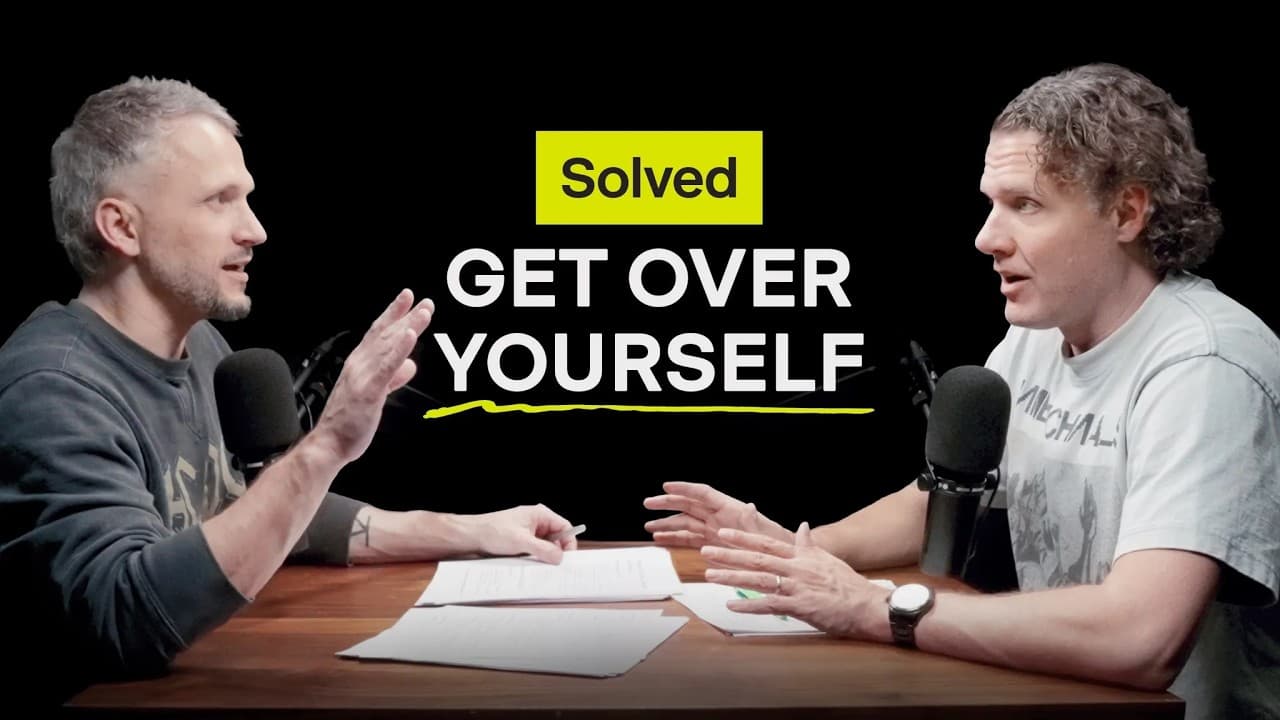
The ego is neither good nor bad. It is a psychological tool that gives you identity, agency, and the ability to navigate reality. Like fire, it causes damage when it grows rigid, inflated, or wounded, and leaves you directionless if you try to destroy it. The healthy path is to understand your ego and find a balance, not to inflate it or kill it.
Transcript
So there's a saying in Hollywood which they they used to say back when Hollywood actually made movies that people went and would watch. Right. Right. But they used to have a saying in Hollywood where where people you know directors, actors uh they they had this saying where they would say one for them, one for you. Right. And and sometimes... Read More
Key Insights
- The ego is the psychological structure that gives a person an identity, agency, and the ability to navigate reality. It is the voice in your head that says 'I' and makes you feel separate from everything else.
- The ego is humanity's greatest paradox because it is both our most valuable psychological asset and our most dangerous liability. Without it we would have no sense of self, no ability to learn from experience, and no capacity to plan for the future.
- A rigid, inflated, or wounded ego becomes a prison. It distorts reality to protect itself, turns relationships into competitions, turns mistakes into catastrophes, and makes other people look like threats or tools.
- Napoleon's 1812 invasion of Russia shows an ego that stopped processing reality. He ignored his advisers, marched in with 600,000 troops, and only 10,000 returned, yet his letters home spoke only of triumph.
- A massive ego often hides deep insecurity. Five trained clinicians who analyzed Napoleon found class inferiority, money insecurity, intellectual envy, sexual anxiety, social awkwardness, and persistent hypersensitivity to criticism.
- Trying to annihilate the ego can backfire. A young American who entered a Japanese monastery in 1969 to erase his ego later said it nearly destroyed his ability to function, and that ignorance about the ego, not the ego, is the enemy.
- People commonly confuse arrogance with confidence, selfishness with self-respect, and walls with boundaries. These mix-ups come from using phrases like 'check your ego' without understanding what the ego actually is.
- The goal is balance, not elimination. The ego works like fire: out of control it burns everything down, but if you put it out completely it can no longer keep you warm.
Install to Summarize YouTube Videos and Get Transcripts
Explore YouTube Video Summarizer or Get YouTube Transcript Extractor
Questions & Answers
Q: What is the ego in psychology?
The ego is the psychological structure that gives you an identity, agency, and the ability to navigate reality. It is the voice in your head that says 'I' and means something by it, making you feel separate from everything else, special in your suffering, and unique in your joys. It also drives habits like compulsively checking your phone and replaying old conversations at night.
Q: Is having an ego good or bad?
The ego is neither good nor bad. It is simultaneously our most valuable psychological asset and our most dangerous liability. Without it we would have no sense of self, no ability to function in society, and no capacity to learn from experience or plan for the future. When it grows rigid, inflated, or wounded, however, it distorts reality and creates the very suffering it tries to avoid.
Q: Should you try to destroy your ego?
No. Destroying the ego is one of the two extremes the episode warns against. A young American who went to a Japanese monastery in 1969 to annihilate his ego through intense meditation later said that destroying his ego nearly destroyed his ability to function at all. His conclusion was that the ego is not the enemy, and ignorance about the ego is.
Q: How did Napoleon's ego affect his invasion of Russia?
In 1812 Napoleon controlled most of Europe and believed he was destiny incarnate. When advisers warned him not to invade Russia, he dismissed them, saying one must never retreat or admit an error. He marched in with 600,000 troops and only 10,000 returned. Even as his army froze and starved, his letters home spoke only of triumph, showing an ego that no longer processed reality.
Q: Why do people with big egos often feel insecure?
A large ego often covers deep wounds. Five trained clinicians who later analyzed Napoleon's behavior found class inferiority, money insecurity, intellectual envy, sexual anxiety, social awkwardness, and persistent hypersensitivity to criticism. Beneath his titanic ego was a deeply wounded man trying desperately to prove he mattered. The hosts also note that anyone with a big ego, by definition, does not think they have one.
Q: What happens when the ego becomes unhealthy?
An unhealthy ego, one that is rigid, inflated, or wounded, becomes a prison. It distorts reality to protect itself and creates the suffering it is trying to avoid. It can turn relationships into competitions, mistakes into catastrophes, and other people into threats or tools. An unhealthy ego can ruin relationships and sabotage a person at every chance it gets.
Q: What is the difference between confidence and arrogance?
The episode points out that people routinely confuse arrogance with confidence, selfishness with self-respect, and walls with boundaries. These confusions arise because people use phrases like 'check your ego' or call someone egotistical without understanding what the ego is. Understanding how the ego works helps separate a healthy, supportive sense of self from a defensive, inflated one.
Q: How do you find a healthy balance with your ego?
The key is to work with your ego rather than against it. The hosts compare it to fire: out of control it burns everything down, but if you put it out completely it cannot keep you warm. True strength comes from understanding the ego, not inflating or destroying it. The episode later covers recognizing the inner dictator and cultivating a quieter ego, with a free PDF guide at solvedpodcast.com/ego.
Summary & Key Takeaways
-
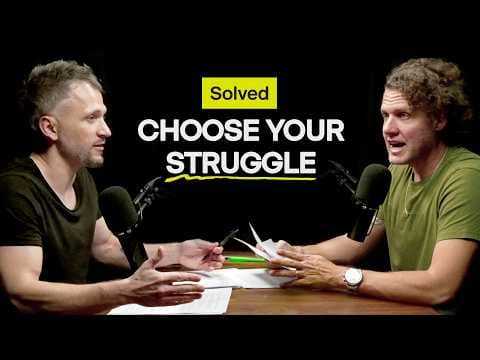
The episode argues that most people misunderstand the ego. Some try to destroy it, others inflate it, but both extremes fail. Drawing on Freud, Buddhism, David Hume, Jung's shadow self, and even the Navy SEALs, the hosts present the ego as a tool that needs to be understood rather than defeated.
-
Two stories frame the problem. Napoleon's rigid ego led him to invade Russia against advice, losing most of 600,000 troops while still describing triumph. A young American who tried to annihilate his ego through intense meditation in 1969 found it nearly destroyed his ability to function at all.
-
Every topic on the show has a healthy and an unhealthy version, and the ego is no different. A healthy ego supports you and helps you function, while an unhealthy one sabotages relationships. The episode covers evolution's reasons for the ego, how it becomes a tyrant, and how to cultivate a quiet ego.
Read in Other Languages (beta)
Share This Summary 📚
Summarize YouTube Videos and Get Video Transcripts with 1-Click
Try YouTube Summary with ChatGPT & Claude or YouTube Transcript Generator
Explore More Summaries from Mark Manson 📚

Summarize YouTube Videos and Get Video Transcripts with 1-Click
Try YouTube Summary with ChatGPT & Claude or YouTube Transcript Generator