How Does Climate Change Impact Our Lives and Earth?
TL;DR
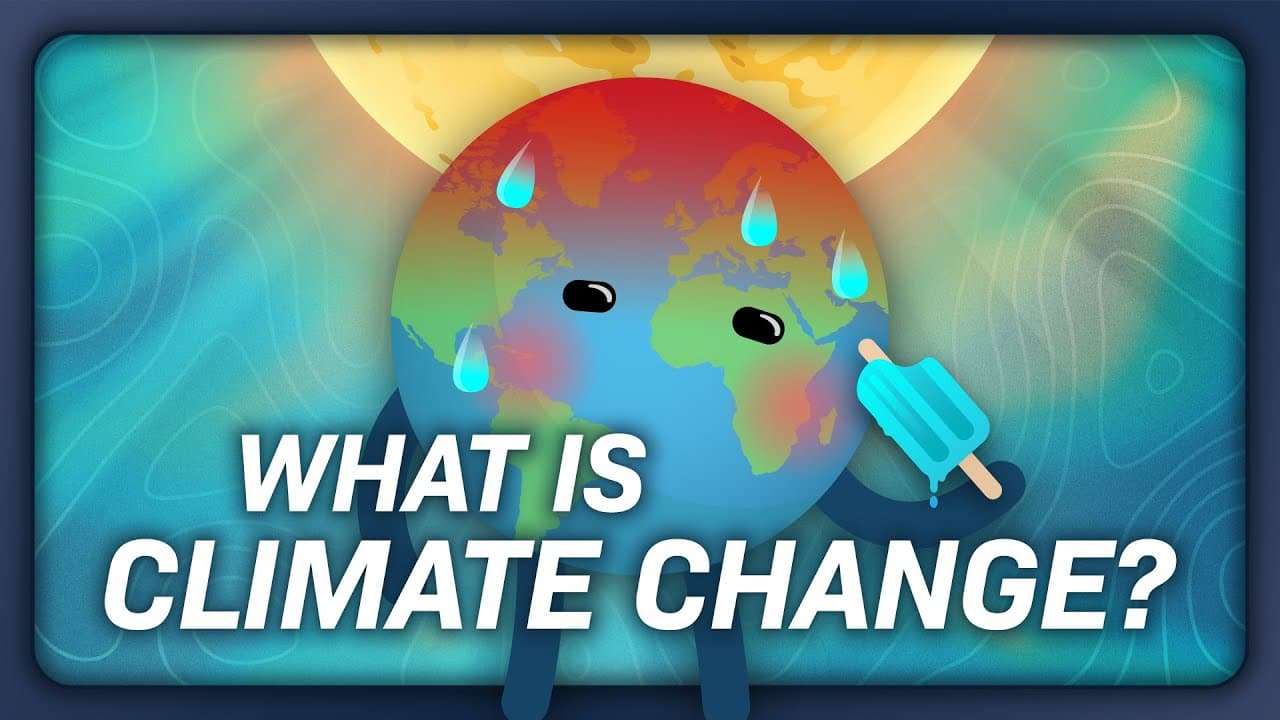
Climate change is a pressing issue that deeply affects our daily lives and the planet. Human activities, primarily the burning of fossil fuels, have led to an unprecedented rise in global temperatures, resulting in severe weather events and environmental shifts. The consequences vary widely across communities, highlighting the need for collective action and innovative solutions to address this global challenge.
Transcript
climate change is intimate and personal at this point it affects you every time you go to the grocery store or fill your gas tank or Vote or flush the toilet or put on your long underwear for a later than usual snowfall and every year it will affect you more at the same time it's cosmically impersonal it involves gases and rocks and chemicals that ... Read More
Key Insights
- ⚖️ Climate change is a complex issue that exists on multiple timelines, from the personal scale of individual experiences to the vast history of the Earth.
- 🫢 The burning of fossil fuels has led to a significant increase in greenhouse gas emissions, causing temperatures to rise at an unprecedented rate.
- 🫠 Extreme weather events are more likely in a warmer climate, with the potential for devastating global impacts such as melting ice caps, rising sea levels, and shifts in agricultural productivity.
- 💱 Climate change affects everyone globally, but the consequences and ability to adapt vary among different regions and communities.
- 💱 Understanding and addressing climate change requires collective action, innovative solutions, and a commitment to sustainable living.
- 😒 Scientists use various methods, such as studying ancient records and ice cores, to gather insights into past climate fluctuations and atmospheric composition.
- 🍉 Climate and weather are closely related, with climate representing long-term trends and weather reflecting short-term conditions.
Install to Summarize YouTube Videos and Get Transcripts
Explore YouTube Video Summarizer or Get YouTube Transcript Extractor
Questions & Answers
Q: What did Eunice Foot's experiments in the 1850s demonstrate about the link between carbon dioxide and atmospheric heating?
Eunice Foot's experiments showed that high concentrations of carbonic acid gas, now known as carbon dioxide, in the atmosphere can cause the air to heat up faster and stay warmer for longer, demonstrating the greenhouse effect.
Q: How do greenhouse gases contribute to the greenhouse effect?
Greenhouse gases, such as carbon dioxide, methane, and water vapor, trap heat in the Earth's atmosphere, similar to how glass panels in a greenhouse trap the sun's heat. This leads to an increase in the Earth's overall temperature and climate change.
Q: How do scientists study ancient temperatures and fluctuations in the composition of the atmosphere?
By analyzing the chemistry of rocks and fossils that are hundreds of millions of years old, scientists can piece together how ancient temperatures fluctuated and how the composition of the atmosphere changed. Ice cores from Greenland and Antarctic ice caps also provide a record of the Earth's atmosphere from hundreds of thousands of years ago.
Q: How has the rate of global temperature increase changed in the last 200 years?
In the last 200 years, temperatures have gone up faster than ever seen before in recorded history. The average global temperature today is the highest it's been in a hundred thousand years, increasing at a rate of 0.7 degrees Celsius per 100 years, almost ten times faster than previous warming periods.
Summary & Key Takeaways
-
Climate change is both intimate and personal, affecting individuals in their daily activities, but it is also a collective and systemic problem that involves entire populations and global systems like energy grids and international trade.
-
Human activity, particularly the burning of fossil fuels, has caused the Earth to warm up at an unprecedented rate, leading to severe weather events, rising sea levels, and other consequences.
-
Climate change will have significant impacts on everyone globally, but not all communities will experience the same consequences or have the same capacity to adapt.
Read in Other Languages (beta)
Share This Summary 📚
Summarize YouTube Videos and Get Video Transcripts with 1-Click
Try YouTube Summary with ChatGPT & Claude or YouTube Transcript Generator
Explore More Summaries from CrashCourse 📚



Summarize YouTube Videos and Get Video Transcripts with 1-Click
Try YouTube Summary with ChatGPT & Claude or YouTube Transcript Generator