How to Scale a Bootstrapped Startup with Distribution
TL;DR
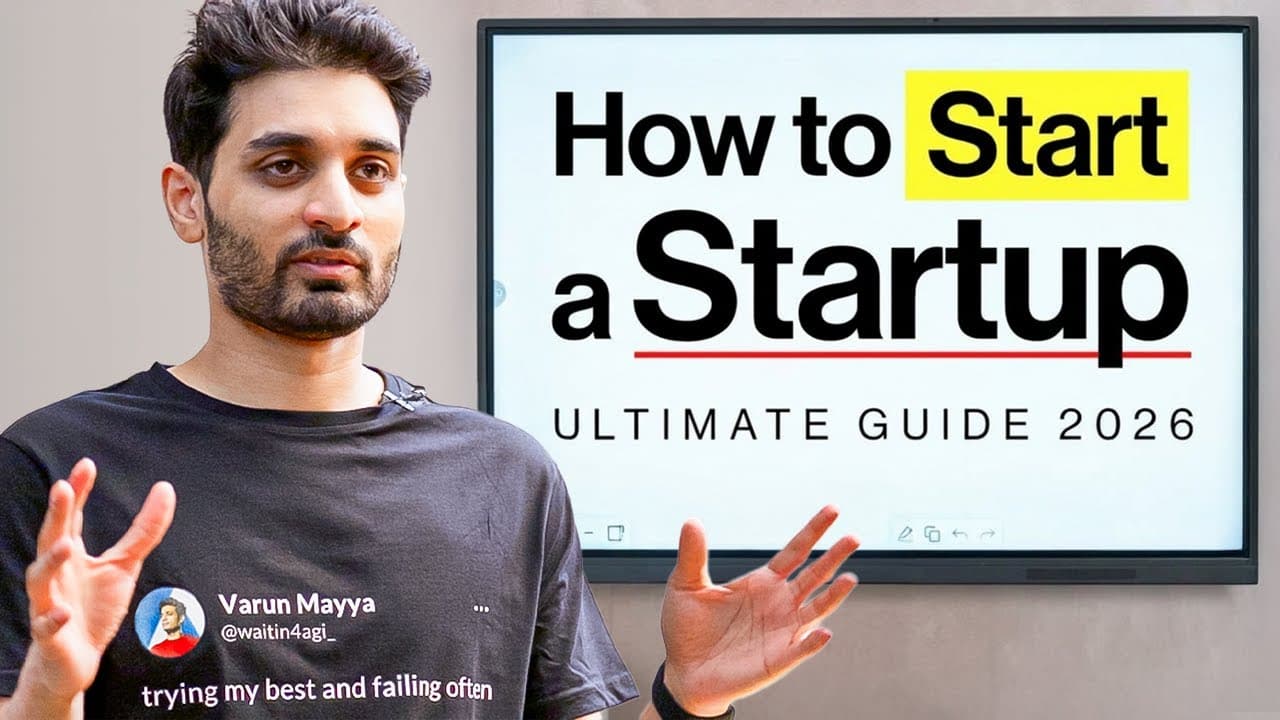
Distribution is the backbone of growth, not just product. Build and share wealth with many people to keep your best talent, and run multiple low risk bets to learn faster. The path shown is bootstrapped profitability, focused on talent, channels, and a scalable ecosystem.
Transcript
A lot of the early team here have figured out through a lot of pain. If you don't have distribution, it's not going to work. You need to generate and share wealth with enough people because without incentives, you lose your best talent. You're constantly losing your best talent. You've taken completely [music] unorthodox bets that other people have... Read More
Key Insights
- Distribution is the critical driver of growth, not just product development.
- Talent is the real moat, and losing top talent undermines scaling efforts.
- A diversified ecosystem (talent, distribution channels, apps, and labs) creates a self-reinforcing growth loop.
- bootstrapping with profitability demonstrates that external funding is not a prerequisite for scale.
- Running multiple small bets increases learning speed and reduces risk compared to chasing a single perfect plan.
- Transparency about past bets and iterative learning helps guide future strategy.
- Building systems like AVTV and 100x Engineers provides sustainable talent pipelines.
- Customer base diversification across advertisers and enterprise clients strengthens market position.
Install to Summarize YouTube Videos and Get Transcripts
Explore YouTube Video Summarizer or Get YouTube Transcript Extractor
Questions & Answers
Q: How did the company achieve profitability while growing to 400 employees?
The company maintained profitability by bootstrapping and focusing on a diverse ecosystem that generates revenue across services, channels, and product offerings. By balancing revenue from clients like brands and leveraging internal talent pipelines such as AVTV and 100x Engineers, they kept costs aligned with cash flow and avoided reliance on external funding. This approach, coupled with disciplined capital management and a focus on sustainable growth, enabled profitability for several years while scaling to a large workforce.
Q: Why is distribution emphasized over product in early growth stages?
Distribution acts as the multiplier for growth by increasing reach and engagement with potential customers before scaling product features. The approach recognizes that wide distribution attracts early buyers, builds network effects, and validates demand, which then informs product iteration. By prioritizing channels, content, and partnerships, the company aligns incentive structures to continuously attract talent and customers, creating a self-reinforcing growth loop.
Q: What is the 16-Kata framework referenced in the talk?
The 16-Kata framework is a structured series of sessions designed to teach and reinforce repeatable principles for building a company. Each kata focuses on different aspects such as origin story, distribution strategy, talent pipelines, technology integration, and future bets. The series mixes dense information with periodic high production episodes to convey practical insights and actionable steps for bootstrapped growth.
Q: How does the speaker view talent in relation to company growth?
Talent is described as the real moat that sustains long term growth. The company invests in building and retaining elite teams through initiatives like the video editing school, AVTV, and the 100x Engineers program. By aligning career overlap between employees and company goals, they create a powerful talent flywheel that feeds both performance and loyalty, reducing turnover and accelerating scaling.
Q: What role do multiple verticals and bets play in scaling?
Multiple verticals and bets spread risk and create several streams of revenue and learning opportunities. The strategy involves running unorthodox bets that others might not take and iterating quickly across different domains such as video, gaming, and AI avatars. This approach increases chances of discovering scalable, profitable paths while avoiding overreliance on a single market or product.
Q: How does bootstrapping influence innovation and risk tolerance?
Bootstrapping fosters a culture of disciplined experimentation with high failure tolerance. Without external funding, teams must validate ideas with real revenue and customer feedback, leading to faster iteration and more prudent investments. This environment encourages bold experiments that have a clear path to sustainability and profitability, while minimizing exposure to external capital risk.
Q: What is the importance of a self-contained ecosystem in growth?
A self-contained ecosystem, including channels, talent development, and services, creates network effects that reinforce growth. By owning multiple levers—AVTV, Yas, AOS Labs, and gaming initiatives—the company can cross-sell, upskill, and accelerate distribution. This integrated approach reduces dependency on external partners and strengthens resilience during market shifts.
Q: How does the speaker propose handling the balance between real-world and screen-based content?
The speaker notes a deliberate separation between on-screen content and real-world experiments, acknowledging that some concepts translate differently across media. They advocate for clear communication, openness to questions, and adjusting delivery to suit both formats. The goal is to make dense material accessible while preserving depth, ensuring learners can apply principles regardless of the medium.
Summary & Key Takeaways
-
The speaker outlines a 16 kata framework for building a company while bootstrapping and remaining profitable for years, emphasizing distribution over product in early stages.
-
AOS operates a multi-vertical ecosystem including talent pipelines, channels, and tools like AVTV, Yas, and AOS Labs, creating a self-sustaining growth engine.
-
The presentation stresses unorthodox bets, continuous learning, and a broad distribution strategy to attract customers and retain top talent across multiple business lines.
Read in Other Languages (beta)
Share This Summary 📚
Summarize YouTube Videos and Get Video Transcripts with 1-Click
Try YouTube Summary with ChatGPT & Claude or YouTube Transcript Generator
Explore More Summaries from Varun Mayya 📚
Summarize YouTube Videos and Get Video Transcripts with 1-Click
Try YouTube Summary with ChatGPT & Claude or YouTube Transcript Generator