How to Build a Sustainable Content Creator Career
TL;DR
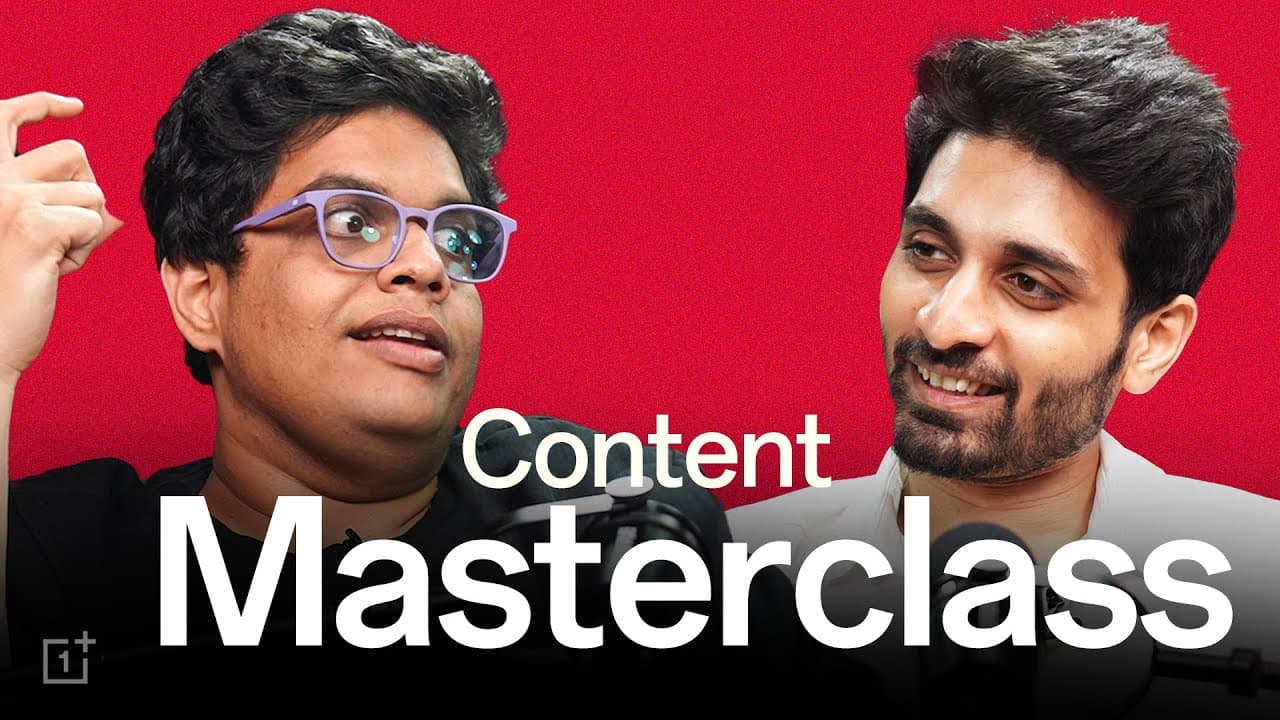
Start creating content while keeping your existing job, and only make the full-time leap when you enjoy the work and can support a year focused on it. Strong writing provides transferable principles across formats, while savings, consistent output, and a willingness to adapt can help bridge the unstable early years before a creator business becomes financially viable.
Transcript
I've written for television, film, radio, boarding, sprint ad. I've written all kinds of stuff. When did you start making money off doing content? When I was 19, there was like a three and a half lakh rupee paycheck that came in every month. Break down the anatomy of a video for me. What should I start doing? How should I think about the video? Bei... Read More
Key Insights
- Content creation is an unstable profession because full-time creators do not necessarily receive predictable monthly paychecks. Large distribution opportunities exist, but the work should be treated as a demanding job rather than as an easy route to likes, attention, or income.
- The first test for an aspiring creator is whether the work provides genuine enjoyment. Tanmay calls this product-market fit for passion and enjoyment, which should be established before trying to prove that the content can support a viable business.
- A practical transition into full-time creation is to produce content while retaining another job. Tanmay recommends taking the leap only after determining that spending a year focused exclusively on content is financially and personally realistic.
- Strong writing is a transferable foundation for content creation because the basic principles of effective content persist across media. Tanmay attributes his ability to move among television, stand-up, podcasting, gaming, streaming, and AI-related content partly to understanding how content works at a fundamental level.
- Early validation can shape a creator's confidence and direction. Tanmay recalls an English teacher awarding his essay the highest score for originality, which showed him that unusual thoughts could be recognized and that originality itself could have value.
- Savings can fund the transition between established work and an uncertain creative career. Tanmay's television-writing income allowed him to pursue stand-up at about 2,000 rupees per night and give new media several years to catch up financially.
- AIB began as an audio-only podcast in 2010 after Gursimran Khamba drew inspiration from WTF with Marc Maron. The appeal was that podcasting offered an alternative medium where prominent people could discuss subjects that traditional television might not accommodate.
- AIB's first meaningful revenue came from live shows rather than the original podcast. The group sold out auditoriums with about 2,000 seats, with average tickets described as roughly 399 to 499 rupees, before dividing proceeds among four members and deducting costs.
Install to Summarize YouTube Videos and Get Transcripts
Explore YouTube Video Summarizer or Get YouTube Transcript Extractor
Questions & Answers
Q: How should someone start a content creator career?
Someone considering a creator career should begin by making content while continuing their existing job. The initial goal is to discover whether they genuinely enjoy producing content, not simply whether it attracts likes. A full-time transition becomes more sensible when the person believes they can spend a year doing nothing else and has enough financial room to handle unstable income.
Q: Why is enjoyment important before monetizing content?
Enjoyment matters because content creation is a profession with substantial work and uncertain monthly income. Tanmay describes the first requirement as product-market fit for passion and enjoyment, followed later by product-market fit for the business. People who enter only because creation is fashionable or because they want likes may discover that they do not enjoy the ongoing process.
Q: When should a creator leave their full-time job?
A creator should consider leaving a job only after testing content creation alongside existing employment and deciding that a year of exclusive focus is realistic. Tanmay advises people to take their time because content can be produced while holding another job. His own transition was supported by savings, and matching his earlier television income required about three to four years.
Q: How did Tanmay Bhat begin his content career?
Tanmay began writing for television when he was approximately 18 or 19 and worked on programs including India's Got Talent and Nach with Saroj Khan. After watching Russell Peters, he became interested in stand-up comedy. He later joined Gursimran Khamba in starting AIB as an audio-only podcast in 2010, before the project expanded into other formats.
Q: How much did Tanmay earn from television writing?
Tanmay says television work paid roughly 12,000 rupees each for story, screenplay, and dialogue assignments, and he completed about eight or nine such units in a month. At 19, he received monthly paychecks of approximately three to three and a half lakh rupees for five or six months, giving him savings for his next career move.
Q: How did AIB first make meaningful money?
AIB's first meaningful payment came from live performances. The group began selling out auditoriums with around 2,000 seats across the country, and Tanmay described an average ticket price of roughly 399 to 499 rupees. Gross proceeds then had to be divided among four members after costs. He estimates that he made about 10 to 12 lakh rupees in 2012.
Q: Why is writing valuable for content creators?
Writing is valuable because the basic principles behind effective content continue to apply when formats and platforms change. Tanmay says that understanding how content works helped him move repeatedly between different areas rather than remaining tied to one medium. His background included television, film, radio, advertising, podcasting, stand-up, gaming, streaming, and AI-related content.
Q: How long can it take creator income to replace a previous salary?
Tanmay says AIB took approximately three to four years to catch up with the income he had previously earned as a television writer. That transition was possible because he had savings from earlier work, including several months of unusually strong television pay. His experience supports maintaining employment and building a financial cushion while testing a creator business.
Summary & Key Takeaways
-
Tanmay Bhat began writing for television at 18 or 19, working across programs and content formats before exploring stand-up comedy. Inspired by the freedom of podcasting, he and Gursimran Khamba launched AIB as an audio-only podcast in 2010, creating outside the restrictions commonly associated with traditional media.
-
His central career advice is to establish product-market fit for personal enjoyment before seeking product-market fit as a business. Content creation is a real but unstable profession without a predictable monthly paycheck, so aspiring creators should test whether they genuinely enjoy the process instead of pursuing attention or following a trend.
-
Early television earnings gave Tanmay the savings needed to accept lower stand-up income and spend several years building AIB. Live shows produced AIB's first meaningful revenue, but matching his previous television-writing income took roughly three to four years. He therefore recommends creating alongside a job before committing full time.
Read in Other Languages (beta)
Share This Summary 📚
Summarize YouTube Videos and Get Video Transcripts with 1-Click
Try YouTube Summary with ChatGPT & Claude or YouTube Transcript Generator
Explore More Summaries from Varun Mayya 📚



Summarize YouTube Videos and Get Video Transcripts with 1-Click
Try YouTube Summary with ChatGPT & Claude or YouTube Transcript Generator