What Happened to Quiznos: From 5,000 Stores to Bankruptcy
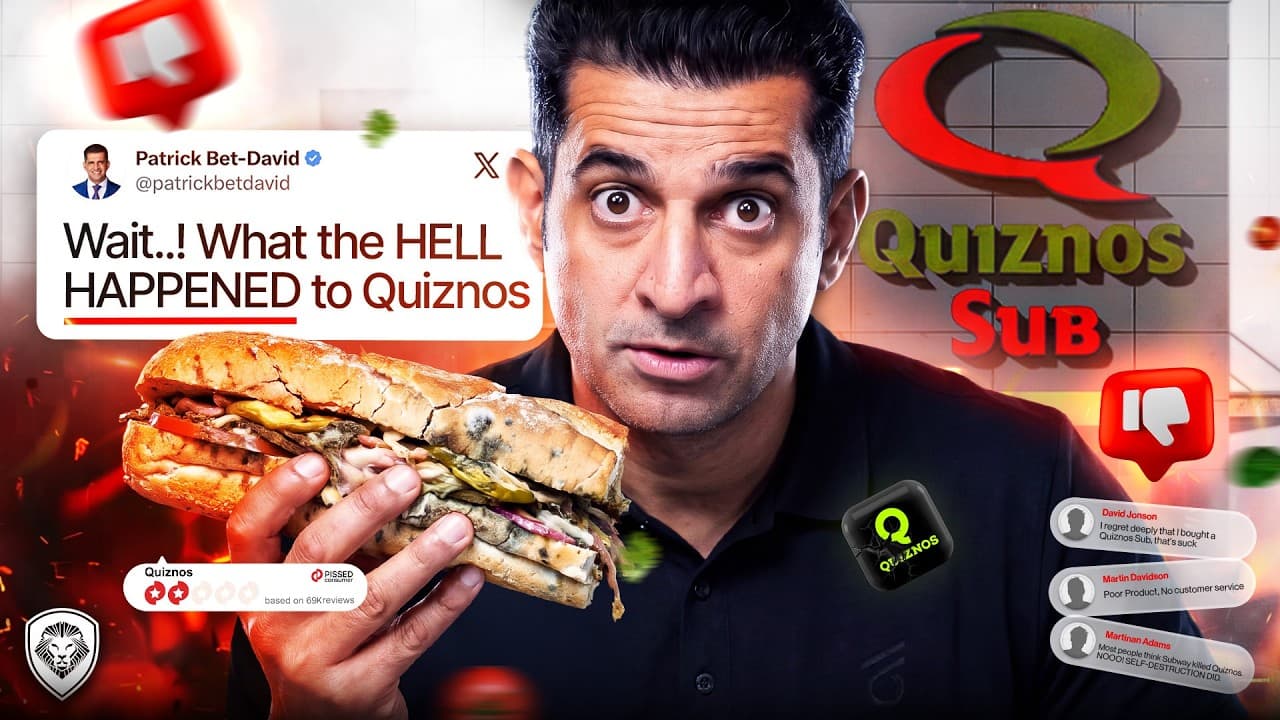
TL;DR
Quiznos grew rapidly by prioritizing heavy advertising and franchise expansion, but the model overpromised on franchisee profits and relied on costly supply rules. When margins compressed amid lawsuits and debt, many locations closed and the company collapsed into bankruptcy, offering clear lessons on franchise economics and growth risk.
Transcript
Today we're doing a business autopsy on Quiznos. Do you remember Quiznos? Do you remember the mosqu chicken, the toast they would put in? It would smell so good. The the broccoli cheese soup that they was my favorite. I used to go to this place all the time. How the hell did they go from 5,000 locations in 2007 2008? They were going to take over Su... Read More
Key Insights
- Quiznos expanded rapidly by using a heavy advertising and franchisee-oriented sales model, but the economics did not sustain profitability for owners.
- Franchisees faced high costs for supply through the parent company, plus royalties and marketing fees that squeezed net profits to margins as low as single digits at times.
- The business model depended on top-down coupons and discounted traffic, which increased customer visits but eroded franchisee margins and trust.
- A big liquidity move in 2006, selling 49 percent to a bank-backed group, brought capital yet saddled the company with debt to be repaid later.
- As margins deteriorated, advertising spending shrank, reducing brand visibility and traffic, contributing to sales decline.
- Class action lawsuits and franchisee disputes highlighted governance and operational challenges that harmed the network’s cohesion and performance.
- Overexpansion created a fragile franchise base; when profits and cash flow weakened, the network could not sustain debt and obligations, leading to bankruptcy.
- The Quiznos case illustrates how misaligned incentives between franchisor and franchisees can threaten an entire brand.
- More videos from this channel:
- More from this channel: Valuetainment
Install to Summarize YouTube Videos and Get Transcripts
Explore YouTube Video Summarizer or Get YouTube Transcript Extractor
Questions & Answers
Q: What led Quiznos to expand to 5,000 locations and why did that strategy fail?
Quiznos expanded rapidly by promoting heavy advertising and a franchise-centric growth strategy, attracting many buyers who believed in the model’s promise of a strong brand and steady stream of customers. The failure came when franchisee profitability did not materialize, costs rose, and the promised advantages could not be sustained against debt and legal conflicts. This misalignment between franchisee profits and corporate incentives ultimately undermined the network and contributed to bankruptcy.
Q: How did franchise economics contribute to Quiznos' decline?
Franchise economics deteriorated as franchisees faced rising costs for supplies supplied by the parent company, high royalties, and advertising fees, while revenue did not translate into meaningful profits. This created a situation where operators could not cover costs, leading to dissatisfaction, legal action, and a shrinking network, all of which weakened sales and brand health.
Q: What role did debt play in Quiznos’ downfall?
Debt accumulated through a 2006 capital move left the company with significant liabilities to be serviced while growth slowed. The ensuing financial burden reduced cash available for essential activities like advertising and maintenance, strained franchise relations, and later led to debt default pressures that undermined stability and accelerated the collapse.
Q: Why were coupons and top-down discounts harmful to franchisees?
Coupons and discounts were designed to boost traffic, but they squeezed franchisee margins by reducing revenue without proportional cost relief. Franchisees had higher labor, rent, and supply costs, so the discounts eroded profits, created resentment, and destabilized the franchise network, making it harder to sustain operations and growth.
Q: What evidence shows franchisee relations deteriorated?
Class action lawsuits and widespread franchisee grievances indicated deep dissatisfaction with the business terms, supply pricing, and operational control. The legal disputes highlighted misalignment between franchisor policies and franchisee economics, harming trust, network cohesion, and willingness to invest in new or existing locations.
Q: How did management decisions affect brand performance?
Management decisions, including aggressive growth, high operating costs, and restrictive supply practices, impacted profitability and customer value. Combined with shrinking advertising and mounting debt, these choices reduced traffic and sales, weakening the brand’s appeal and ultimately undermining long-term viability.
Q: What are the key lessons for other franchisors from Quiznos' story?
Important lessons include aligning franchisor and franchisee incentives to ensure profitability, maintaining sustainable margins even during growth, avoiding excessive debt that constrains operational flexibility, and balancing marketing spend with franchisee value. Effective governance and fair, transparent supply and pricing practices are essential to preserving network health and brand resilience.
Q: Could Quiznos have avoided bankruptcy with different strategy, based on the material?
Based on the presented material, possible alternative strategies could have included an earlier shift to more favorable supply terms, reducing reliance on onerous royalties and advertising fees, restoring margin pressure for franchisees, and prioritizing sustainable growth over sheer quantity of locations. Strengthening franchisee relations through fair terms and open governance might have preserved the network and delayed or averted bankruptcy.
Summary & Key Takeaways
-
Quiznos expanded to 5,000 locations by leveraging strong branding and aggressive advertising, but the model depended on franchisee profits that never materialized for many owners. This misalignment undermined long term growth and set the stage for later decline.
-
Franchisee economics deteriorated as costs for supplies, labor, and royalties rose, while franchisees faced limited profit in the face of top-down price pressures and aggressive coupon strategies that shrank margins.
-
Debt, legal challenges, and loss of ad spend reduced traffic and sales, ultimately weakening the franchise network, triggering bankruptcies, and forcing Chapter restructuring that could not rescue the business despite initial hype.
Read in Other Languages (beta)
Share This Summary 📚
Summarize YouTube Videos and Get Video Transcripts with 1-Click
Try YouTube Summary with ChatGPT & Claude or YouTube Transcript Generator
Explore More Summaries from Valuetainment 📚






Summarize YouTube Videos and Get Video Transcripts with 1-Click
Try YouTube Summary with ChatGPT & Claude or YouTube Transcript Generator