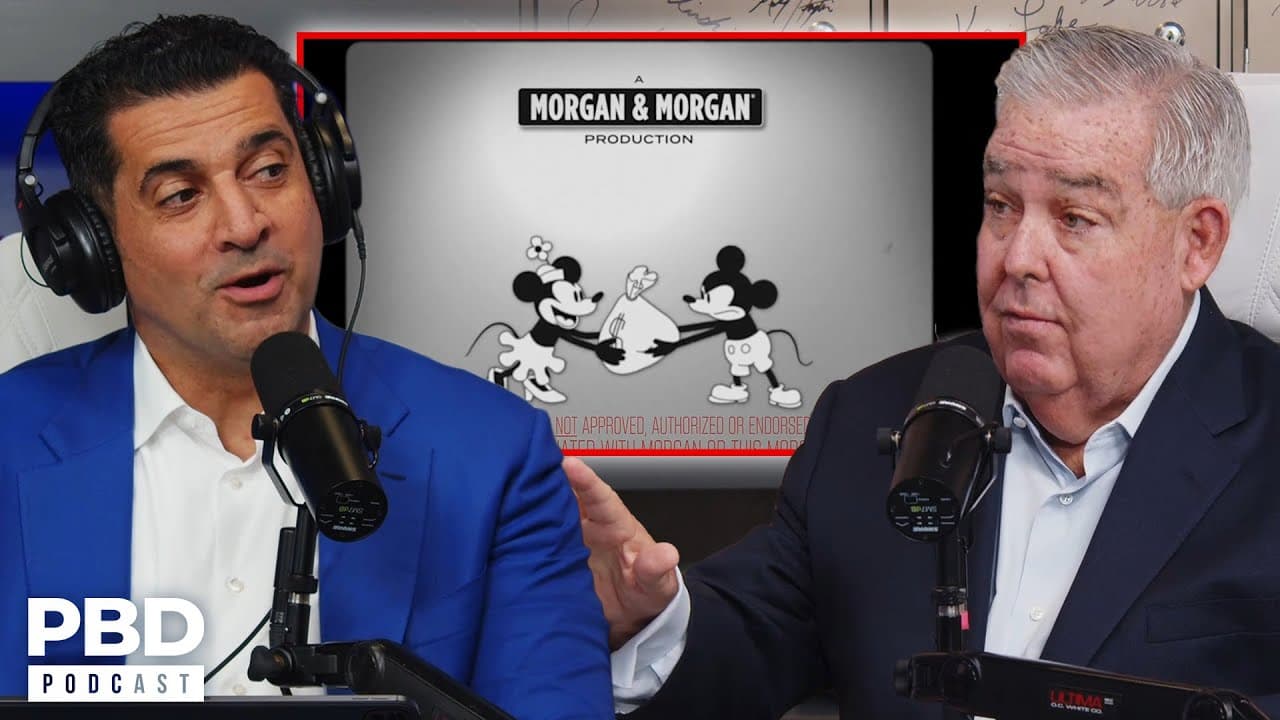
How did John Morgan challenge Disney over Steamboat Willie?
TL;DR
John Morgan filed a deck action in federal court arguing that the Steamboat Willie IP had expired, allowing him to use a related commercial. Disney reportedly agreed to let the commercial run after several months, marking a rare victory in IP enforcement and a full-circle moment involving his brother. This story centers on IP rights, litigation strategy, and personal vindication.
Transcript
What happened with you and the the the Willie uh uh what is it? The Sweetboat Willie. What? Am I saying it correctly or no? Ste, can you can you pull up the Steamboat Willie commercial? I want to know what's going on with Disney. Are you suing Disney? Are they suing you? Play the clip first. I'll show it. Go for it. I'll tell you what I did. This M... Read More
Key Insights
- IP rights can expire, enabling new uses of classic characters or works.
- A deck action can challenge ongoing IP restrictions by arguing expiration of rights.
- Disney reportedly permitted the use of the ad after reviewing the case, suggesting flexibility in enforcement.
- Marketing strategy can leverage controversial or attention-grabbing concepts, like a purple cow, to boost engagement.
- Legal disputes over IP often involve complex negotiations and evolving positions from both sides.
- Personal history and family connections can influence the trajectory and motivation of litigation stories.
- Public perception and brand image play roles in how IP disputes are perceived by audiences.
- Advertising approvals may hinge on disclaimers and legal consultations to avoid misrepresentation.
- More videos from this channel:
- More from this channel: Valuetainment
Install to Summarize YouTube Videos and Get Transcripts
Explore YouTube Video Summarizer or Get YouTube Transcript Extractor
Questions & Answers
Q: A real search query question about the video (e.g. 'How to...', 'What is...', 'Why does...', 'When should...'). Question 1
What is the central claim John Morgan made about Steamboat Willie and the IP rights, and how did he pursue it in federal court? The central claim is that the Steamboat Willie IP rights had expired, allowing him to run a related commercial. He pursued the claim by filing a deck action in federal court, seeking a determination that the IP no longer belonged to Disney for the purposes of his advertisement. The process involved multiple law firms and consultations before he proceeded with legal action, illustrating a strategic use of litigation to unlock advertising opportunities.
Q: A real search query question about the video (e.g. 'How to...', 'What is...', 'Why does...', 'When should...'). Question 2
How did Disney respond to Morgan’s legal challenge and what was the outcome for the ad campaign? Disney agreed that Morgan could run the commercial after a period of negotiation and review, indicating a resolution without a traditional public settlement. The outcome was that the ad campaign moved forward under this understanding, and Morgan claimed a personal victory by achieving the ability to use the Steamboat Willie related material in advertising.
Q: A real search query question about the video (e.g. 'How to...', 'What is...', 'Why does...', 'When should...'). Question 3
What role did the idea of a purple cow play in Morgan’s marketing approach and how does it relate to IP risk? The purple cow concept represents a standout, memorable ad idea intended to stop viewers and prompt rewatches. This marketing strategy is inherently high-visibility and potentially risky with IP concerns, requiring careful legal navigation to ensure the concept does not infringe protected works while achieving strong branding impact.
Q: A real search query question about the video (e.g. 'How to...', 'What is...', 'Why does...', 'When should...'). Question 4
Why did Morgan mention his brother and past encounters with Disney, and how does that connect to the broader theme of retribution or vindication? The references to his brother and past experiences add a narrative layer of personal history and perceived cycles of action and consequence. This connection underscores a broader theme of retribution or vindication, showing how personal history can intertwine with business and legal disputes.
Q: A real search query question about the video (e.g. 'How to...', 'What is...', 'Why does...', 'When should...'). Question 5
What is the significance of the date and the claims around the Steamboat Willie IP in the context of the ad and the lawsuit? The significance lies in the assertion that Steamboat Willie IP rights expired after a set period, which Morgan leveraged to argue that his advertising rights could extend beyond the original protections. This legal argument framed the basis for allowing the ad to run and marked a notable moment in IP law as presented in the video.
Q: A real search query question about the video (e.g. 'How to...', 'What is...', 'Why does...', 'When should...'). Question 6
How is the idea of accountability or disclaimer presented in the discussion of using Disney IP, and why is it important for advertisers? The discussion highlights that obtaining advice and adding disclaimers are necessary when working with IP that might be contested. This helps minimize misrepresentation and legal risk while still pursuing creative advertising, illustrating the tension between bold marketing and legal compliance in IP matters.
Q: A real search query question about the video (e.g. 'How to...', 'What is...', 'Why does...', 'When should...'). Question 7
What does the narrative suggest about the role of legal counsel and firm navigation in IP disputes tied to advertising campaigns? The narrative shows ongoing consultations with IP professionals and law firms, indicating that strategic legal navigation is crucial. The process includes advice on disclaimers, poll considerations, and the costs involved, emphasizing that thorough legal groundwork is essential for aggressive marketing moves tied to IP.
Q: A real search query question about the video (e.g. 'How to...', 'What is...', 'Why does...', 'When should...'). Question 8
What is the broader takeaway from Morgan’s experience regarding using expired or contested IP for marketing and its risks and rewards? The broader takeaway is that pursuing IP rights related to older works can unlock marketing opportunities, but it requires careful legal strategy, risk assessment, and possibly negotiations with the IP holder. The story demonstrates both potential rewards and the complexities of navigating IP law in a real advertising context.
Summary & Key Takeaways
-
Morgan challenges Disney over Steamboat Willie IP and files a federal deck action, claiming rights have expired. Disney agrees to allow the ad to run after a court review, indicating a settlement-like shift without formal settlement. The narrative ties back to personal family history and a broader IP legal context.
-
The ad strategy described as a purple cow aims to create memorable, attention-grabbing content that prompts viewers to rewatch, balancing legal risk with promotional impact. The case illustrates how IP expiration can influence advertising rights and branding opportunities.
-
The discussion weaves in personal anecdotes about retribution and family ties, showing how individual decisions intersect with corporate IP enforcement and public perception. The outcome highlights the potential for creative campaigns to navigate legal boundaries and achieve promotional goals.
Read in Other Languages (beta)
Share This Summary 📚
Summarize YouTube Videos and Get Video Transcripts with 1-Click
Try YouTube Summary with ChatGPT & Claude or YouTube Transcript Generator
Explore More Summaries from Valuetainment 📚



Summarize YouTube Videos and Get Video Transcripts with 1-Click
Try YouTube Summary with ChatGPT & Claude or YouTube Transcript Generator