How to balance soft and hard skills in hiring
TL;DR
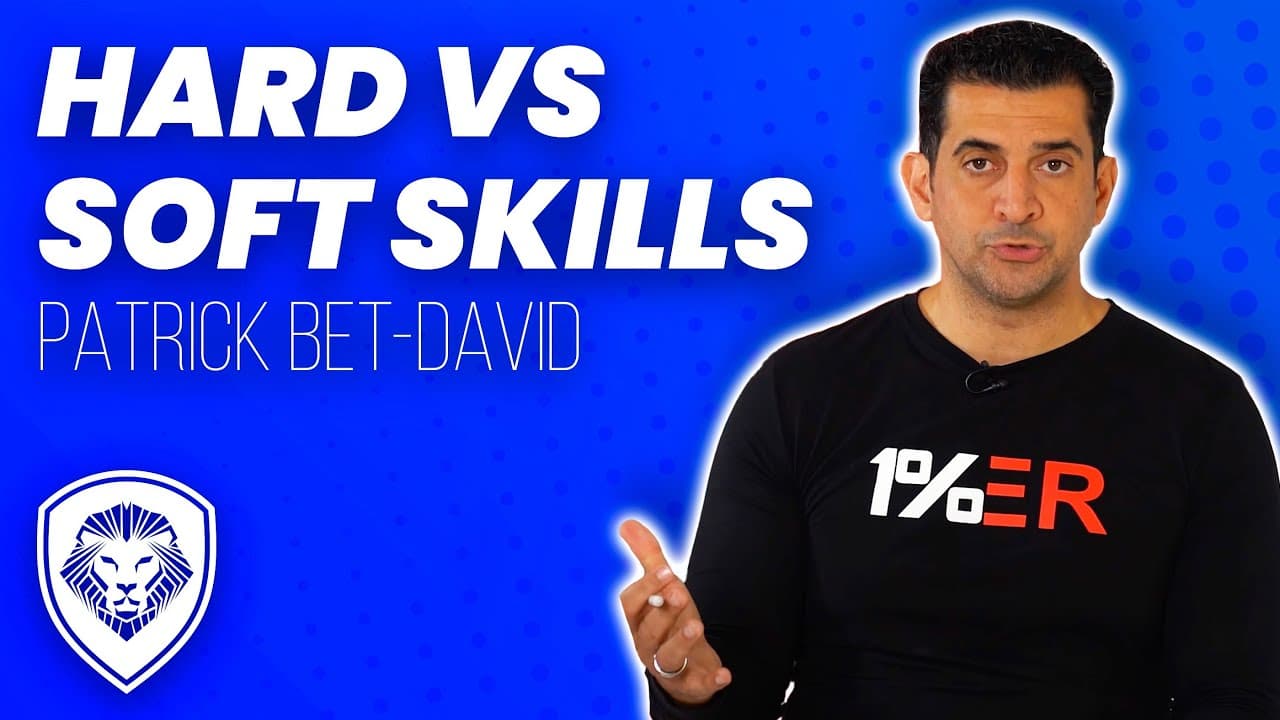
Trust and soft skills matter as much as, or more than, pure hard skills in successful teams. Hire people who are highly trusted and capable with people, and be prepared to manage or separate those who are technically skilled but low in trust or teamwork. The market rewards reliability, attitude, and coachability alongside expertise.
Transcript
so let me ask you a question when it comes down to hiring somebody what's more important to you somebody you trust a hundred percent or somebody who is very specialized in their skill maybe one of the best to do it but you can only choose between trust and skill or somebody who's got very good soft skills but terrible hard skills which one do you v... Read More
Key Insights
- Trust and expertise are both valuable but the best teams maximize both, avoiding extreme cases where trust or skill alone dominates.
- The ideal employee is a high trust, high skill superstar who is reliable, coachable, and a strong teammate.
- Low trust and high skill creates friction and requires isolation or separation to prevent negative impact on others.
- High trust with low skill can be forgiving initially but needs coaching and development to reach full potential.
- High skill with low trust is risky, often requiring independent work and close monitoring to prevent conflicts.
- Market demand favors soft skills such as attitude, reliability, and collaboration, especially in team-based environments.
- Great companies grow by investing in people who exhibit trust, reliability, and teachability over time, rather than chasing talent alone.
- Regularly evaluating people against a trust versus skill framework helps leadership make clearer, more objective decisions.
- More videos from this channel:
- More from this channel: Valuetainment
Install to Summarize YouTube Videos and Get Transcripts
Explore YouTube Video Summarizer or Get YouTube Transcript Extractor
Questions & Answers
Q: How to decide between trust and skill when hiring for a team
The decision hinges on balancing two axes: trust and skill. High trust and high skill is the ideal, creating a superstar who both performs well and collaborates effectively. If trust is high but skill is lacking, invest in coaching and targeted development. If skill is high but trust is low, consider roles that limit interpersonal impact or provide closer supervision. In any case, prioritize long-term team cohesion and reliability to deliver consistent results.
Q: Why is soft skill often valued more in today’s market
Soft skills like attitude, reliability, and teamwork influence how well people work with others and adapt to changes. The speaker emphasizes that the market rewards people who are good teammates, coachable, and able to work across personalities. Even technically skilled individuals can be held back if they cannot collaborate effectively, making soft skills a persistent differentiator in hiring decisions.
Q: What happens when you have a highly skilled but untrustworthy employee
A highly skilled but untrustworthy employee can become a liability, potentially slowing or harming team performance. The recommended approach is to isolate them in roles that require minimal interaction with others, or to address the trust gap through development plans if feasible. The key is to prevent negative influence on the broader team while still leveraging their expertise where appropriate.
Q: How should managers handle high-trust low-skill workers
High-trust, low-skill workers should be supported with coaching to build skill while leveraging their reliability. They are valuable because trust reduces friction and accelerates development, but the focus should remain on upskilling so they can contribute more substantially. If rapid growth is not possible, provide clear paths and ensure their responsibilities align with their strengths.
Q: What is the recommended strategy for underperforming trusted employees
The strategy is not to abandon trusted individuals but to set clear performance expectations and coaching plans. If progress stalls, leaders should reassign roles to align strengths with needs or phase them out if necessary to protect overall team health. The underlying principle is to protect the organization by maintaining a high-trust culture while ensuring performance parity.
Q: How can leaders use the infographic mentioned in the video
The infographic serves as a decision aid to visualize the tradeoffs between trust and skill. Leaders can map current team members along the trust and skill axes, identify gaps, and prioritize development or hiring actions that push the team toward high trust and high skill. Using a visual aid helps communicate criteria clearly to the team.
Q: What did Simon Sinek’s example add to the discussion
The example cites Navy SEALs valuing running mates and balancing trust with specialized skill, reinforcing that trust is crucial even in high-stakes environments. It supports the broader message that teams perform best when members are both trustworthy and capable, and that neglecting either dimension can undermine mission success.
Q: What is the practical takeaway for building a strong team
The practical takeaway is to pursue a workforce with high trust, strong soft skills, reliability, and coachability, while also maintaining a pipeline of individuals with strong hard skills. Regularly evaluate people against this framework, have honest discussions, and be ready to make tough calls to keep the team aligned with long-term goals.
Summary & Key Takeaways
-
A practical framework is presented that weighs trust against specialized skill to determine who to hire and retain. The approach emphasizes high trust and strong soft skills as the core driver of team performance, while recognizing the role of hard skills in technical tasks. The speaker shares real-world examples and an infographic to guide decisions.
-
The content contrasts three archetypes: high trust with high skill, high trust with low skill, and low trust with high skill, arguing that the ideal hires are high trust and high skill, while practical limitations may require situational adjustments.
-
The video encourages leaders to inventory their teams, measure trust and skill levels, and act to optimize the balance for long-term company performance, including difficult decisions about letting underperforming trusted staff go.
Read in Other Languages (beta)
Share This Summary 📚
Summarize YouTube Videos and Get Video Transcripts with 1-Click
Try YouTube Summary with ChatGPT & Claude or YouTube Transcript Generator
Explore More Summaries from Valuetainment 📚

Summarize YouTube Videos and Get Video Transcripts with 1-Click
Try YouTube Summary with ChatGPT & Claude or YouTube Transcript Generator