How to Build a One-Page Annual Business Plan
TL;DR
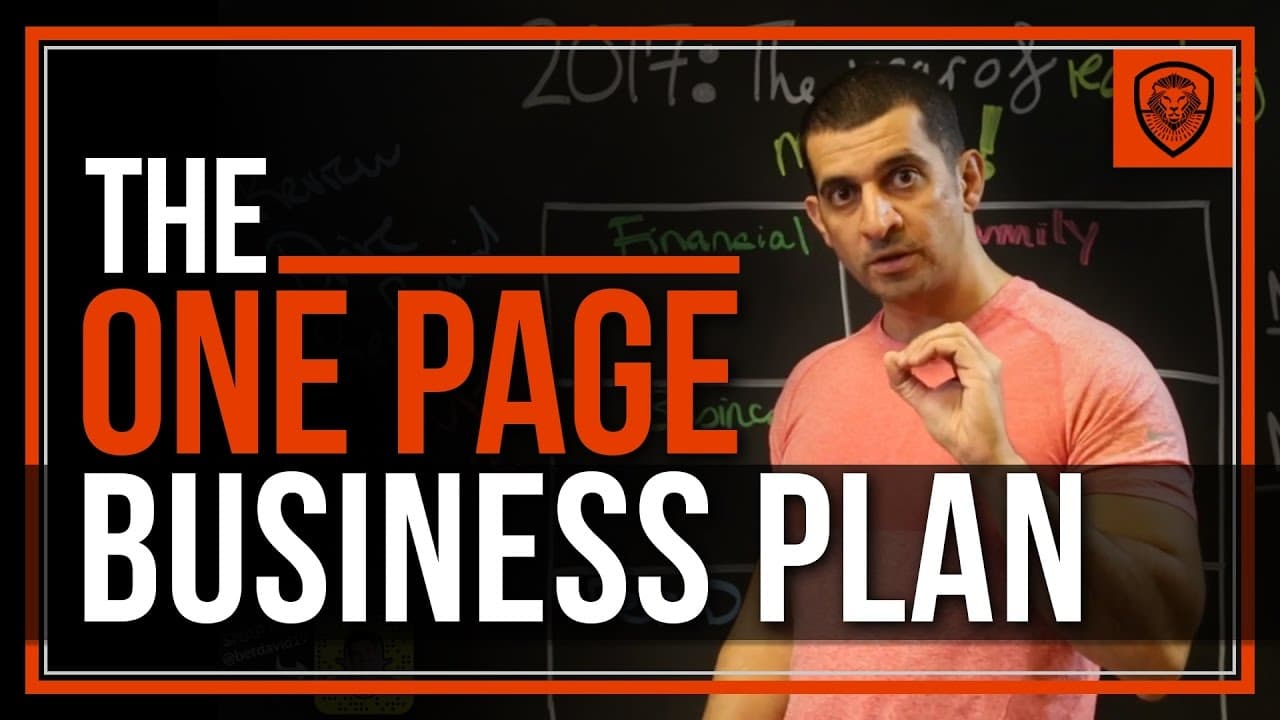
Review the previous year before planning the next one, identifying what worked, what failed, and which recurring behaviors you can control. Then create a detailed plan that connects business targets to a mathematical formula, and condense it into a one-page annual campaign covering business, finances, relationships, health, spirituality, and personal development, with three habits and three goals for each area.
Transcript
For the longest time I didn't like writing Here's why. Because every time it came time to write a teacher from Jr. high school would say, "Patrick, Write up a business plan." And I'm sitting here saying, wait a minute. First of all, I don't know how to write a Secondly, I don't think it works. I don't think it's effective. I don't think this thing'... Read More
Key Insights
- A useful annual plan begins with an honest review of the previous year. Recording what was good, bad, and ugly reveals mistakes and trends that would otherwise be carried forward into another year without examination or correction.
- Business performance is connected to finances, family relationships, health, spirituality, and personal development. Conflict, financial disorder, low energy, pain, or declining health can affect concentration, confidence, sales presentations, and the ability to operate a business effectively.
- Poor results usually point to either insufficient effort or an ineffective strategy. The recommended review emphasizes what the planner can control instead of automatically blaming the market or other external conditions for missed goals.
- Clarity is necessary before goals can guide action. Decisions about family, health, finances, personal growth, and business should reflect what the person actually wants, rather than what friends, social expectations, or general enthusiasm suggest they should pursue.
- A detailed business plan should identify required systems, personnel, leadership, operations, and revenue. Its financial target should be translated into a mathematical formula that connects specific activities and resources with the amount the business intends to produce.
- A one-page plan is a condensed reference, not a replacement for deeper analysis. The detailed plan gathers the reasoning and calculations, while the single page captures the priorities that should be reviewed repeatedly during the year.
- An annual theme turns the year into a distinct campaign. Naming it around growth, expansion, explosion, or recreating oneself gives the plan a central identity and helps connect its separate goals to one overall direction.
- Three habits and three goals per category create a memorable limit. Habits describe repeated behaviors, such as tracking finances or reading daily, while goals describe outcomes, such as reaching a target weight, finding a mentor, or completing a marathon.
- More videos from this channel:
- More from this channel: Valuetainment
Install to Summarize YouTube Videos and Get Transcripts
Explore YouTube Video Summarizer or Get YouTube Transcript Extractor
Questions & Answers
Q: How do you write a one-page annual business plan?
Start by reviewing the previous year across business, finances, family or relationships, health, spirituality, and personal development. Record what was good, bad, and ugly, then decide what you want next year. Build a detailed business plan with required people, systems, resources, and a mathematical revenue formula. Finally, condense the priorities onto one page with an annual theme, three habits, and three goals for every category.
Q: Why should you review the previous year before making a business plan?
Reviewing the previous year exposes recurring behaviors, mistakes, and missed commitments that can undermine the next plan. The process asks what worked, what failed, what became ugly, and what could have been done differently. It also helps determine whether disappointing results came from inadequate effort or a weak strategy. Without this examination, a person may repeat the same patterns while expecting a different annual outcome.
Q: What life categories should a one-page business plan include?
The plan should cover business, finances, family or personal relationships, health, spirituality, and personal development. These areas belong together because conditions outside the company can directly affect business performance. Financial disorder can create stress, relationship conflict can disrupt focus before a sales presentation, and poor health can reduce energy. Reviewing the categories together creates a more complete picture of what must change.
Q: What is the good, bad, and ugly planning method?
The good, bad, and ugly method is an honest assessment of each life and business category during the previous year. For finances, relationships, health, spirituality, personal development, and business, write what went well, what went poorly, and what became especially damaging. Then identify your responsibility, the trends that kept appearing, and the actions you could control. The resulting details become evidence for planning the following year.
Q: How do you turn a revenue goal into an actionable business plan?
Begin with the amount the business needs to produce, then identify what is required to reach it. The transcript's example asks whether the company needs better systems, seven strong salespeople, a sales leader, an operations person, or additional money for expansion. Next, create a mathematical formula in which defined activities and resources lead to the revenue target. That calculation belongs in the longer, detailed business plan.
Q: What is the difference between the detailed plan and the one-page plan?
The detailed plan contains the research, reflection, requirements, and mathematical formula behind the annual targets. It explains how the business will reach its goals and what people, systems, operations, and resources are needed. The one-page version condenses that work into a document that can be reviewed repeatedly. It highlights the year's theme and the most important habits and goals across all six categories.
Q: How many habits and goals should each planning category have?
Each category should contain no more than three new habits and three goals. The limit makes the plan easier to remember and prevents each section from becoming overloaded. A financial habit might be reviewing a credit report monthly or tracking investments, while a health habit might be exercising three times a week. Goals describe intended results, such as saving a chosen amount, reaching a target weight, or running a marathon.
Q: Why should an annual business plan have a theme?
An annual theme treats each year as a new campaign and gives the plan a recognizable identity. The theme should state what the year is intended to represent, using an idea such as growth, expansion, explosion, or recreating oneself. Placing that title at the top of the one-page plan helps unify the separate priorities in business, finances, relationships, health, spirituality, and personal development.
Summary & Key Takeaways
-
Begin by reviewing the previous year instead of immediately writing next year's plan. Examine the good, bad, and ugly results in business, finances, relationships, health, spirituality, and personal development. Identify recurring mistakes, distinguish weak effort from weak strategy, and focus on factors that you can personally control and change.
-
Define what you want in each area with enough clarity to make decisions and set measurable targets. For the business category, identify the systems, people, leadership, operations, and income required. Break the financial target into a mathematical formula showing how specific activities and resources can produce the intended annual result.
-
Condense the detailed analysis into a one-page plan titled as an annual campaign, such as a year of growth or reinvention. Give every life category no more than three new habits and three goals. Review this shorter document multiple times throughout the year so its priorities remain memorable and actionable.
Read in Other Languages (beta)
Share This Summary 📚
Summarize YouTube Videos and Get Video Transcripts with 1-Click
Try YouTube Summary with ChatGPT & Claude or YouTube Transcript Generator
Explore More Summaries from Valuetainment 📚





Summarize YouTube Videos and Get Video Transcripts with 1-Click
Try YouTube Summary with ChatGPT & Claude or YouTube Transcript Generator