What Was the Cold War and Its Impact on the World?
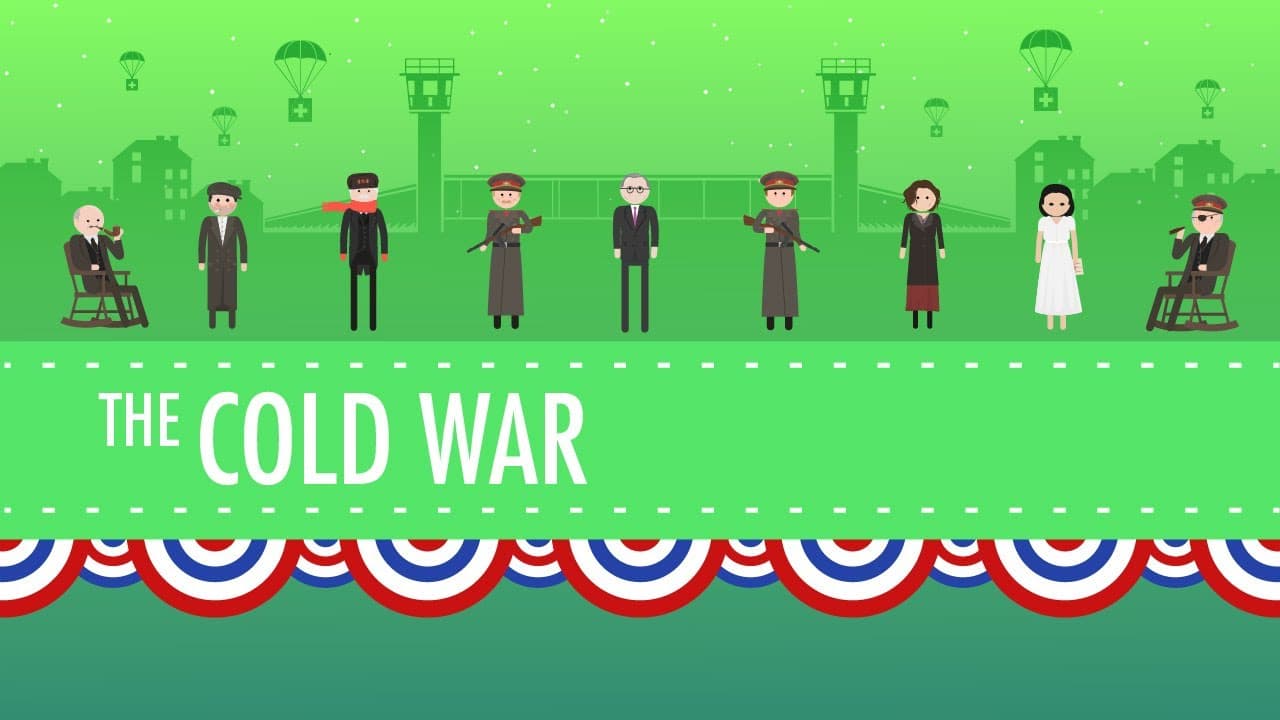
TL;DR
The Cold War was a geopolitical struggle between the USA and USSR from 1945 to 1990, marked by ideological conflicts and proxy wars, including Korea and Vietnam. Its legacy includes the U.S. adoption of the containment policy, the Truman Doctrine, and the Marshall Plan, which aimed to curb communism and led to significant military, political, and economic interventions globally.
Transcript
Hi I’m John Green; this is Crash Course U.S. history and today we’re gonna talk about the Cold War. The Cold War is called “Cold” because it supposedly never heated up into actual armed conflict, which means, you know, that it wasn’t a war. Mr. Green, Mr. Green, but if the War on Christmas is a war and the War on Drugs is a war… You’re not going to... Read More
Key Insights
- The Cold War, lasting from 1945 to 1990, was marked by ideological and strategic conflicts between the USA and USSR, involving real wars in Korea and Vietnam.
- The USA's containment policy aimed to prevent the spread of communism, leading to significant military and political interventions worldwide.
- The Truman Doctrine established the USA's role in supporting anti-communist regimes globally, often regardless of their democratic status.
- The Marshall Plan was a significant economic initiative to rebuild Europe post-WWII, preventing the spread of communism by stabilizing economies.
- The Berlin Crisis highlighted geopolitical tensions, leading to the division of Germany and the eventual construction of the Berlin Wall.
- Domestic policies in the USA were heavily influenced by anti-communist sentiment, affecting social programs and leading to the Red Scare and McCarthyism.
- The Cold War spurred significant investments in science, technology, and infrastructure, including the interstate highway system as a national security measure.
- Espionage played a crucial role in the Cold War, with notable cases like Klaus Fuchs and the Rosenbergs contributing to the Soviet nuclear capabilities.
Install to Summarize YouTube Videos and Get Transcripts
Explore YouTube Video Summarizer or Get YouTube Transcript Extractor
Questions & Answers
Q: What was the primary objective of the USA's containment policy?
The containment policy aimed to prevent the spread of communism beyond where it already existed. This strategy was driven by the belief that communism posed a direct threat to free-market democracies and, by extension, to the United States' global influence and security.
Q: How did the Marshall Plan aim to combat communism in Europe?
The Marshall Plan sought to rebuild war-torn Europe by providing economic aid to stabilize economies and prevent the spread of communism. By alleviating poverty and chaos, the plan aimed to create a prosperous, capitalist Europe that would resist communist ideologies.
Q: What was the significance of the Berlin Crisis during the Cold War?
The Berlin Crisis underscored the tensions between the USA and USSR, leading to the division of Germany into East and West. It highlighted the geopolitical struggle for influence in Europe and eventually resulted in the construction of the Berlin Wall, symbolizing the ideological divide.
Q: How did the Cold War influence US domestic policy?
The Cold War fueled anti-communist sentiment, leading to policies that curtailed civil liberties and promoted loyalty tests, exemplified by McCarthyism. It also influenced economic policies, with increased investments in science, technology, and infrastructure, justified as national security measures.
Q: What role did espionage play in the Cold War?
Espionage was crucial in the Cold War, with both superpowers seeking to gain intelligence on each other's capabilities. Notable spies like Klaus Fuchs and the Rosenbergs provided the USSR with nuclear secrets, accelerating their atomic program and intensifying the arms race.
Q: Why was the Truman Doctrine significant in the context of the Cold War?
The Truman Doctrine marked a significant shift in US foreign policy, committing to support anti-communist regimes worldwide. It established the ideological framework for US interventions, framing the Cold War as a struggle between freedom and tyranny, justifying military and economic aid.
Q: What were some cultural impacts of the Cold War in the United States?
Culturally, the Cold War influenced American media, with government-backed anti-communist films and propaganda promoting American values. The fear of communism also permeated society, affecting public opinion and leading to the inclusion of 'under God' in the Pledge of Allegiance as a counter to atheistic communism.
Q: How did the Cold War affect global geopolitical dynamics?
The Cold War reshaped global geopolitics, creating a bipolar world divided between the US-led capitalist bloc and the Soviet-led communist bloc. This division influenced international relations, leading to proxy wars, military alliances like NATO, and significant political and economic interventions in various countries.
Summary & Key Takeaways
-
The Cold War was a prolonged period of geopolitical tension between the United States and the Soviet Union, characterized by ideological conflicts and strategic power plays. It began after WWII and involved numerous proxy wars around the globe.
-
The USA adopted a containment policy to curb the spread of communism, leading to military and financial interventions in various regions. The Truman Doctrine and Marshall Plan were key strategies in this global effort.
-
Domestically, the Cold War influenced American politics and society, leading to the Red Scare and McCarthyism. It also prompted investments in technology and infrastructure, reshaping the nation's priorities and capabilities.
Read in Other Languages (beta)
Share This Summary 📚
Summarize YouTube Videos and Get Video Transcripts with 1-Click
Try YouTube Summary with ChatGPT & Claude or YouTube Transcript Generator
Explore More Summaries from CrashCourse 📚




Summarize YouTube Videos and Get Video Transcripts with 1-Click
Try YouTube Summary with ChatGPT & Claude or YouTube Transcript Generator