What Would Make a Planet Better for Life?
TL;DR
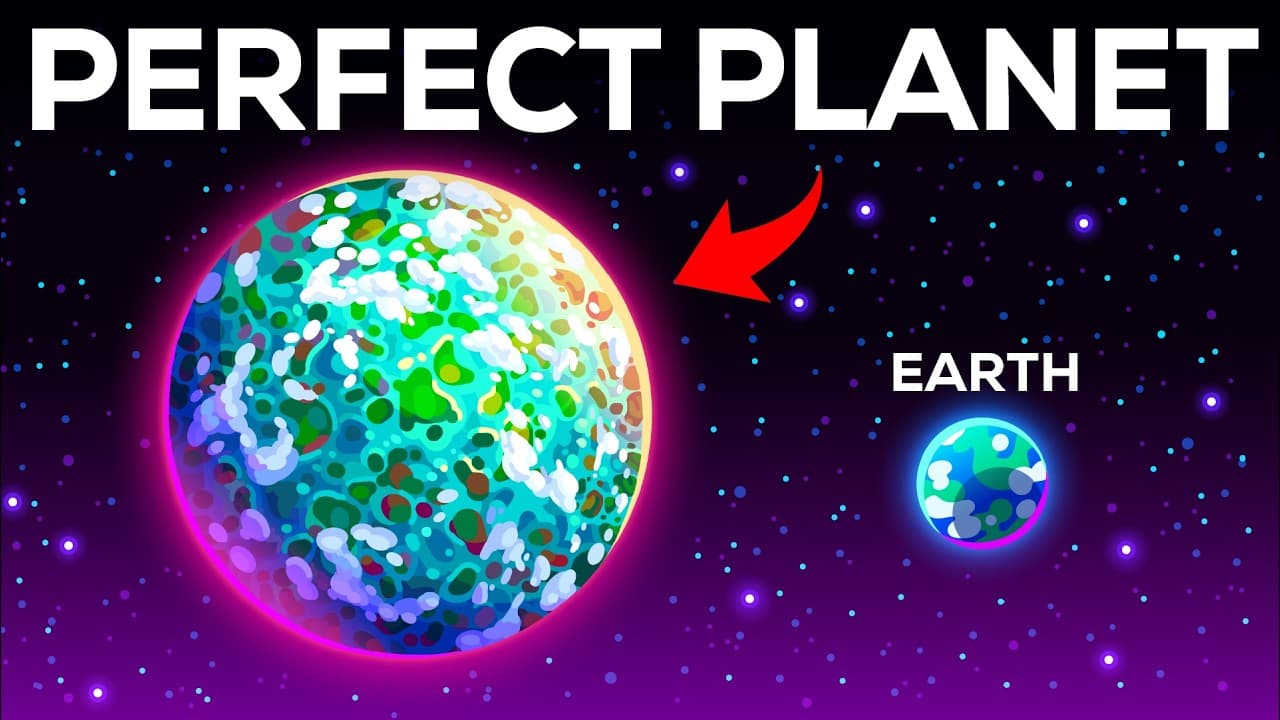
A superhabitable planet could support more biomass and biodiversity than Earth by orbiting a stable orange dwarf and combining a protective magnetic field, plate tectonics, warm temperatures, fragmented land, a dense atmosphere, and shallow oceans. The imagined planet Hestia maximizes coastlines, illuminated seafloor, humid forests, isolated habitats, and ecological disruption, creating abundant niches in the land, sea, and sky.
Transcript
Our hottest update for Star Birds is out now! Earth seems like a paradise for life but it's actually kind of mid. Big parts of it are covered by hostile deserts of ice, fire, rock or darkness. Could there be a planet that is not just more suitable for life, but ideal? So perfect for the emergence of life, filled with not just biomass but also bio... Read More
Key Insights
- Orange dwarfs may offer better long-term conditions for life because their energy output is stable, their radiation tends to be less aggressive, and they can live for up to 70 billion years, giving evolution far more time than a yellow dwarf such as the Sun.
- Hestia is designed as a super-Earth with 1.3 times Earth’s radius, 70% more surface area, almost twice Earth’s mass, and 20% stronger surface gravity, providing more physical space for ecosystems while making organisms at the surface feel correspondingly heavier.
- A strong magnetic field is essential to Hestia because it protects the surface from solar storms and cosmic radiation while helping prevent atmospheric loss. The imagined field comes from a massive metallic core spinning within a liquid mantle.
- Plate tectonics supports long-term habitability by removing carbon dioxide from the surface, releasing internal heat without rare catastrophic eruptions, and circulating water, minerals, and other elements. These processes prevent Hestia from following the hostile path attributed to Venus.
- Fragmented land increases biodiversity because islands isolate populations and create numerous specialized habitats. Hestia has dozens of continents and millions of islands, ensuring that all land remains near saltwater or freshwater and preventing the formation of dry continental interiors.
- A warmer, wetter climate increases terrestrial biomass because Hestia is about 5°C warmer than Earth and lacks frozen polar regions. Its humid conditions allow tropical forests to cover the land while heavy rainfall limits the ecosystem-wide danger created by oxygen-enhanced wildfires.
- A dense atmosphere makes flight easier because Hestia’s air has just under one and a half times Earth’s pressure. Despite stronger gravity, animals can remain airborne with smaller wings and less energy, allowing many evolutionary branches to occupy the sky.
- Shallow oceans expand productive marine habitat because sunlight reaches only about 200 meters into water. Hestia’s oceans are mostly continental shelves between one and two hundred meters deep, placing nearly all their water and seafloor within the sunlight zone.
Install to Summarize YouTube Videos and Get Transcripts
Explore YouTube Video Summarizer or Get YouTube Transcript Extractor
Questions & Answers
Q: What makes a planet more habitable than Earth?
A planet could be more habitable than Earth if it provides stable conditions for longer, protects its atmosphere and surface, and creates more biologically productive habitats. Hestia combines an orange dwarf star, a magnetic field, plate tectonics, warm humidity, fragmented continents, a dense atmosphere, shallow oceans, and extremely long coastlines. Together, these features increase accessible energy, nutrients, ecological niches, biomass, and biodiversity.
Q: Why would an orange dwarf be a good star for life?
An orange dwarf could support life especially well because its energy output is described as very stable, its radiation tends to be less aggressive than that of a young red dwarf, and it can live for up to 70 billion years. That long lifespan gives life extensive time to emerge, evolve, and diversify, without the relatively short habitable window associated with yellow dwarfs such as the Sun.
Q: Why are red dwarfs less suitable for habitable planets?
Red dwarfs live for trillions of years, but their low brightness places habitable zones close to the star. Planets there are likely to become tidally locked, potentially creating a hot hemisphere and a frozen hemisphere. Young red dwarfs also produce dangerous radiation that can sterilize planetary surfaces or boil oceans away, making their longevity less useful for life.
Q: How do magnetic fields and plate tectonics support life?
A magnetic field shields a planet from solar storms and cosmic radiation while helping keep its atmosphere from being stripped away. Plate tectonics moves surface material into the planet and returns water, minerals, and useful elements to the surface. It also removes carbon dioxide and releases internal heat more gradually, reducing the risk of extreme warming and catastrophic volcanic episodes.
Q: Why would islands increase biodiversity on Hestia?
Islands create physical separation between populations, allowing organisms to adapt independently to local conditions and fill specialized ecological niches. Hestia’s fragmented plates produce long island arcs, dozens of continents, and millions of islands in many sizes and shapes. This arrangement also maximizes coastlines and keeps every land area close to saltwater or freshwater, avoiding the resource-poor interiors found within large continents.
Q: How would Hestia’s atmosphere affect animal life?
Hestia’s greater mass holds a thicker atmosphere with just under one and a half times Earth’s pressure, along with more oxygen and carbon dioxide. Extra oxygen supports faster metabolisms, higher activity, and larger animals that breathe through diffusion. Dense air also reduces the energy cost of flight, allowing many kinds of animals, including enormous sky-dwelling creatures, to evolve smaller wings and remain airborne.
Q: Why are shallow oceans better for marine ecosystems?
Shallow oceans keep more water and seafloor within reach of sunlight. On Earth, sunlight penetrates only about 200 meters, while the average ocean is 3,700 meters deep, leaving 95% of the sea in permanent darkness. Hestia’s oceans are mainly one to two hundred meters deep, so plankton can support food webs across nearly the entire marine environment.
Q: Why does Hestia have much longer coastlines than Earth?
Hestia has fragmented continents, millions of islands, and predominantly shallow seas, producing coastlines 45 times longer than Earth’s. Coastal zones bring terrestrial and marine ecosystems together, mix nutrients, and create feeding relationships across both environments. Although coastlines occupy only 7% of Earth’s marine area, they contain more than half of its marine life, illustrating their ecological importance.
Summary & Key Takeaways
-
Hestia is an imagined superhabitable planet orbiting an orange dwarf, a stable type of star that can live for up to 70 billion years. With 1.3 times Earth’s radius, nearly twice its mass, and protective geological systems, the planet offers more surface area and long-term conditions for life to evolve and diversify.
-
Hestia’s fragmented continents and millions of islands maximize access to water, eliminate deserts, and isolate populations in countless ecological niches. Temperatures about 5°C warmer than Earth produce tropical forests and ice-free polar regions, while mild seasons, 36-hour days, and four moons provide recurring changes without excessively disruptive instability.
-
A thick, oxygen-rich atmosphere makes flight less energetically costly and supports large, active animals, while Hestia’s shallow oceans keep nearly the entire seafloor within the sunlight zone. Coastlines 45 times longer than Earth’s connect marine and terrestrial ecosystems, concentrating nutrients and creating habitats for potentially vast numbers of specialized species.
Read in Other Languages (beta)
Share This Summary 📚
Summarize YouTube Videos and Get Video Transcripts with 1-Click
Try YouTube Summary with ChatGPT & Claude or YouTube Transcript Generator
Explore More Summaries from Kurzgesagt – In a Nutshell 📚

Summarize YouTube Videos and Get Video Transcripts with 1-Click
Try YouTube Summary with ChatGPT & Claude or YouTube Transcript Generator