How to Improve Focus and Concentration
TL;DR
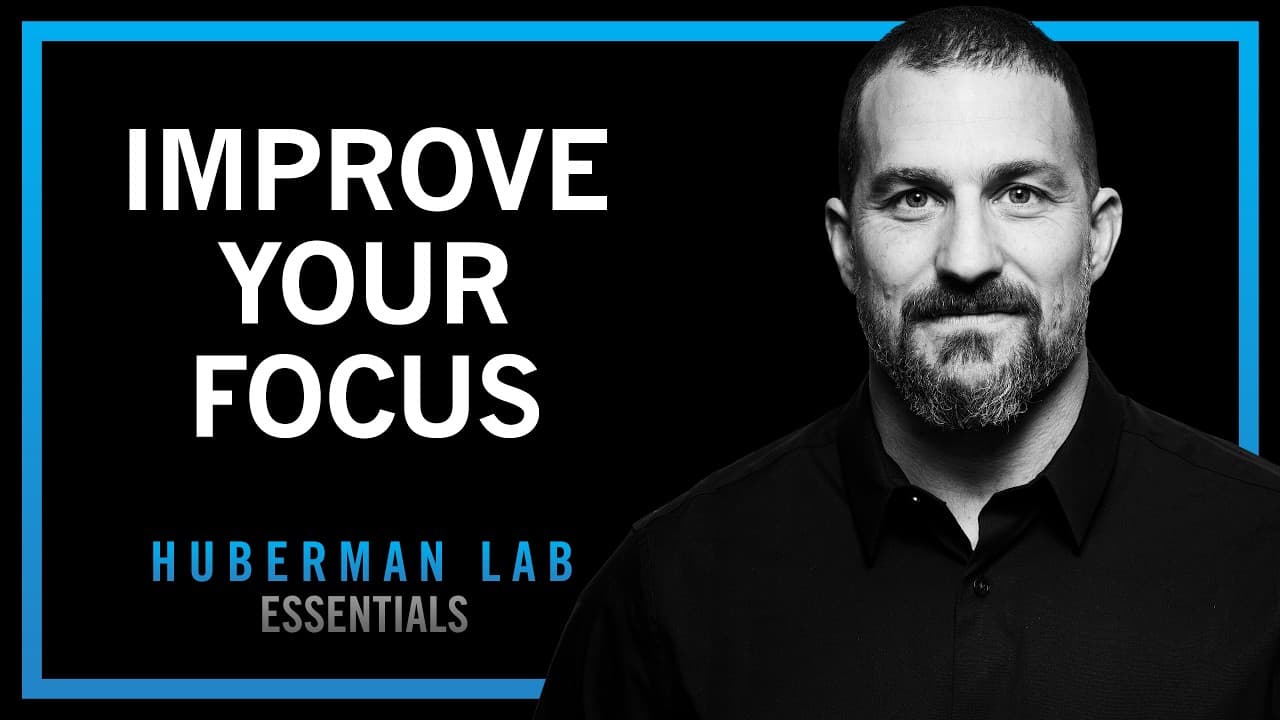
Improving focus and concentration involves optimizing sleep, using sound-based tools like white noise, and engaging in structured work sessions. Neurochemicals such as epinephrine, acetylcholine, and dopamine play crucial roles. Techniques like meditation, visual focus exercises, and deliberate cold exposure can enhance attention. Supplements and nutrition also support cognitive function, while prescription treatments for ADHD offer additional options.
Transcript
Welcome to Huberman Lab Essentials, [music] where we revisit past episodes for the most potent and actionable science-based tools for mental health, physical health, and performance. I'm Andrew Huberman, and I'm a professor of neurobiology and opthalmology at Stanford School of Medicine. Today we are discussing focus and concentration and tools for... Read More
Key Insights
- Epinephrine, acetylcholine, and dopamine are key neurochemicals for focus and concentration.
- Quality sleep is essential for cognitive performance and focus.
- White noise and pink noise can aid in transitioning into focused states.
- Structured work sessions should align with 90-minute ultradian cycles.
- Fasting and meal timing affect focus; avoid large meals before focus sessions.
- Caffeine can enhance focus but should be consumed early in the day.
- Deliberate cold exposure increases epinephrine, enhancing focus.
- Meditation and visual focus exercises train the brain to refocus attention.
Install to Summarize YouTube Videos and Get Transcripts
Explore YouTube Video Summarizer or Get YouTube Transcript Extractor
Questions & Answers
Q: How do epinephrine, acetylcholine, and dopamine affect focus?
Epinephrine increases alertness and energy, acetylcholine acts as an attentional spotlight, and dopamine enhances motivation. Together, these neurochemicals enable precise and sustained focus, allowing individuals to concentrate deeply and refocus as needed. Their combined action supports the neural circuits responsible for attention and concentration.
Q: What role does sleep play in focus and concentration?
Quality sleep is vital for cognitive performance, affecting focus, concentration, and overall brain function. Adequate sleep modulates various processes in the brain, and consistently getting good sleep improves mental clarity and the ability to concentrate. Sleep deprivation can impair these abilities, highlighting the importance of sleep in maintaining focus.
Q: How can white noise and pink noise aid concentration?
White noise and pink noise help individuals transition into focused states by amplifying neuronal activity in the prefrontal cortex, which is crucial for directing focus. These sound-based tools decrease the time required to enter a concentrated state, making it easier to achieve and maintain focus during cognitive tasks.
Q: What is the significance of ultradian cycles in work sessions?
Ultradian cycles, typically lasting around 90 minutes, are natural rhythms that govern brain and body activity. Aligning work sessions with these cycles allows for optimal focus and productivity. The first 5-10 minutes serve as a warm-up, with deep focus achieved as the cycle progresses, enhancing concentration and cognitive performance.
Q: How does fasting influence focus and concentration?
Fasting can enhance mental clarity by preventing the shift to a parasympathetic state that occurs after eating. While neurons thrive on glucose, a fasted state can improve focus, provided one is not distracted by hunger. Conversely, consuming too much food can lead to decreased focus due to increased parasympathetic activity.
Q: Can caffeine improve focus, and what are the considerations?
Caffeine, in doses of 100-400 mg, can enhance focus by increasing alertness and concentration. However, it should be consumed early in the day to avoid disrupting sleep architecture. Those sensitive to caffeine or prone to anxiety should start with lower doses to prevent adverse effects like increased heart rate or anxiety.
Q: How does deliberate cold exposure enhance focus?
Deliberate cold exposure, such as cold showers or baths, increases epinephrine and dopamine levels, which enhance focus and concentration. The cold stress narrows the visual field and promotes a tunnel-like focus, making it easier to concentrate on tasks. This method is a safe and effective way to boost attention without external stressors.
Q: What are the benefits of meditation and visual focus exercises?
Meditation, particularly a 13-minute daily practice, improves focus and concentration by training the brain to refocus attention. Visual focus exercises, which involve maintaining gaze on a single point, enhance cognitive focus by engaging the prefrontal cortex and eye fields. Both practices leverage neuroplasticity to strengthen focus over time.
Summary & Key Takeaways
-
Focus and concentration are driven by neurochemicals like epinephrine, acetylcholine, and dopamine. Enhancing these abilities involves optimizing sleep, using sound tools like white noise, and engaging in structured work sessions. Techniques such as meditation, visual focus exercises, and deliberate cold exposure can further improve attention.
-
Nutrition and supplements play a supporting role in cognitive function. Omega-3 fatty acids and creatine are beneficial, while caffeine should be used judiciously. Prescription treatments for ADHD, such as Adderall, can aid those with clinically diagnosed attention issues.
-
Deliberate defocusing is also crucial, allowing the brain to recover and improve focus when needed. Engaging in practices that encourage neuroplasticity can lead to long-term improvements in focus and concentration, helping to achieve desired cognitive states more efficiently.
Read in Other Languages (beta)
Share This Summary 📚
Summarize YouTube Videos and Get Video Transcripts with 1-Click
Try YouTube Summary with ChatGPT & Claude or YouTube Transcript Generator
Explore More Summaries from Andrew Huberman 📚

Summarize YouTube Videos and Get Video Transcripts with 1-Click
Try YouTube Summary with ChatGPT & Claude or YouTube Transcript Generator