Nobel lecture: Yoshinori Ohsumi, Nobel Laureate in Physiology or Medicine 2016

TL;DR
Autophagy degrades and recycles cellular components, releasing energy and recovering building blocks used to produce proteins, sugars, and fats. Yoshinori Ohsumi made the process experimentally accessible in baker’s yeast, identified genes essential for autophagy, and helped establish a broad understanding of its mechanisms and significance in physiology and disease.
Transcript
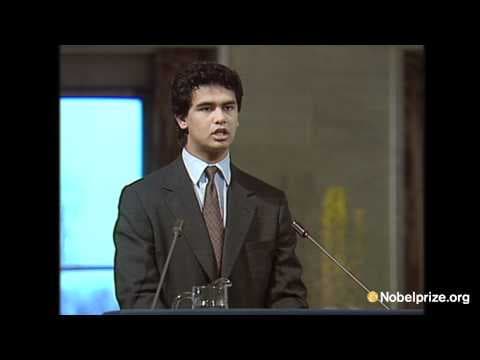
[Applause] Nob priz La excellencies ladies and gentlemen a very good afternoon to you all it's a great pleasure and privilege for me to welcome you all to kinska Institute at AAA for the 2016 Noel lecture in phys theology or medicine my name is Ken Dalman Wright and I serve as acting Vice Chancellor of kinska instituted during the noble week and pa... Read More
Key Insights
- Autophagy is an evolutionarily conserved physiological process in which eukaryotic cells digest part of their own contents, releasing energy and recycling building blocks required for producing proteins, sugars, and fats.
- Autophagic vesicles are double-membrane structures that sequester portions of cytoplasm and large cellular components, including protein aggregates and organelles, before fusing with lysosomes where their contents are destroyed.
- The molecular basis of autophagy remained largely unknown for almost 30 years because relatively few scientists studied the phenomenon after its initial observation more than 50 years before Ohsumi’s Nobel lecture.
- Baker’s yeast is a useful experimental organism for autophagy research because Ohsumi established that the process is conserved in yeast and can be visualized readily in this simple unicellular organism.
- Ohsumi’s screening method identified numerous genes essential for autophagy, enabling subsequent investigation of their products in yeast and mammalian cells and contributing to a comprehensive view of the process.
- The yeast vacuole is an important homeostatic compartment because Ohsumi demonstrated active transport of amino acids and calcium ions across its membrane, providing evidence that it regulates cellular metabolites and ions.
- Protein degradation is essential to cellular dynamics because the body must remove cells and proteins while producing replacements. Ohsumi illustrated this turnover by calculating that about 3 million blood cells and 1 million billion hemoglobin molecules are produced each second.
- Scientific curiosity guided Ohsumi toward less fashionable questions, including the poorly understood yeast vacuole, which was regarded as little more than a cellular garbage dump but appeared likely to have undiscovered physiological functions.
Install to Summarize YouTube Videos and Get Transcripts
Explore YouTube Video Summarizer or Get YouTube Transcript Extractor
Questions & Answers
Q: What is autophagy and what does it do in cells?
Autophagy, a term that literally means self-eating, is an evolutionarily conserved physiological process in eukaryotic cells. It digests portions of a cell’s own contents, allowing the cell to release energy and recycle building blocks needed to produce proteins, sugars, and fats. The process therefore contributes to the dynamic maintenance of living cells.
Q: How does autophagy deliver cellular material for degradation?
Autophagy uses vesicles surrounded by a double-layer membrane. These structures appear in the cytoplasm, grow around portions of cytoplasm, and can engulf large components such as protein aggregates and organelles. The completed vesicles ultimately fuse with lysosomes, the cell’s recycling compartments, where the enclosed cellular contents are destroyed and their constituent materials can be reused.
Q: Why was baker’s yeast important to Ohsumi’s autophagy research?
Baker’s yeast gave Ohsumi a simple unicellular experimental organism in which autophagy could be studied directly. He established that autophagy is conserved in yeast and can be visualized readily there. This accessibility allowed him to develop a screening method, identify genes essential for the process, and investigate the functions of the corresponding gene products.
Q: How did Ohsumi identify genes required for autophagy?
Ohsumi developed a screening method in baker’s yeast that enabled him to identify a large number of genes essential for autophagy. He and his colleagues then investigated the functions of the products encoded by those genes. Their work in yeast and mammalian cells helped produce a comprehensive understanding of autophagy’s mechanisms and supported further study of its physiological and disease-related importance.
Q: What role does the lysosome play in autophagy?
The lysosome serves as a cellular recycling compartment where components are destroyed. During autophagy, double-membrane vesicles sequester parts of the cytoplasm and large structures such as protein aggregates and organelles. These vesicles then fuse with lysosomes, exposing their cargo to the degradative environment and completing the destruction stage of the recycling process.
Q: What did Ohsumi discover about the yeast vacuole?
Ohsumi showed that the yeast vacuole is more than a cellular garbage dump. He demonstrated active transport of amino acids and calcium ions across the vacuolar membrane, providing evidence that the compartment supports homeostasis of metabolites and ions. His group also described a proton pump on the membrane that generates a proton gradient across it.
Q: Why is protein degradation necessary for living cells?
Protein degradation is necessary because cellular life depends on continuous turnover, not only continuous synthesis. Ohsumi emphasized that about 3 million blood cells are produced each second, along with about 1 million billion hemoglobin molecules. If the body remains dynamically balanced, equivalent amounts of cells and proteins must also be degraded as replacements are generated.
Q: How did Ohsumi’s scientific background lead him to study autophagy?
Ohsumi began with interests in chemistry and molecular biology, studied ribosomes and protein synthesis, investigated membrane-related questions, and encountered yeast during work on DNA replication initiation. After returning to Japan, he examined the yeast vacuole and its transport functions. When he established his own laboratory in 1988, he focused on the vacuole’s lytic function and its resemblance to the lysosome.
Summary
In this Nobel Lecture in Physiology or Medicine, Yoshinori Ohsumi discusses his research on autophagy, a process in which eukaryotic cells degrade and recycle their own cellular components. He explains how he discovered autophagy in yeast cells and identified the genes involved in the process. Ohsumi also discusses the importance of autophagy in maintaining cellular homeostasis and its relevance to various diseases. He concludes by emphasizing the need for both purpose-oriented science and curiosity-driven research.
Questions & Answers
Q: What is autophagy and why is it significant?
Autophagy is a cellular process in which cells degrade and recycle their own components. It is significant because it helps maintain cellular homeostasis and plays a role in various physiological functions, such as nutrient recycling and quality control of proteins and organelles.
Q: How did Yoshinori Ohsumi discover autophagy?
Ohsumi discovered autophagy by observing a dramatic change in yeast cells under starvation conditions. He noticed the formation of structures called autophagosomes, which engulfed cellular components and fused with the lysosome for degradation. This observation led him to further investigate autophagy and identify the genes involved.
Q: What are the key genes involved in autophagy?
Yoshinori Ohsumi and his team identified several key genes involved in autophagy, including ATG1, ATG5, ATG7, and ATG8. These genes encode proteins that are essential for the formation and progression of autophagosomes. ATG8, for example, plays a crucial role in membrane biogenesis.
Q: How is autophagy regulated?
Autophagy is regulated by a complex network of proteins and pathways. One key regulator is the nutrient-sensing protein mTOR, which inhibits autophagy when nutrients are abundant. Under starvation conditions, mTOR is inhibited, leading to the activation of autophagy. Other signaling pathways and post-translational modifications also play important roles in autophagy regulation.
Q: What is the importance of autophagy in disease?
Autophagy dysfunction has been implicated in various diseases, including neurodegeneration, infectious diseases, and cancer. Defects in autophagy can lead to the accumulation of damaged proteins and organelles, contributing to disease pathogenesis. Understanding the role of autophagy in disease could lead to the development of new therapeutic strategies.
Q: How has autophagy research evolved over time?
Autophagy research has become a major field in biology, with a rapid increase in the number of papers related to autophagy. The field has expanded to include not only the basic mechanisms of autophagy but also its physiological functions and its relevance to various diseases. This progress has been made possible by the collaborative efforts of researchers worldwide.
Q: What are some current research areas in autophagy?
Current research areas in autophagy include the study of selective autophagy, the identification of autophagy receptors, and the exploration of the role of autophagy in different organs and cell types. Researchers are also investigating the degradation products of autophagy and their effects on cellular metabolism.
Q: What challenges do scientists face in autophagy research?
Scientists working on autophagy face challenges in understanding the precise molecular details of the process and identifying the functions of individual autophagy-related proteins. There is also a need for more research on selective autophagy and the physiological significance of autophagy in different contexts.
Q: How can society support curiosity-driven research?
Yoshinori Ohsumi highlights the importance of nurturing curiosity-driven research alongside purpose-oriented science. Society should recognize the value of fundamental research and provide support and funding for scientists to pursue their intellectual curiosity. This approach can lead to unforeseen discoveries and advancements in science.
Q: What is the significance of receiving the Nobel Prize in Physiology or Medicine?
The Nobel Prize in Physiology or Medicine is a prestigious recognition of scientific contributions. For Yoshinori Ohsumi, receiving this prize acknowledges the significance of autophagy research and its contribution to fundamental science. It also serves as a motivation and encouragement for further advancements in the field.
Takeaways
Yoshinori Ohsumi's research on autophagy has provided valuable insights into a fundamental cellular process. Autophagy plays an essential role in maintaining cellular homeostasis, and its dysfunction is associated with various diseases. The rapid growth of autophagy research reflects its increasing recognition and relevance in biology. There are still many unanswered questions and challenges in understanding autophagy, particularly in selective autophagy and the precise molecular mechanisms. Society should support both purpose-oriented research and curiosity-driven science to foster further advancements in knowledge and understanding.
Summary & Key Takeaways
-
Autophagy, literally meaning self-eating, is an evolutionarily conserved process through which eukaryotic cells digest portions of their contents. Cellular material is enclosed within double-membrane vesicles that engulf cytoplasm, protein aggregates, and organelles, then fuse with lysosomes, where the captured contents are destroyed and their components can be recycled.
-
For almost 30 years, autophagy attracted relatively little research, leaving its molecular mechanisms and biological significance largely unknown. Ohsumi transformed the field by demonstrating that the process is conserved and readily observable in baker’s yeast, then developing a screening method that identified numerous genes required for autophagy and enabled analysis of their products.
-
Ohsumi’s scientific path moved from chemistry and molecular biology to ribosomes, membranes, yeast, and vacuoles. His studies showed that the yeast vacuole actively transports amino acids and calcium ions, supports metabolite and ion homeostasis, contains a proton pump, and functions as an acidic compartment containing hydrolytic enzymes, resembling the lysosome.
Read in Other Languages (beta)
Share This Summary 📚
Summarize YouTube Videos and Get Video Transcripts with 1-Click
Try YouTube Summary with ChatGPT & Claude or YouTube Transcript Generator
Explore More Summaries from Nobel Prize 📚

Summarize YouTube Videos and Get Video Transcripts with 1-Click
Try YouTube Summary with ChatGPT & Claude or YouTube Transcript Generator