How to Practice Stoicism During Difficult Times
TL;DR
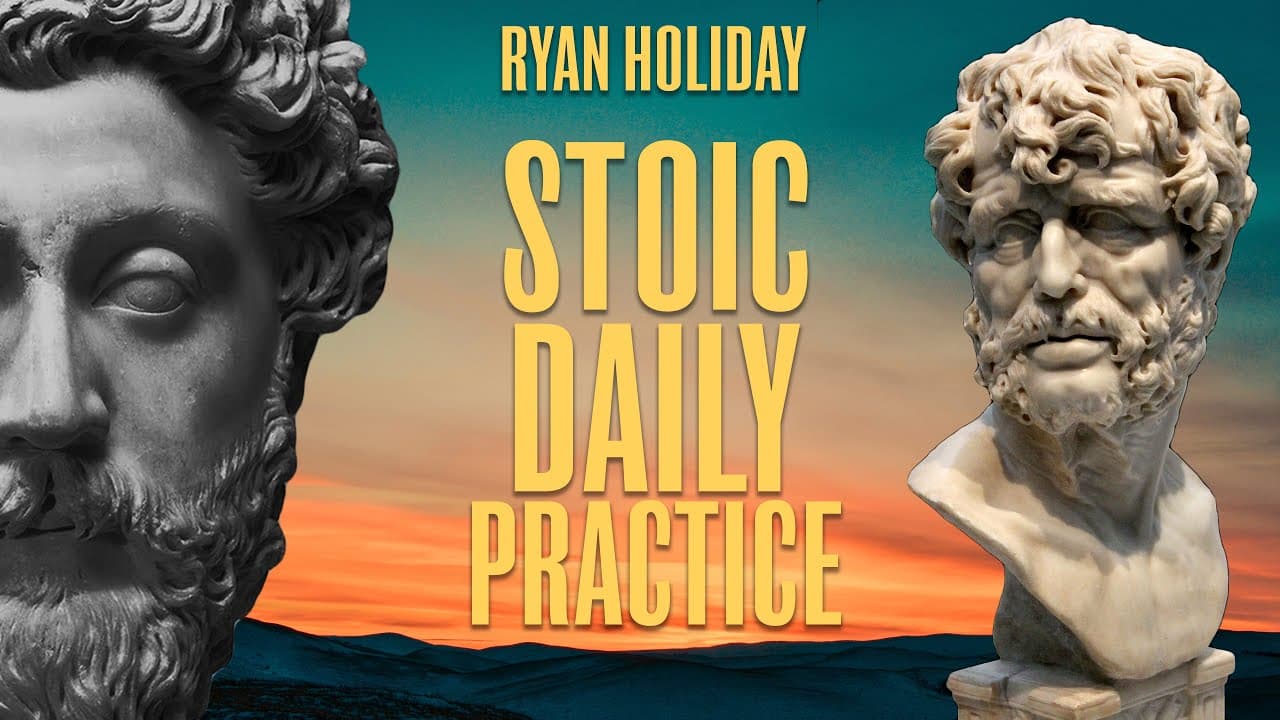
Use a daily Stoic quotation to focus on your response rather than trying to control external circumstances. Ryan Holiday describes this practice as a source of direction during the pandemic, with recurring reminders about resilience, accepting change, using time well, acting for the common good, and meeting adversity with a disciplined mind.
Transcript
não são raros estão em ver se vende arrepender né tapete de croche online and in different Market with all people in the greater New York City which is Fifty years old and playbacks free climax of Night and Black a walk in the Park and so I turn to you every single day is trying to be your One Direction and Steel Plastic is with a sequel and it is ... Read More
Key Insights
- A daily Stoic quotation can provide a consistent point of reflection during an extended crisis. Holiday used one quotation each day for seven months during the pandemic, turning a small repeated practice into a source of direction amid uncertainty.
- Stoicism is presented as a practical philosophy for daily life, not merely a subject to study. Its value comes from applying brief teachings to immediate choices, emotional reactions, relationships, responsibilities, and circumstances that cannot be personally controlled.
- External circumstances do not determine the quality of every personal response. The material emphasizes directing attention toward the mind, choices, and actions available in the present instead of becoming consumed by events that remain outside individual control.
- Change is treated as a natural and recurring part of life. Stoic practice helps a person meet changing seasons and difficult conditions without assuming that stability, comfort, or control can always be preserved.
- Time is limited, so using the present opportunity well matters more than wishful thinking. The transcript repeatedly invokes time running out, the present moment, and making the most of available circumstances, connecting Stoic reflection with purposeful action.
- Resilience is strengthened through repeated practice rather than a single moment of inspiration. Reading and considering one idea each day creates an ongoing routine that can reinforce steadiness throughout months of disruption and uncertainty.
- The common good is an important standard for action. Stoic reflection is not framed only as private emotional relief, because the material also connects a better life with relationships, community, responsibility, and conduct that benefits other people.
- Marcus Aurelius, Epictetus, and Seneca are the principal Stoic thinkers emphasized by the Daily Stoic. Their teachings are used to provide actionable guidance about resilience, strength, happiness, daily routines, and responding constructively to adversity.
- More videos from this channel:
- More from this channel: Daily Stoic
Install to Summarize YouTube Videos and Get Transcripts
Explore YouTube Video Summarizer or Get YouTube Transcript Extractor
Questions & Answers
Q: How can you practice Stoicism during difficult times?
Practice Stoicism by returning to a short philosophical reminder each day and applying it to your immediate circumstances. Focus on your own choices, responses, and responsibilities instead of demanding control over external events. Holiday’s pandemic practice used one quotation per day for seven months, creating a consistent routine for reflection, resilience, and purposeful action during uncertainty.
Q: Why did Ryan Holiday read one Stoic quote each day?
Ryan Holiday turned to a Stoic quotation each day as a source of direction during the pandemic. The daily format made the philosophy easy to revisit while conditions remained uncertain. Across seven months, the practice repeatedly redirected attention toward personal responses, the present moment, acceptance of change, constructive action, and the distinction between inner choices and external circumstances.
Q: What does Stoicism teach about external circumstances?
Stoicism teaches that external circumstances should not be allowed to control every inner response. The practical task is to recognize what can be directed personally, including choices, judgments, attention, and conduct. Instead of relying on the world to remain predictable, a person can work on responding to adversity with steadiness, discipline, and awareness of present responsibilities.
Q: How does a daily Stoic quotation build resilience?
A daily quotation builds resilience by making reflection repetitive and manageable. Each short reminder offers an opportunity to examine current reactions, reconsider what is controllable, and choose a constructive response. Holiday’s seven-month practice shows how consistency can sustain philosophical ideas through prolonged disruption, rather than leaving them as concepts encountered once and quickly forgotten.
Q: What is the role of change in Stoic practice?
Change is approached as a natural condition of life rather than an exceptional failure of plans. Stoic practice encourages a person to adjust the mind and response when seasons, circumstances, or opportunities change. This does not mean pretending hardship is pleasant. It means avoiding dependence on complete external stability and continuing to act deliberately within present conditions.
Q: Why is Stoicism described as a practical philosophy?
Stoicism is described as practical because it is meant to guide everyday conduct, routines, judgments, and responses to difficulty. The Daily Stoic focuses on applying teachings rather than treating them only as historical ideas. Its materials aim to offer actionable tools that help people become stronger, more resilient, and happier while handling ordinary responsibilities and unpredictable circumstances.
Q: Which philosophers are central to the Daily Stoic?
The Daily Stoic primarily focuses on Marcus Aurelius, Epictetus, and Seneca. Their ideas form the basis of its guidance on understanding Stoicism and practicing it in daily life. The teachings are presented through routines, quotations, and actionable reflections designed to address resilience, personal conduct, difficult circumstances, and the disciplined use of one’s attention.
Q: How does Stoicism connect personal strength with the common good?
Stoic practice connects personal discipline with conduct that considers other people. The material refers to living for the common good alongside themes of resilience, relationships, and individual responsibility. Personal strength is therefore not presented only as private endurance. It also supports better choices within families, friendships, communities, and situations where one person’s response can affect others.
Summary & Key Takeaways
-
Ryan Holiday describes turning to one Stoic quotation each day for seven months during the pandemic. The repeated practice offered direction while ordinary life felt uncertain. Rather than promising control over events, the quotations encouraged attention to personal choices, present responsibilities, the use of limited time, and responses to difficult external circumstances.
-
The central practice is simple: read a short philosophical reminder every day and apply it to the conditions directly in front of you. The material repeatedly connects Stoicism with resilience, clear thinking, acceptance of change, and deliberate action, making philosophy a daily routine rather than an abstract subject reserved for formal study.
-
The Daily Stoic presents Stoicism as a practical philosophy centered on Marcus Aurelius, Epictetus, and Seneca. Its stated purpose is to help people practice Stoicism in ordinary life and become stronger, more resilient, and happier. Holiday’s pandemic routine illustrates how recurring ideas can support steadiness during prolonged uncertainty.
Read in Other Languages (beta)
Share This Summary 📚
Summarize YouTube Videos and Get Video Transcripts with 1-Click
Try YouTube Summary with ChatGPT & Claude or YouTube Transcript Generator
Explore More Summaries from Daily Stoic 📚




Summarize YouTube Videos and Get Video Transcripts with 1-Click
Try YouTube Summary with ChatGPT & Claude or YouTube Transcript Generator