How to Build a Stoic Journaling Practice
TL;DR
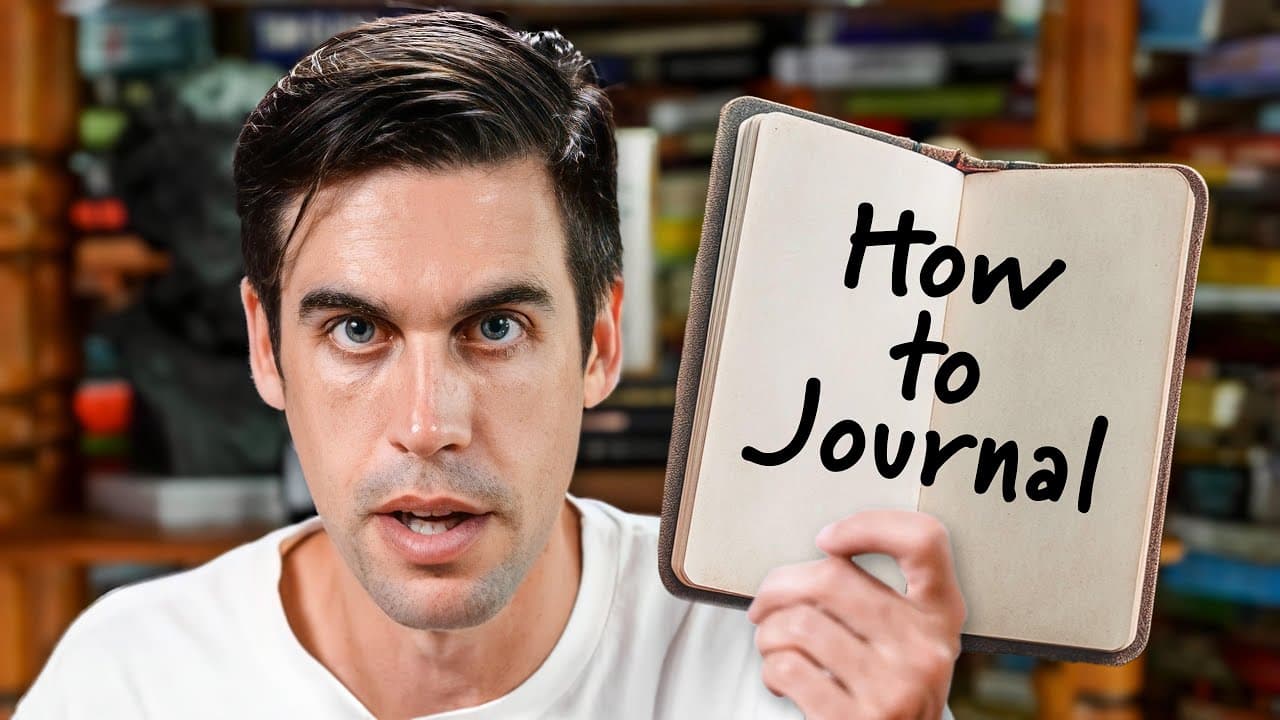
Start journaling now with one sentence, one thought, or a short list of daily events, using any notebook available. Write in the morning to prepare for likely difficulties or at night to review your conduct, process emotions, identify lessons, and decide how to respond better tomorrow. Consistency matters more than finding the perfect journal, pen, schedule, or elaborate method.
Transcript
in the year 170 at night on the front lines of the war in Germania Marcus Aurelius the emperor of Rome entered his tent perhaps it was before Dawn at his Palace or perhaps he stole a few seconds to himself at the games ignoring the Carnage of the Coliseum so what what was he doing what was the most important person in the world the last of the five... Read More
Key Insights
- The best way to begin journaling is to start immediately with whatever notebook is available. Choosing the ideal format, pen, or time can become another form of preparation that postpones the practice itself.
- A one-line-a-day journal makes consistency achievable because almost everyone can find time for one sentence. The entry can record what happened, what the writer thought, or what mattered most during the day.
- A daily journal can begin with simple tracking rather than deep reflection. Recording reading, push-ups, running, walking, workouts, meetings, or a few events can prime the mind and make more expansive writing easier.
- Morning journaling is preparation for the day ahead. Marcus Aurelius appears to have used his writing to anticipate obnoxious, meddling, ungrateful, dishonest, or jealous behavior and to prepare his own response before encountering it.
- Evening journaling is a structured review of conduct and experience. Seneca described examining his entire day without hiding or passing over anything, while the speaker uses evening reflection to process events and prepare for tomorrow.
- A journal is a private outlet for difficult emotions. Writing anger, resentment, stress, and frustration on the page allows those feelings to be examined and dissipated instead of being unloaded on colleagues, coworkers, or family.
- Stoic self-examination uses direct questions to uncover better choices. Useful prompts include whether obligations were fulfilled, what could have been done better, where more preparation was needed, and what lesson from today can improve tomorrow.
- Journaling challenges assumptions and habitual behavior by asking questions about purpose, mortality, hardship, character, and necessity. Questions such as whether an activity is essential can produce insight, self-awareness, and more deliberate action.
- Related book: The Daily Stoic
- Related book: The Notebook
- Export your Kindle highlights to Glasp: How to Download Highlights and Notes from Kindle
Install to Summarize YouTube Videos and Get Transcripts
Explore YouTube Video Summarizer or Get YouTube Transcript Extractor
Questions & Answers
Q: How do you start a Stoic journaling practice?
Start immediately with any notebook you already have and write one small entry. It can be a single sentence about what happened, what you thought, or what is currently affecting you. Do not delay the practice while searching for the best journal, pen, format, or schedule. Beginning with a deliberately small action reduces overwhelm and creates a foundation that can expand naturally over time.
Q: What should you write in a Stoic journal each day?
Write about what happened, what you felt, how you acted, and what you can carry into tomorrow. A minimal entry might be one thought, one sentence, a few bullet points, or a record of reading and exercise. A deeper entry can examine whether you fulfilled your responsibilities, where you lacked preparation, what you learned, and how you want to behave differently in a similar situation.
Q: When is the best time to practice Stoic journaling?
Morning and evening are presented as the most useful times, although the practice should fit the writer's circumstances. Morning journaling prepares the mind for difficult people, demanding responsibilities, and possible setbacks. Evening journaling reviews the day, processes what occurred, and prepares a better response for tomorrow. The speaker prefers evening writing because it helps him wind down, reflect, and anticipate the following day's challenges.
Q: How does morning Stoic journaling work?
Morning Stoic journaling prepares you for the situations and behavior you may encounter during the day. Marcus Aurelius wrote about telling himself that people could be obnoxious, meddling, ungrateful, dishonest, or jealous. Anticipating these difficulties creates an opportunity to decide how you want to respond before frustration begins, making the entry a practical exercise in preparation rather than a simple record of events.
Q: How do you conduct an evening Stoic review?
Review the entire day honestly and avoid hiding uncomfortable details from yourself. Ask whether you followed through on what you were supposed to do, how you could have acted better, where additional preparation would have helped, and what you learned that can guide tomorrow. The review can also address upcoming travel, parenting pressures, or relationship difficulties so that past experience becomes practical preparation for future conduct.
Q: Why does journaling help manage anger and stress?
Journaling gives anger, stress, resentment, and frustration a private destination. Instead of directing those emotions toward colleagues, coworkers, or family members, you can place them on the page and examine them with greater distance. The transcript describes this as processing feelings on paper, where they can dissipate and gain perspective. A journal is patient, private, and intended to receive thoughts without harming another person.
Q: What questions did Marcus Aurelius explore in his journal?
Marcus Aurelius questioned his purpose, how to live, how to recognize what is right, and how mortality should shape his actions. He also examined how to endure hardship without damaging his character, why he struggled with certain events, and why he said, did, or thought particular things. Practical questions also mattered, including whether what he was doing was essential and whether it truly needed to be done.
Q: How can you maintain a daily journaling habit when busy?
Make the minimum entry so small that time is rarely a credible obstacle. One sentence, one useful thought, a short list of events, or a record of exercise and reading is enough to continue the practice. The speaker describes a one-line-a-day journal as especially sustainable because every day allows time for one sentence. Consistency can then create space for additional notebooks and longer reflection when circumstances permit.
Summary & Key Takeaways
-
Stoic journaling begins with immediate, manageable action rather than elaborate preparation. A single sentence, thought, workout record, or list of daily events can establish the habit. Starting ridiculously small removes the pressure created by idealized routines and ensures that even a busy person can make time for regular written reflection.
-
Morning and evening serve different but complementary purposes. Morning writing can anticipate difficult people, stressful obligations, and possible setbacks. Evening writing can review whether responsibilities were fulfilled, identify where preparation or behavior fell short, extract useful lessons, and convert the experiences of the past day into guidance for tomorrow.
-
A journal provides a private place to examine emotions, assumptions, choices, mortality, hardship, and character. Writing frustrations on paper can prevent them from being directed at colleagues, family, or other people. Persistent self-questioning interrupts habitual thinking and supports perspective, self-awareness, better decisions, and more deliberate conduct.
Read in Other Languages (beta)
Share This Summary 📚
Summarize YouTube Videos and Get Video Transcripts with 1-Click
Try YouTube Summary with ChatGPT & Claude or YouTube Transcript Generator
Explore More Summaries from Daily Stoic 📚





Summarize YouTube Videos and Get Video Transcripts with 1-Click
Try YouTube Summary with ChatGPT & Claude or YouTube Transcript Generator