Is Organic Food Healthier or Just a Trendy Scam?
TL;DR
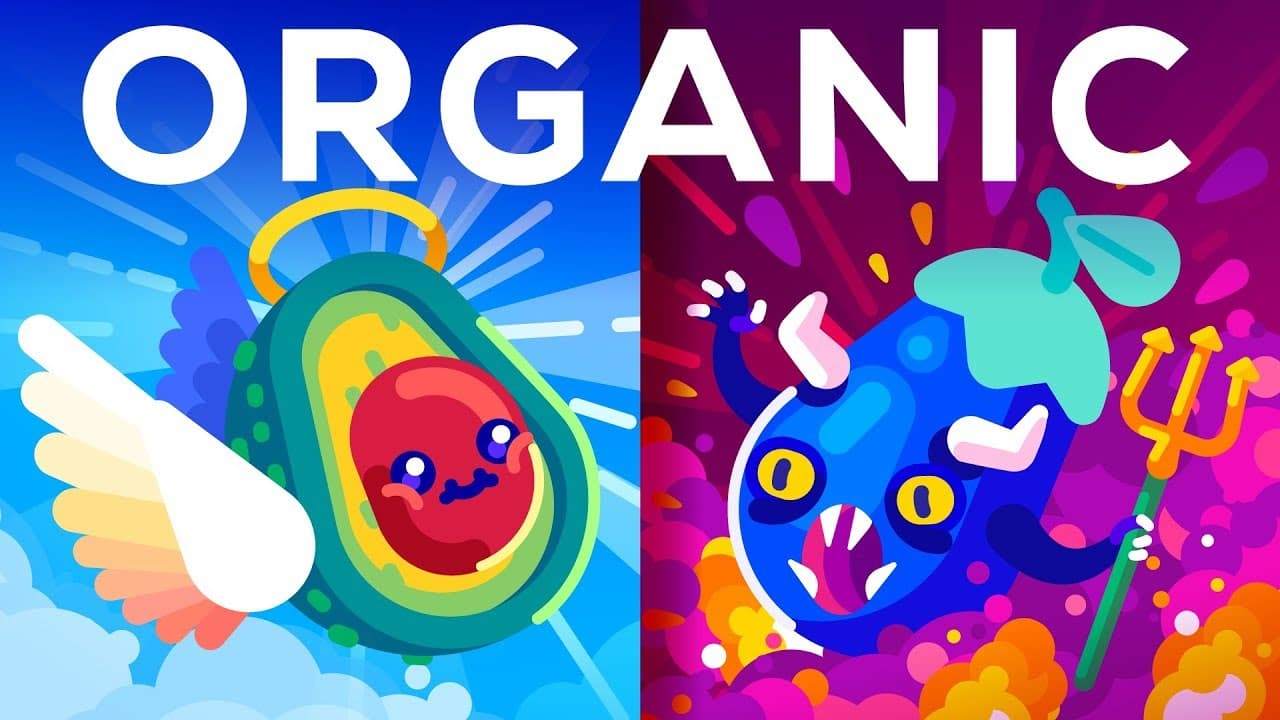
Organic food does not show significant health benefits over conventional food, though it may have fewer pesticide residues. Nutritional differences are minor, and the environmental impact of organic versus conventional farming is mixed, primarily differing in land use. Ultimately, choosing fresh, seasonal produce is more beneficial than solely focusing on organic labels.
Transcript
Over the last few years, organic food has spread like wildfire. Despite higher prices, buying organic is turning from an alternative into a moral and social responsibility. Organic food is supposedly healthier more natural and more ethical. But what do we even mean when we say organic? There's no global consensus, so different regions have differen... Read More
Key Insights
- 😋 Organic food may contain more antioxidants, but the health benefits are still uncertain.
- 🦺 Organic pesticides are not necessarily safer than conventional pesticides.
- 🍉 Organic farming has a smaller environmental impact in terms of energy and pesticide residues, but it requires more land.
- 😋 The demand for organic food can lead to unsustainable production methods, such as greenhouse farming with high energy consumption and emissions.
- 😊 Organic and conventional farming have pros and cons, and a combination of their best features may be the most efficient way to produce healthy food.
- 😅 An organic label is not a guarantee of quality or safety; what you eat is more important than how it is produced.
- 😋 Buying local and seasonal food can be a sustainable choice for both health and the environment.
Install to Summarize YouTube Videos and Get Transcripts
Explore YouTube Video Summarizer or Get YouTube Transcript Extractor
Questions & Answers
Q: Does organic food have significant health benefits compared to conventional food?
Studies show that organic food may contain more antioxidants, but the differences in nutritional value are small. Eating fruits and vegetables in general is more important for health than how they are produced.
Q: Are organic pesticides safer than conventional pesticides?
Organic pesticides are not necessarily safer than conventional pesticides. Toxicity depends on concentration and exposure, regardless of whether the substance is natural or synthetic.
Q: Is organic food better for the environment?
The environmental impact of organic and conventional farming is mixed. Organic farming uses less energy and has fewer pesticide residues, but it requires more land to produce the same amount of crop.
Q: Should I buy organic food for health or environmental reasons?
If your goal is to eat healthily, focus on consuming more fruits and vegetables, regardless of whether they are organic or not. Buying local and seasonal food can be a more sustainable choice for the environment.
Summary & Key Takeaways
-
Organic food is farmed without GMO seeds, synthetic fertilizers, or synthetic pesticides but different regions have different definitions.
-
Studies suggest that organic food may contain more antioxidants, but the evidence for higher nutritional value is mixed.
-
Organic food has fewer pesticide residues, but organic pesticides are not necessarily safer than conventional pesticides.
-
Organic farming has a similar environmental impact to conventional farming, with differences mainly in land use and ecotoxicity.
Read in Other Languages (beta)
Share This Summary 📚
Summarize YouTube Videos and Get Video Transcripts with 1-Click
Try YouTube Summary with ChatGPT & Claude or YouTube Transcript Generator
Explore More Summaries from Kurzgesagt – In a Nutshell 📚





Summarize YouTube Videos and Get Video Transcripts with 1-Click
Try YouTube Summary with ChatGPT & Claude or YouTube Transcript Generator