What Is the Relationship Between Buddhism and Hinduism?
TL;DR
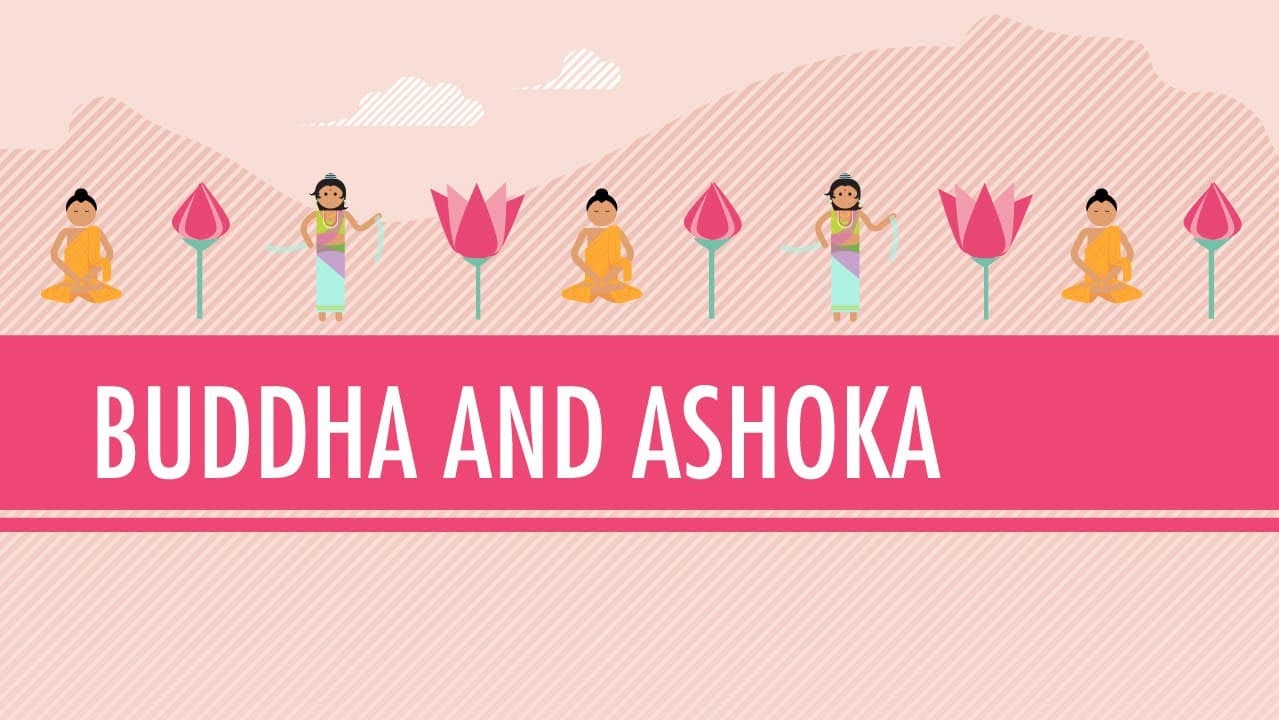
Buddhism emerged as a reformative movement within Hinduism, founded by Siddhartha Gautama, who sought enlightenment to overcome suffering. Key concepts include dharma, samsara, moksha, and karma, with Buddhism offering liberation without the caste constraints of Hinduism. Despite its decline in India, Hinduism absorbed Buddhist elements, integrating the Buddha into its pantheon as an incarnation of a god.
Transcript
Hi, my name is John Green; you’re watching Crash Course World History and today we’re going to talk about India, which is hard because: A. I only have 10 minutes... Past John: Mr. Green, Mr. Green! Present John: I don’t have time for you today, Me from the Past! B. When we study history we tend to study unified polities that we can label like “The ... Read More
Key Insights
- The Indus Valley Civilization was an early cradle of civilization, but it disappeared around 1750 BCE, leading to Aryan migration and the formation of Vedic texts.
- The caste system in India is deeply rooted in religious texts like the Vedas, dividing society into four main classes with specific roles.
- Dharma in Hinduism refers to one's duty in life, heavily influenced by birth and caste, emphasizing fulfilling one's role over personal desires.
- The concepts of samsara, moksha, and karma are central to Hindu belief, explaining the cycle of rebirth and the law of moral cause and effect.
- Buddhism emerged as a response to Hinduism, founded by Siddhartha Gautama, who became the Buddha and taught the Four Noble Truths to overcome suffering.
- Ashoka, a Mauryan emperor, embraced Buddhism after witnessing the horrors of war, promoting Buddhist principles throughout his empire.
- Hinduism's flexibility allowed it to absorb Buddhism over time, incorporating the Buddha as an incarnation of a Hindu god.
- Despite Buddhism's decline in India, its teachings spread to other regions, significantly influencing cultures in East Asia.
Install to Summarize YouTube Videos and Get Transcripts
Explore YouTube Video Summarizer or Get YouTube Transcript Extractor
Questions & Answers
Q: What are the Vedas and their significance in Indian history?
The Vedas are a collection of ancient religious texts that form the foundation of Hinduism. They were composed during the Aryan migration into the Indian subcontinent and are considered some of the oldest religious scriptures in existence. The Vedas outline rituals, hymns, and philosophical concepts that have influenced Indian culture and religion for millennia.
Q: How does the caste system in India function according to the video?
The caste system is a hierarchical social structure in India, rooted in the Vedic texts. It divides society into four main classes: Brahmins (priests), Kshatriyas (warriors), Vaisyas (merchants and artisans), and Shudras (laborers). Each class has specific roles and duties, known as dharma, which are believed to maintain social order and cohesion.
Q: What is the concept of dharma in Hinduism?
Dharma in Hinduism refers to an individual's duty or role in life, determined by their birth and caste. It emphasizes fulfilling one's responsibilities and obligations, even if they are challenging or undesirable. Dharma is considered crucial for maintaining social order and is closely linked to the concepts of karma and samsara.
Q: What are the Four Noble Truths in Buddhism?
The Four Noble Truths are core teachings of Buddhism, introduced by Siddhartha Gautama, the Buddha. They state that all life involves suffering; the cause of suffering is desire; ending desire leads to the cessation of suffering; and following the Eightfold Path can help individuals overcome desire and achieve enlightenment, ultimately leading to nirvana.
Q: How did Ashoka contribute to the spread of Buddhism?
Ashoka was a Mauryan emperor who embraced Buddhism after witnessing the devastation of war. He promoted Buddhist principles throughout his empire by building stupas and pillars inscribed with Buddhist teachings. Ashoka's support helped spread Buddhism across India and beyond, although the religion eventually declined in the region after his death.
Q: How did Hinduism absorb elements of Buddhism?
Hinduism's flexible nature allowed it to assimilate various religious traditions, including Buddhism. Over time, the Buddha was incorporated into Hinduism as an incarnation of a Hindu god, rather than being seen as a separate mortal teacher. This integration helped maintain cultural and social unity in India, even as Buddhism declined.
Q: Why did Buddhism appeal to low-caste Hindus?
Buddhism offered an alternative to the rigid caste system of Hinduism. It emphasized personal enlightenment and the cessation of desire, allowing individuals to achieve nirvana regardless of their social status. This egalitarian aspect made Buddhism particularly attractive to low-caste Hindus, who faced social and economic restrictions under the caste system.
Q: What impact did Buddhism have outside of India?
Buddhism spread from India to other regions, significantly influencing cultures in East Asia. It adapted to local traditions and became a major religious and philosophical system in countries like China, Japan, and Korea. This expansion helped preserve Buddhist teachings and practices, even as the religion declined in its country of origin.
Summary & Key Takeaways
-
The video explores the history of India post-Indus Valley Civilization, focusing on the development of Hinduism and Buddhism. It covers the Vedic texts, the caste system, and the concepts of dharma, samsara, moksha, and karma.
-
Buddhism emerged as a reformative movement within Hinduism, founded by Siddhartha Gautama, who became the Buddha. The religion offered an alternative to the caste system, emphasizing personal enlightenment and the cessation of desire.
-
Ashoka, a prominent Mauryan emperor, adopted Buddhism and promoted its principles across his empire, although Buddhism eventually declined in India. Hinduism's adaptability allowed it to integrate Buddhist elements, maintaining cultural unity.
Read in Other Languages (beta)
Share This Summary 📚
Summarize YouTube Videos and Get Video Transcripts with 1-Click
Try YouTube Summary with ChatGPT & Claude or YouTube Transcript Generator
Explore More Summaries from CrashCourse 📚





Summarize YouTube Videos and Get Video Transcripts with 1-Click
Try YouTube Summary with ChatGPT & Claude or YouTube Transcript Generator