How to Sell AI by Focusing on Business Outcomes
TL;DR
Sell the transformation and measurable impact of an AI offer, not AI itself. When adoption stalls, connect the technology to a clear business story, involve leaders who use the tools personally, and build an intent verification loop that checks whether AI-generated work is correct, sustainable, and secure.
Transcript
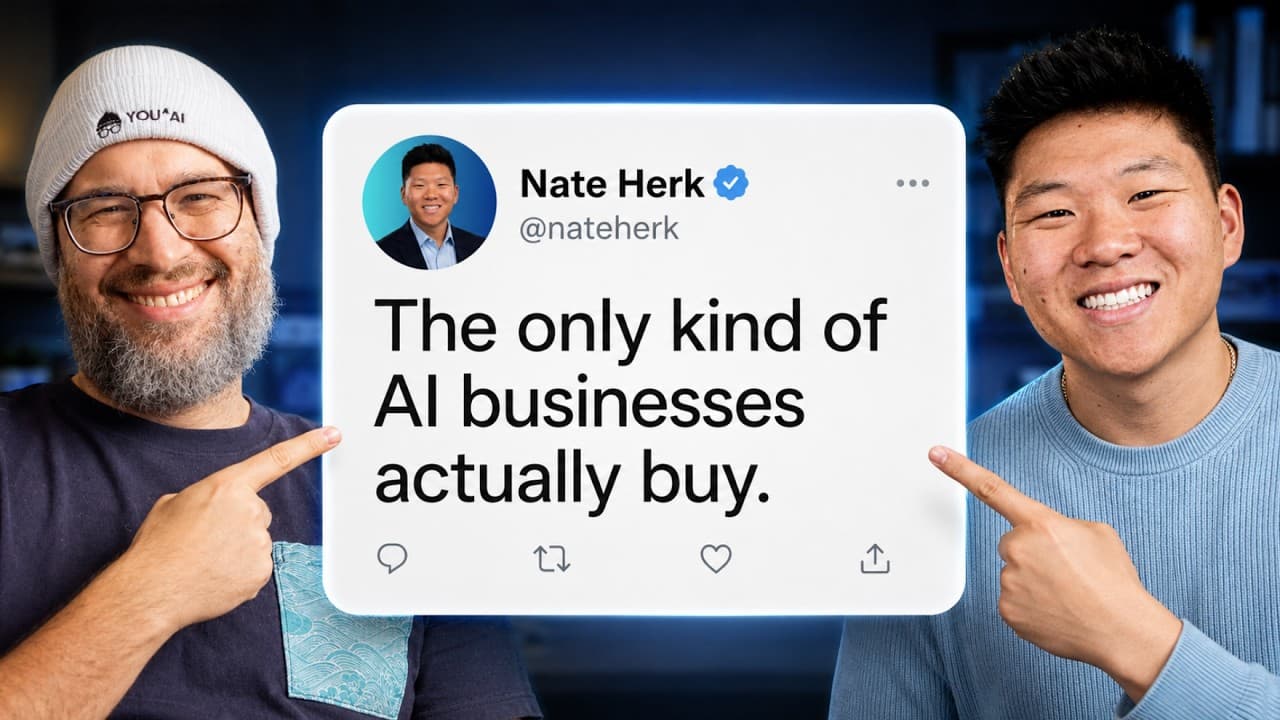
What would you say by the end of today's episode that the audience is going to take away and what will they have learned? >> But if you are having trouble selling, the issue is that you are having trouble storytelling. You shouldn't be selling AI. AI is not valuable in and of itself. Sell that story. Sell the transformation. Sell the real impact of... Read More
Key Insights
- AI is not valuable merely because it is AI. An offer becomes commercially meaningful when it connects the technology to a specific transformation, practical impact, and story that customers can understand in the context of their own organization.
- Difficulty selling an AI offer is often a storytelling problem. Builders should explain what changes for the customer, why that change matters, and how the delivered system creates impact instead of making the underlying model or tool the center of the pitch.
- AI builders can pull the future forward for hundreds or thousands of companies. Many established organizations will not reach their desired AI future without operators who can translate emerging capabilities into practical programs, workflows, and organizational change.
- The model is not the moat in an AI business. Differentiation comes from how the model is used, the subject-matter expertise surrounding it, and the ability to apply its capabilities to a customer's actual operational needs.
- An intent verification loop is essential for AI-assisted development. Businesses may not require every solution to be hand-coded, but they do need a dependable way to confirm that the delivered result is correct, sustainable, and secure.
- Vibe coding lowers the barrier to creating software by turning communicated intent into code. That convenience increases the importance of thinking clearly, defining the desired outcome precisely, and verifying that the generated implementation actually matches the original intent.
- AI adoption begins with executive behavior. Jones tells CEOs that the responsibility stops with them, because leaders who do not personally use tools such as Codex or Claude Code should not expect their organizations to embrace them.
- AI-native builders reach for artificial intelligence first, second, and last. This does not eliminate deterministic code or human teamwork, but it makes AI the primary operating layer while treating other methods as appropriate tools within the broader process.
Install to Summarize YouTube Videos and Get Transcripts
Explore YouTube Video Summarizer or Get YouTube Transcript Extractor
Questions & Answers
Q: How do you sell an AI offer that customers understand?
Sell the transformation, practical impact, and business story rather than presenting AI as inherently valuable. A customer needs to understand what will change inside the organization and why that change matters. When an AI offer is difficult to sell, the underlying issue may be weak storytelling rather than weak technology, so the pitch should center on the outcome being delivered.
Q: Why do some AI offers fail to sell?
AI offers often fail to sell because their creators focus on AI itself instead of explaining the customer's transformation. The technology is not valuable in isolation. A persuasive offer describes the real impact of the work, connects that impact to the customer's situation, and gives the buyer a clear story about why the proposed change deserves attention and adoption.
Q: What is an intent verification loop in AI development?
An intent verification loop is a process for checking whether software created from a person's stated intent is actually correct, sustainable, and secure. Vibe coding can instantiate intent in code without requiring traditional hand-coding, but business leaders still need evidence that the output works as requested and can be maintained safely after its initial creation.
Q: Why does vibe coding require stronger verification?
Vibe coding makes it easier to express an idea and turn that intent into code, but lower development barriers do not guarantee a correct result. Businesses still need to verify that the implementation matches the intended outcome, remains sustainable, and meets security expectations. Clear thinking and the ability to evaluate results therefore become central skills in AI-assisted development.
Q: What does it mean to become AI native?
Being AI native means reaching for artificial intelligence first, second, and last when approaching work or building a business. It does not mean rejecting deterministic code or removing human teamwork. Those remain important, but they function as tools within a process in which AI is the primary starting point and recurring operating layer.
Q: Why must executives personally use AI tools?
Executive behavior shapes whether AI adoption spreads through an organization. Jones tells CEOs that the responsibility stops with them and that they are the AI change they want to see. If senior leaders do not personally use tools such as Codex or Claude Code, they should not expect employees and other leaders to adopt those tools consistently.
Q: What makes an AI business defensible beyond its model?
The model itself is not the moat. A stronger source of differentiation is the way the model is used, combined with subject-matter expertise and experience applying technology to real operational problems. Builders create value by translating AI capabilities into relevant workflows, verifying the results, and communicating the transformation in terms that a particular organization understands.
Q: How should companies introduce AI tools to employees?
Companies should not simply distribute access or credits and tell employees to figure everything out. Jones compares that approach to handing a factory worker a sparking 480-volt live line without proper direction. Effective adoption requires deliberate leadership, a clear explanation of why AI matters, practical guidance, and verification that the resulting work is correct, sustainable, and secure.
Summary & Key Takeaways
-
Nate B. Jones argues that AI agencies and builders help existing companies pull the future forward. These companies need more than access to new tools. They need operators who understand organizational transformation, can translate technology into relevant outcomes, and can help employees and executives adopt AI through deliberate, practical implementation.
-
Lower development barriers make clear thinking and verification increasingly important. Vibe coding can translate intent into code without traditional hand-coding, but businesses still need assurance that the result is correct, sustainable, and secure. Jones expects AI-powered verification to become an important investment theme for business leaders as adoption expands.
-
Selling AI requires a compelling story about transformation rather than a pitch centered on the technology itself. Leadership also matters because executives cannot expect broad adoption while avoiding the tools personally. Becoming AI native means reaching for artificial intelligence throughout the work process while still using deterministic code and human teamwork when appropriate.
Read in Other Languages (beta)
Share This Summary 📚
Summarize YouTube Videos and Get Video Transcripts with 1-Click
Try YouTube Summary with ChatGPT & Claude or YouTube Transcript Generator
Explore More Summaries from Nate Herk | AI Automation 📚


Summarize YouTube Videos and Get Video Transcripts with 1-Click
Try YouTube Summary with ChatGPT & Claude or YouTube Transcript Generator