Haitian Creole - The World's Most Widely Spoken Creole Language
TL;DR
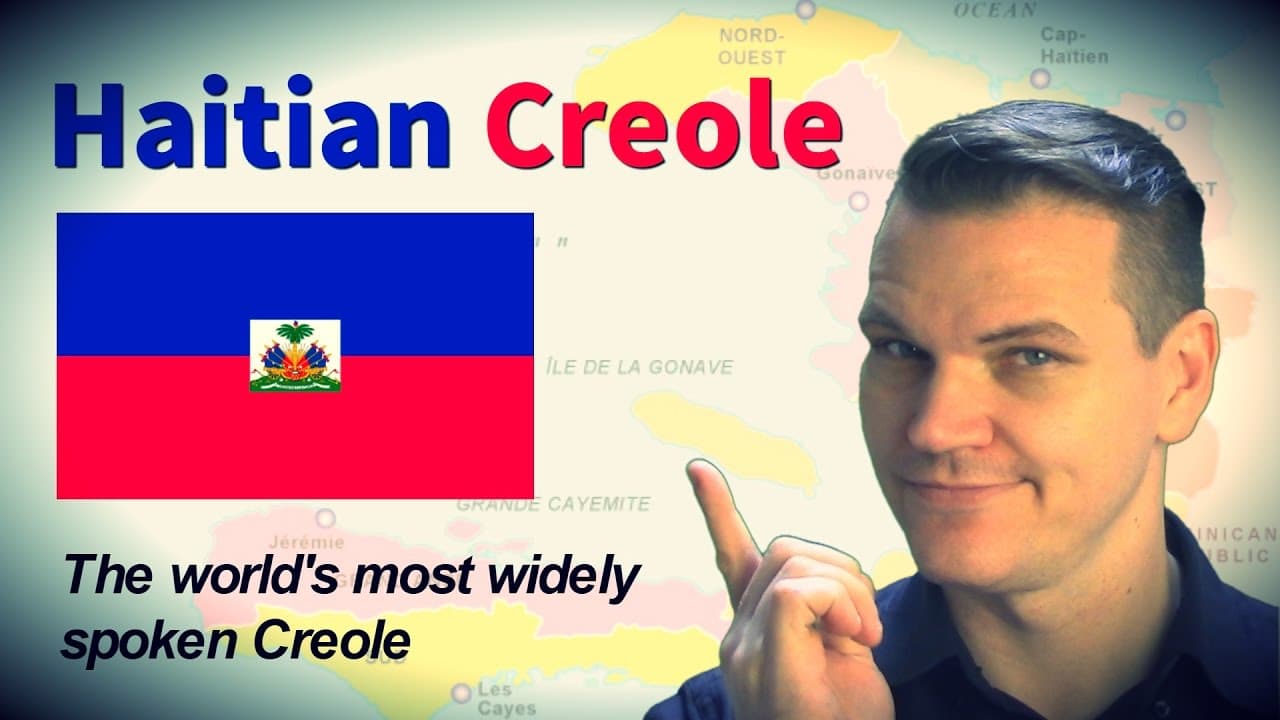
Haitian Creole is the most widely spoken Creole language globally.
Transcript
follow Lang focus on Facebook Twitter and Instagram hello everyone welcome to the Lang Focus Channel and my name is Paul today's topic is Haitian Creole the most widely spoken Creole language in the world Haitian Creole is the main language of Haiti mainly in the western 1-ir of the island of Hispanola with the rest of the island belonging to the D... Read More
Key Insights
- Haitian Creole is spoken by approximately 12 million people, primarily in Haiti and among Haitian immigrants in the US, Canada, France, and the Caribbean.
- The language is French-based, with about 90% of its vocabulary derived from French, but its grammar is rooted in West African languages.
- Haitian Creole developed from a pidgin language created by African slaves to communicate with French colonialists and among themselves.
- In 1987, Haitian Creole was recognized as a national language alongside French, enabling its use in education and official broadcasts.
- Despite its origins, Haitian Creole has evolved to become a fully functional language with its own grammar, vocabulary, and orthography.
- Haitian Creole uses a phonetic spelling system and has simplified French vocabulary, making it distinct yet similar to French.
- The language has no verb conjugations; tense is indicated by markers placed before the verb.
- Haitian Creole has a unique system for definite articles, which change based on the final syllable of the noun they modify.
Install to Summarize YouTube Videos and Get Transcripts
Explore YouTube Video Summarizer or Get YouTube Transcript Extractor
Questions & Answers
Q: What is the origin of Haitian Creole?
Haitian Creole originated in the 17th and 18th centuries as a pidgin language developed by African slaves in Haiti. These slaves, unable to communicate with each other or their French colonial masters, created a simplified French-based language to facilitate communication. Over time, this pidgin evolved into a Creole language, incorporating West African grammatical structures.
Q: How is Haitian Creole different from French?
While Haitian Creole shares about 90% of its vocabulary with French, it differs significantly in grammar and pronunciation. Haitian Creole uses a phonetic spelling system and has simplified French words. Unlike French, it has no verb conjugations, and tense is indicated by markers placed before the verb. Its grammar is influenced by West African languages, making it distinct from French.
Q: What role does Haitian Creole play in Haiti today?
Haitian Creole is a national language of Haiti and is widely spoken by the population. It is used in education, media, and daily communication. Although French remains a prestige language, Haitian Creole's recognition as a national language has elevated its status and allowed it to be used alongside French in official contexts, helping bridge linguistic divides in the country.
Q: How does Haitian Creole handle verb tenses?
Haitian Creole does not use verb conjugations like French. Instead, it employs tense markers placed before the verb to indicate the tense. For example, 'ap' is used for present continuous, 'te' for past, 'pral' for near future, and 'ta' for conditional. This system simplifies verb usage, making the language more accessible for speakers.
Q: What is the significance of the 1987 recognition of Haitian Creole?
The recognition of Haitian Creole as a national language in 1987 was significant because it legitimized the language in official and educational contexts. Prior to this, French was the only official language, and Haitian Creole was stigmatized as a language of the poor. The recognition allowed for its use in schools, media, and government, promoting cultural pride and linguistic inclusivity.
Q: How does Haitian Creole's spelling system differ from French?
Haitian Creole uses a phonetic spelling system that simplifies French words. For example, the French word 'manger' becomes 'manje' in Haitian Creole. This system reflects the language's oral traditions and makes it easier to learn and pronounce. The orthography was standardized in 1979, balancing phonetic spelling with French-based writing.
Q: What are some influences on Haitian Creole besides French?
Besides French, Haitian Creole incorporates elements from West African languages, reflecting the linguistic heritage of the African slaves who developed it. It also includes words from Spanish, Portuguese, and English, due to historical contact with other European powers. Additionally, interactions with the indigenous Taíno people introduced some Taíno words into the language.
Q: How are definite articles used in Haitian Creole?
In Haitian Creole, definite articles come after the noun they modify and change based on the noun's final syllable. For example, if a noun ends with a nasal vowel, the article is 'an'; if it ends with an oral consonant preceded by an oral vowel, the article is 'la'. This system is unique to Haitian Creole and differs from French, where articles precede the noun.
Summary & Key Takeaways
-
Haitian Creole is the primary language of Haiti and the most widely spoken Creole language globally. It developed from a pidgin language used by African slaves and French colonialists, evolving into a fully functional language. It has a French-based vocabulary but West African grammatical roots.
-
Officially recognized as a national language in 1987, Haitian Creole is used alongside French in education and media. Despite its French origins, it has distinct spelling and pronunciation, with no verb conjugations and a unique system for definite articles.
-
Haitian Creole's development reflects Haiti's colonial history and cultural influences, incorporating words from Spanish, Portuguese, and English. Its recognition as a national language has helped reduce the stigma once associated with it, promoting its use in various aspects of life.
Read in Other Languages (beta)
Share This Summary 📚
Summarize YouTube Videos and Get Video Transcripts with 1-Click
Try YouTube Summary with ChatGPT & Claude or YouTube Transcript Generator
Explore More Summaries from Langfocus 📚


Summarize YouTube Videos and Get Video Transcripts with 1-Click
Try YouTube Summary with ChatGPT & Claude or YouTube Transcript Generator