How Can Democracies Coordinate a 5G Strategy?
TL;DR
Free-market democracies should separate concerns about unfair Chinese trade practices from the security risks created by foreign 5G equipment. They should deter misconduct while coordinating industrial policy, spectrum access, standards participation, equipment review, and international cooperation to build competitive and secure 5G markets without treating every economic dispute as proof of network compromise.
Transcript
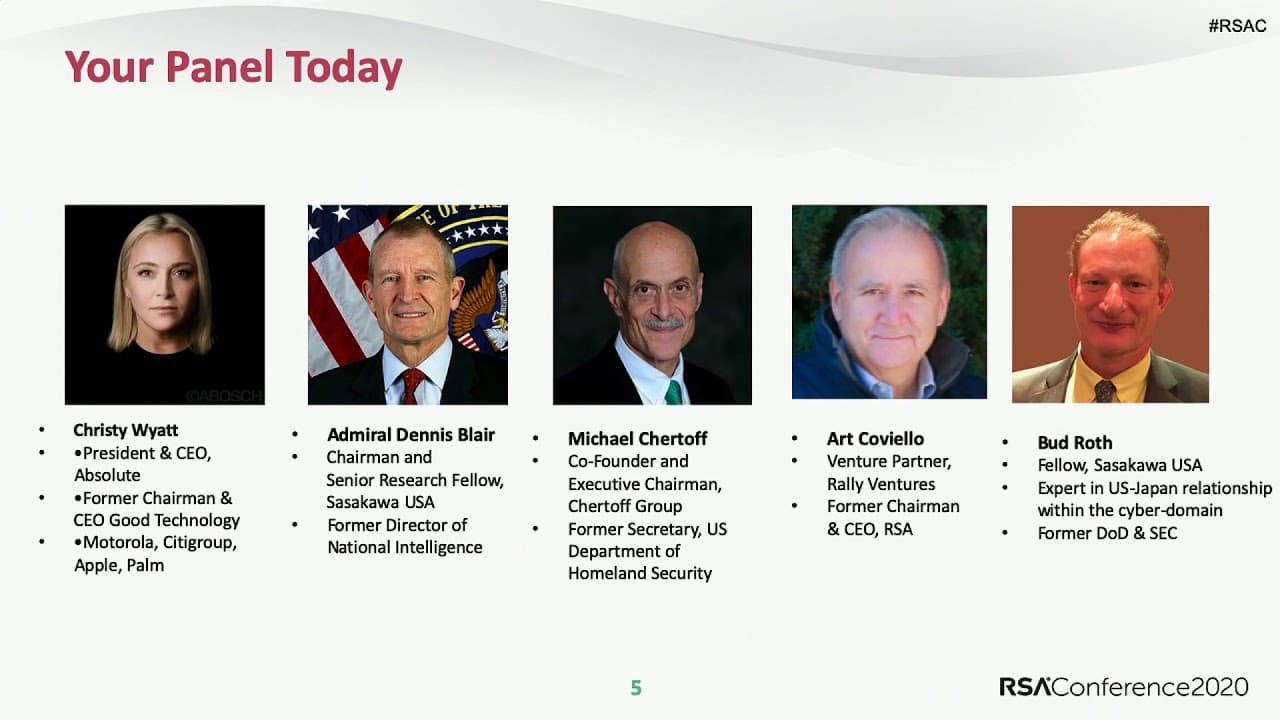
All right, good morning. Are we on? Are we live? Yes, we are. Excellent. You found us all the way at the end of the hall, tucked around the corner. Thank you. Uh, so good morning. My name is, uh, Christy Wyatt. I'm going to, uh, uh, ask each one of our colleagues to introduce themselves in just a moment. I'm gonna give you just a couple quick minut... Read More
Key Insights
- 5G is a broad infrastructure transformation that promises faster service, lower latency, and pervasive connectivity. It also blurs the distinction between local and global networks, changing how enterprises manage mobility, data flows, applications, and security across increasingly interconnected environments.
- The economic opportunity surrounding 5G extends beyond chipset sales and infrastructure contracts. The cited KPMG estimate of forty-three trillion reflects potential changes across enterprise operations, vertical applications, mobility, and data management, making the ecosystem attractive to both established companies and disruptive entrants.
- China’s 5G strategy is coordinated through government planning and collaboration with domestic industry. Government assistance, tax credits, and spectrum licensing helped local vendors build a strong home market before offering products internationally at competitive prices.
- Huawei and ZTE are positioned as major exporters of Chinese 5G technology. Their domestic development benefited from a coordinated environment intended to create competitive products at home and then support their sale across global markets.
- 5G security differs from traditional infrastructure security because digital components can create pathways into an entire network. Placing equipment within critical digital infrastructure may therefore introduce risks extending beyond the isolated component itself.
- Concerns about network compromise are distinct from concerns about unfair trade practices. The panel argues that combining them prevents a nuanced response, because technical infrastructure risk and alleged economic misconduct require different evidence, policies, and remedies.
- Economic concerns include the belief that the Chinese government conducts espionage benefiting state-owned enterprises and national champions. The discussion also cites allegations involving transactions that violated United States sanctions against Iran and espionage charges against Huawei employees in Europe.
- A coordinated democratic response should combine competitive industrial policy with national-security review of foreign equipment. Free-market countries can deter unfair practices while strengthening domestic and allied 5G capabilities through cooperation on spectrum, standards, markets, and security assessment.
Install to Summarize YouTube Videos and Get Transcripts
Explore YouTube Video Summarizer or Get YouTube Transcript Extractor
Questions & Answers
Q: How should democracies coordinate a competitive 5G strategy?
Free-market democracies should coordinate policies that strengthen competitive 5G markets while protecting critical digital infrastructure. The discussion points to cooperation on spectrum, standards, industrial policy, supplier development, and national-security review of foreign equipment. It also stresses that governments should address unfair trade practices separately from technical security risks so each problem receives an evidence-based and appropriately targeted response.
Q: Why should 5G security and trade concerns be treated separately?
5G security concerns focus on whether equipment placed inside critical digital infrastructure could compromise a broader network. Trade concerns involve alleged economic espionage, government assistance, sanctions violations, and support for national champions. Treating these issues independently allows governments to evaluate technical risks directly while using separate economic, diplomatic, or enforcement measures to deter unfair commercial practices and other misconduct.
Q: How did China support the development of its 5G industry?
China recognized both the domestic economic opportunity and the potential global market for 5G technology. Its government coordinated with local industry and provided forms of assistance that included tax credits and access to substantial spectrum. This helped companies such as Huawei and ZTE develop products in a strong domestic market before exporting those products internationally at competitive prices.
Q: Why does 5G create different critical infrastructure risks?
5G creates distinctive risks because it is digital, interconnected infrastructure rather than an isolated physical system. According to the discussion, inserting a component or piece of equipment into such a network can create the potential for compromise across the broader network. Faster service, lower latency, pervasive connectivity, and blurred boundaries between local and global networks increase the importance of evaluating every trusted component.
Q: What economic opportunities does 5G create for enterprises?
5G creates opportunities extending well beyond sales of chipsets and network equipment. It can reshape enterprise mobility, change how data moves through organizations, support new vertical applications, and require businesses to reinvent operations and security practices. The discussion cites a KPMG estimate of forty-three trillion to illustrate the potential scale of the wider ecosystem and its capacity for disruption.
Q: What concerns were raised about Huawei in the 5G market?
The discussion raises concerns about Huawei’s potential market dominance, the security implications of placing its equipment in critical digital infrastructure, and allegations connected to broader Chinese economic policies. It cites alleged involvement in transactions violating United States sanctions against Iran and espionage charges involving two Huawei employees in Europe. The panel nevertheless argues that specific allegations should remain distinct from general technical risk assessments.
Q: What role should industrial policy play in 5G competition?
Industrial policy can help free-market democracies cultivate competitive suppliers and avoid depending solely on foreign vendors supported by coordinated national strategies. The proposed approach includes encouraging 5G development, improving coordination among allied countries, and reviewing foreign equipment for national-security risks. Such measures should support competition and security while remaining separate from actions designed specifically to punish unfair trade behavior.
Q: How will 5G change enterprise cybersecurity and data management?
5G will make connectivity faster, reduce latency, expand its presence, and blur boundaries between local and global networks. Enterprises will need to reconsider mobility, data movement, application architecture, and protection across a more interconnected environment. Because individual components may create access to wider digital infrastructure, security review and risk management must account for network-wide consequences rather than assessing devices only in isolation.
Summary & Key Takeaways
-
5G promises faster connections, lower latency, widespread coverage, and increasingly blurred boundaries between local and global networks. Its deployment represents a massive infrastructure transition that could reshape consumer services, enterprise mobility, data movement, security practices, and vertical applications, while creating substantial opportunities for both innovation and disruption.
-
China identified 5G as strategically important and coordinated government support with domestic industry. Assistance such as tax credits and extensive spectrum licensing helped companies including Huawei and ZTE develop products at home, compete on price, and pursue international markets, creating challenges for less coordinated free-market democracies.
-
The panel recommends distinguishing network-security risks from disputes about unfair trade practices. Governments should deter economic espionage and other misconduct separately while developing coordinated industrial policies, supporting competitive suppliers, reviewing foreign equipment on national-security grounds, and cooperating internationally to protect critical digital infrastructure without collapsing every concern into one response.
Read in Other Languages (beta)
Share This Summary 📚
Summarize YouTube Videos and Get Video Transcripts with 1-Click
Try YouTube Summary with ChatGPT & Claude or YouTube Transcript Generator
Explore More Summaries from RSAC Cybersecurity 📚






Summarize YouTube Videos and Get Video Transcripts with 1-Click
Try YouTube Summary with ChatGPT & Claude or YouTube Transcript Generator