How to Analyze Software Supply Chain Risks
TL;DR
Software supply chain analysis identifies hidden third-party components, links them to known vulnerabilities, and determines whether each finding matters in the deployed environment. Organizations should inventory component names, origins, and versions, automate cross-referencing against vulnerability data, and classify findings as relevant, not relevant, or under investigation before alerting engineering teams.
Transcript
Thank you everyone. Thank you. Now, usually after an introduction like that, there's a question that pops up in w- people's minds, and I wanna get it out of the way so you're not sitting there thinking about this through the whole conversation, the whole presentation itself. So first of all, the painter, no relationship to him. The virus, I didn't ... Read More
Key Insights
- Software security depends on component visibility because a product can contain third-party libraries that are not obvious in its installer or program listing. Those embedded components may become vulnerable after the product has already been built, released, and installed.
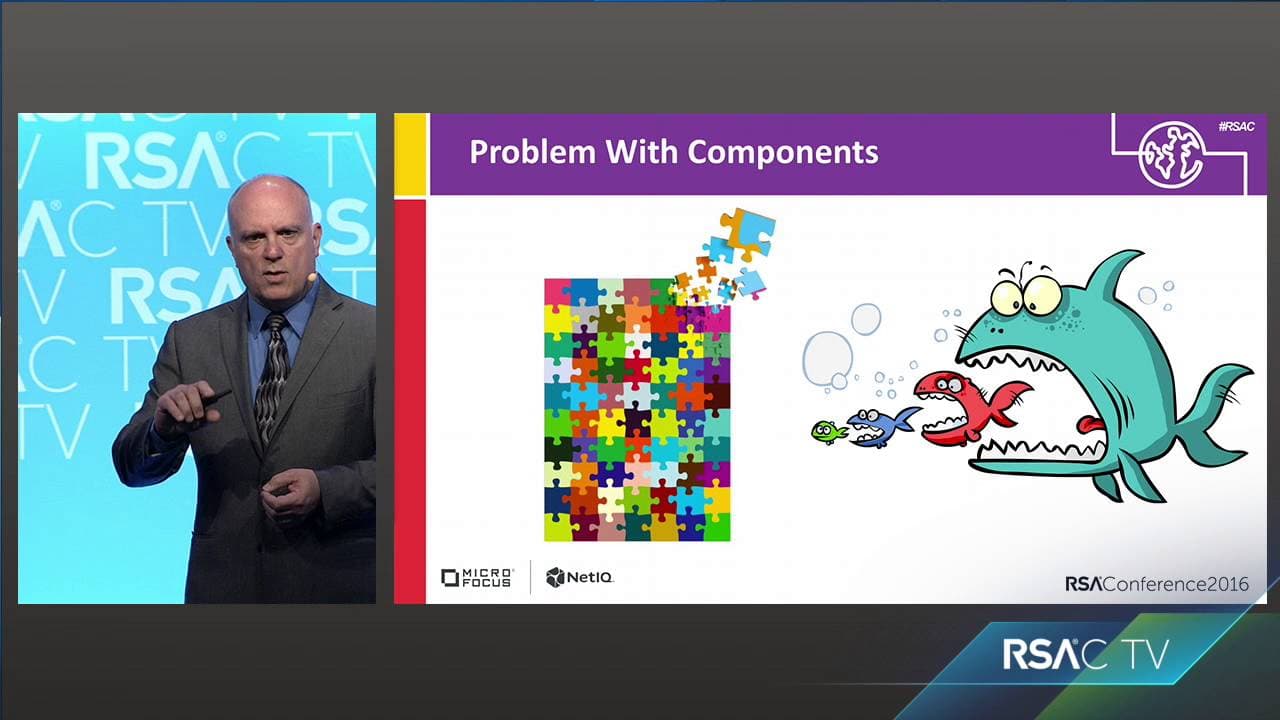
- A software product can hide components several layers deep, including technologies such as Apache, OpenSSL, or JBoss. An organization may therefore be exposed without recognizing the affected component as a separately installed product in its infrastructure.
- The National Vulnerability Database supports vulnerability tracking, while the National Software Reference Library can help identify products. These resources become more useful when an organization first discovers which components and versions actually exist inside its deployed products.
- Component identification can use bills of materials, installer contents, copyright statements, trademarks, version information, third-party license files, and hashes. These clues help establish each component's name, origin, and version so it can be connected to a containing product.
- Vulnerability attribution becomes difficult when a vulnerable technology is incorporated into many products. The transcript links the 2014 CVE spike to products containing OpenSSL, where vulnerabilities could not simply be attributed to OpenSSL as a separately visible installation.
- Automated analysis is necessary because manually cross-referencing products, third-party components, and vulnerability records would consume extensive time. A useful tool should show component relationships and identify every product in the environment that contains a selected component.
- Effective vulnerability monitoring connects new component findings to the organization's actual environment. The desired system automatically identifies potentially affected products and can create a bug report or notify an engineering team to investigate the suspected exposure.
- Vulnerability triage prevents alert fatigue because not every CVE is meaningful in every environment. Findings should be marked relevant, not relevant, or under investigation, with investigation treated as a distinct phase before teams conclude that a vulnerability truly affects them.
Install to Summarize YouTube Videos and Get Transcripts
Explore YouTube Video Summarizer or Get YouTube Transcript Extractor
Questions & Answers
Q: How do you analyze software supply chain risks?
Analyze software supply chain risks by inventorying products and discovering their embedded third-party components. Record each component's name, origin, and version using installer contents, bills of materials, copyright statements, trademarks, license files, version information, and hashes. Then cross-reference those components with vulnerability records and classify each finding as relevant, not relevant, or under investigation.
Q: Why are embedded software components a security risk?
Embedded components are a security risk because they may be hidden several layers inside a product and may not appear as separate entries in a normal program list. A component can also have no known vulnerability when a product is built or installed, then receive a vulnerability disclosure later. Without component visibility, the organization may not recognize its exposure.
Q: What information should a software component inventory contain?
A software component inventory should identify each component by name, origin, and version, then associate it with the product that contains it. The analysis can gather evidence from bills of materials, installers, copyright statements, trademarks, version information, third-party license files, and hashes. These relationships allow new component vulnerabilities to be traced back to affected organizational products.
Q: How can organizations discover hidden third-party components?
Organizations can inspect the product's bill of materials and installer to determine which files and components are deployed. They can also search for copyright notices, trademarks, version information, third-party license files, and hashes. Combining these clues helps reveal software embedded inside a product, including components located several layers deep and not otherwise visible in the environment.
Q: Why should software vulnerability analysis be automated?
Software vulnerability analysis should be automated because manually matching products, embedded components, and vulnerability records requires substantial effort. A tool can maintain component-to-product associations, show every product containing a selected component, monitor vulnerability information, and flag potentially affected systems. It can also generate a bug report or send an investigation notice to an engineering team.
Q: How should organizations triage software vulnerabilities?
Organizations should classify each potential vulnerability as relevant, not relevant, or under investigation. The investigation state is important because a CVE associated with a component may not actually affect the way that component is configured or used in the environment. Confirming relevance before broad notification reduces false alarms and preserves confidence in later security alerts.
Q: Why is a product-level software inventory insufficient?
A product-level inventory is insufficient because vulnerable technologies can be incorporated within larger products rather than installed as visible attachments. The organization might know that a commercial product is present but remain unaware that it contains Apache, OpenSSL, JBoss, or another third-party component. Security analysis must therefore map internal components to every product that includes them.
Q: What role do vulnerability databases play in supply chain analysis?
The National Vulnerability Database provides records that organizations can use to track known vulnerabilities, while the National Software Reference Library can help identify software products. These resources do not solve hidden-component discovery by themselves. Organizations must first determine which products and component versions are present, then connect those findings to the relevant vulnerability information and triage the results.
Summary & Key Takeaways
-
Organizations consume software much like organisms consume food, and hidden ingredients can create unexpected harm. Commercial and open-source products may contain embedded components whose vulnerabilities emerge after deployment. Security therefore depends on knowing exactly what software is installed, including components buried several layers inside products and absent from ordinary program inventories.
-
Component discovery can use bills of materials, installer contents, copyright notices, trademarks, version information, third-party license files, and hashes. Once each component has a name, origin, and version, it can be associated with its containing product. New vulnerability information can then be traced to every affected product in the organization.
-
Manual component tracking is impractical, so organizations need tools that cross-reference installed products, embedded components, and vulnerability records. Automated findings should feed a triage process instead of triggering indiscriminate alerts. Each possible vulnerability should be classified as relevant, not relevant, or under investigation before engineering teams receive actionable reports.
Read in Other Languages (beta)
Share This Summary 📚
Summarize YouTube Videos and Get Video Transcripts with 1-Click
Try YouTube Summary with ChatGPT & Claude or YouTube Transcript Generator
Explore More Summaries from RSAC Cybersecurity 📚



Summarize YouTube Videos and Get Video Transcripts with 1-Click
Try YouTube Summary with ChatGPT & Claude or YouTube Transcript Generator