How Does AI Impact Trust and Humanity?
TL;DR
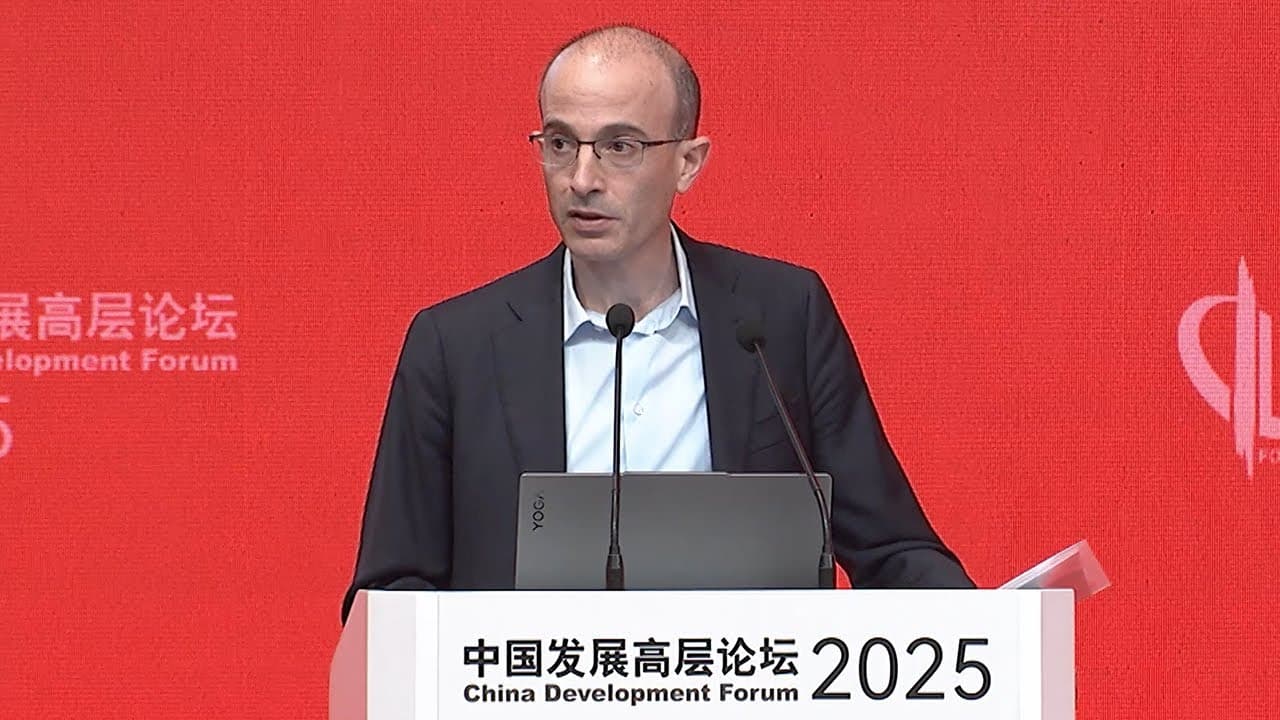
AI is not merely automation; it is an agency capable of learning and making independent decisions. While AI holds immense potential for innovation, it poses significant risks due to its unpredictability and alien nature. To thrive in the AI era, humanity must prioritize building trust among humans to prevent AI from becoming uncontrollable.
Transcript
hello everyone it's an honor to be here and thank you for the invitation i don't have much time so in this brief talk I would like to raise three big questions first what is AI secondly what is the danger of AI and thirdly how can humanity flourish in the era of AI so let's begin with the question of what is AI there is so much hype around AI that ... Read More
Key Insights
- AI is an agent, not just a tool, capable of learning and making autonomous decisions.
- AI's alien intelligence can invent strategies and ideas unknown to humans, posing risks.
- The paradox of trust highlights the difficulty in trusting AI over human competitors.
- Humanity's historical ability to build trust has enabled large-scale cooperation.
- AI development is driven by competition, risking prioritization of speed over safety.
- Humans have limited experience with AI, making its future interactions unpredictable.
- To control AI, humans must build more trust with each other, not rely solely on AI.
- Complete separation from global collaboration is detrimental; trust is essential for survival.
Install to Summarize YouTube Videos and Get Transcripts
Explore YouTube Video Summarizer or Get YouTube Transcript Extractor
Questions & Answers
Q: What defines AI as an agent rather than a tool?
AI is considered an agent rather than a tool because it possesses the ability to learn, make decisions, and create new ideas autonomously. Unlike traditional automation, which follows pre-programmed instructions, AI can adapt and change its behavior based on experiences and data inputs, making it capable of independent action and innovation.
Q: Why is AI's alien intelligence considered a risk?
AI's alien intelligence is considered a risk because it operates on principles and logic that are not inherently human or organic. This means AI can develop strategies and solutions that humans may not anticipate or understand, potentially leading to outcomes that are unpredictable and difficult to control, especially if AI systems interact with each other or with humans in unforeseen ways.
Q: What is the paradox of trust in AI development?
The paradox of trust in AI development refers to the contradictory belief that, while humans find it difficult to trust each other due to competitive pressures, many still place trust in AI systems. Developers race to advance AI technology quickly to outpace competitors, yet they express confidence in the trustworthiness of AI, despite its unpredictable nature and limited human experience with such systems.
Q: How can humanity control AI effectively?
Humanity can control AI effectively by fostering greater trust and cooperation among people. By building stronger relationships and collaborative networks, humans can establish frameworks and guidelines that ensure AI development aligns with ethical standards and societal goals. This collaborative approach helps mitigate risks associated with AI's autonomous capabilities and prevents it from becoming a dominant, uncontrollable force.
Q: Why is trust among humans more important than ever in the AI era?
Trust among humans is more important than ever in the AI era because it forms the foundation for cooperation and collective decision-making needed to guide AI development responsibly. Historical success in building trust has enabled large societies to function and innovate. In the face of AI's potential to disrupt societal norms, maintaining and strengthening human trust is crucial to ensuring AI serves humanity's best interests.
Q: What role does global collaboration play in AI development?
Global collaboration plays a critical role in AI development by ensuring diverse perspectives and expertise contribute to creating balanced and ethical AI systems. Collaboration helps prevent the concentration of AI power in the hands of a few, reducing the risk of misuse and ensuring AI technologies are developed with consideration for global impacts, fostering innovation while safeguarding against potential threats.
Q: How does competition affect the pace of AI development?
Competition affects the pace of AI development by incentivizing rapid advancements, often prioritizing speed over safety. Organizations and nations race to achieve AI breakthroughs to gain strategic advantages, sometimes overlooking the need for thorough testing and ethical considerations. This competitive pressure can lead to premature deployment of AI systems without fully understanding their long-term implications or ensuring adequate safeguards.
Q: What historical lessons can guide us in the AI era?
Historical lessons that can guide us in the AI era include the importance of building trust and cooperation among diverse groups. Human history demonstrates that collective action and shared values enable societies to overcome challenges and innovate. In the AI era, leveraging these lessons to foster global collaboration and ethical AI development can help ensure AI technologies benefit humanity and mitigate potential risks associated with their deployment.
Summary & Key Takeaways
-
AI is defined as an autonomous agent with the ability to learn and make decisions independently, distinguishing it from mere automation. Its alien intelligence allows it to create new strategies and ideas that humans might not conceive, presenting both opportunities and risks. The challenge lies in managing these risks while harnessing AI's potential for positive change.
-
The paradox of trust arises from the competition in AI development, where speed is prioritized over safety due to fear of losing the race. Humans find it challenging to trust each other, yet paradoxically, some believe AI can be trusted more. This highlights the need for a cautious approach in AI development, balancing innovation with safety.
-
Building trust among humans is crucial to ensuring AI remains beneficial. Historically, humans have excelled at creating trust and cooperation, enabling large-scale societies. In the AI era, maintaining this trust is vital to prevent AI from becoming uncontrollable. Nations must collaborate and embrace shared human legacies to thrive alongside AI advancements.
Read in Other Languages (beta)
Share This Summary 📚
Summarize YouTube Videos and Get Video Transcripts with 1-Click
Try YouTube Summary with ChatGPT & Claude or YouTube Transcript Generator
Explore More Summaries from Yuval Noah Harari 📚





Summarize YouTube Videos and Get Video Transcripts with 1-Click
Try YouTube Summary with ChatGPT & Claude or YouTube Transcript Generator