How Does AI Transform Image Generation?
TL;DR
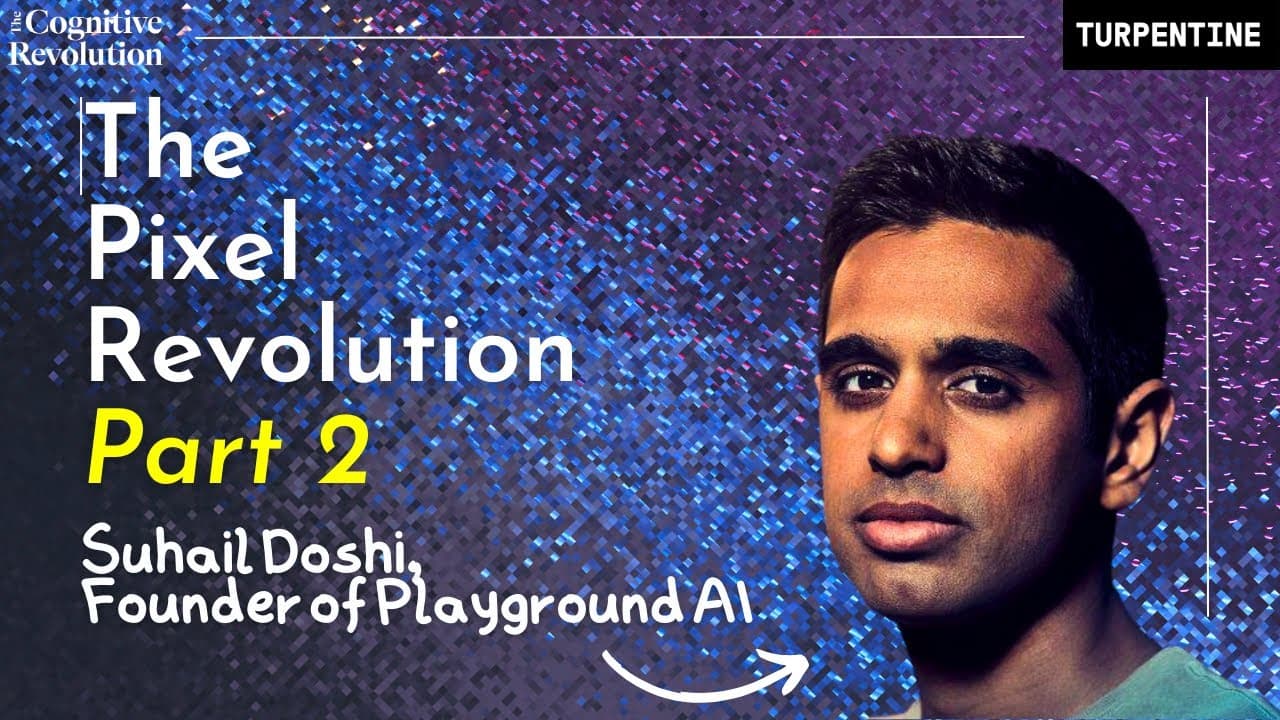
AI image generation is advancing rapidly but is still behind language models in utility. Suhail Doshi, founder of Playground AI, discusses the challenges and potential of creating a unified vision model that can create, edit, and understand images. The focus is on improving editing capabilities and addressing ethical concerns in AI art.
Transcript
I try to sometimes put myself in the shoes of you know let's say the artists or the people making these images geographers whoever you were the first site ever and I think the only site where if there was a prompt on our site and someone references his name we directly link back to his page it might be generally okay to make things in fact many bra... Read More
Key Insights
- AI image generation is currently not as advanced as language models, likened to being at a GPT-2 stage.
- The primary uses for current image models are art and basic manipulations, lacking broader utility.
- Playground AI aims to build a unified vision model that can create, edit, and understand images.
- Current models struggle with tasks like image segmentation and realistic editing of real-world photos.
- Synthetic data and multimodal models could enhance the training and capabilities of future vision models.
- A significant challenge is the lack of well-annotated training data for vision tasks.
- Ethical considerations in AI art include artist credit, commercial use, and the pace of technological change.
- Developers should prioritize safety and ethical use to prevent misuse of AI-generated content.
Install to Summarize YouTube Videos and Get Transcripts
Explore YouTube Video Summarizer or Get YouTube Transcript Extractor
Questions & Answers
Q: How does Playground AI plan to improve AI image generation?
Playground AI plans to improve AI image generation by developing a unified vision model that can create, edit, and understand images. The focus is on enhancing editing capabilities, allowing for realistic manipulations of real-world photos. They aim to address current limitations by using synthetic data and multimodal models to improve training datasets.
Q: What are the current limitations of AI image generation models?
Current AI image generation models primarily excel in creating art and performing basic manipulations but lack broader utility. They struggle with tasks like realistic editing of real-world photos, image segmentation, and maintaining character consistency. These limitations are partly due to inadequate training data and the models' inability to handle complex, high-dimensional tasks.
Q: What ethical considerations are discussed regarding AI-generated art?
Ethical considerations in AI-generated art include ensuring artist credit, regulating commercial use, and managing the pace of technological change to avoid disenfranchising artists. Suhail Doshi suggests focusing on commercial use restrictions rather than training data limitations and emphasizes the importance of developing safety models to prevent misuse of AI-generated content.
Q: How can multimodal models enhance AI image generation?
Multimodal models can enhance AI image generation by integrating text and vision capabilities, allowing for better understanding and manipulation of images. These models can improve tasks like image segmentation and prompt alignment, leading to more accurate and contextually relevant image outputs. They leverage the strengths of language models to address the annotation challenges in vision datasets.
Q: What role does synthetic data play in training AI vision models?
Synthetic data plays a crucial role in training AI vision models by providing a large volume of annotated images that can be used to enhance model training. It helps overcome the limitations of poorly annotated real-world datasets, allowing for the development of more robust models capable of handling complex image manipulation tasks and improving overall model performance.
Q: Why is a unified vision model important for AI image generation?
A unified vision model is important for AI image generation because it can integrate the capabilities to create, edit, and understand images within a single framework. This would significantly enhance the utility of image generation models, allowing for more complex and realistic manipulations, better context understanding, and broader applications beyond art, ultimately making AI tools more accessible and useful to a wider audience.
Q: What are the potential benefits of improved AI image editing capabilities?
Improved AI image editing capabilities can provide users with the ability to perform complex manipulations on real-world photos, such as altering lighting, changing backgrounds, and adjusting object positions. This would democratize access to advanced editing tools, enabling non-experts to achieve professional-quality results and expanding the creative possibilities for artists, designers, and everyday users.
Q: How does Playground AI address safety and ethical use in its platform?
Playground AI addresses safety and ethical use by implementing state-of-the-art safety filters to prevent the generation and distribution of harmful or illegal content. They prioritize ethical considerations by linking back to artists' pages for credit and advocate for collaboration in developing open safety models. This approach aims to balance innovation with responsible use, ensuring that AI-generated content is used ethically and safely.
Summary & Key Takeaways
-
AI image generation is advancing but still lacks the utility seen in language models. Suhail Doshi of Playground AI discusses the need for a unified vision model that can create, edit, and understand images. Current models excel in art but struggle with practical applications, which Playground AI aims to address by enhancing editing capabilities and ethical considerations.
-
Playground AI focuses on developing a model that can handle multitask editing to manipulate real images effectively. The company emphasizes the importance of using synthetic data and multimodal models to overcome the limitations of current training datasets. Ethical use and safety are prioritized to prevent misuse of AI-generated content.
-
Suhail Doshi highlights the challenges in the AI art space, including the need for better training data and the ethical implications of AI-generated art. He suggests focusing on commercial use rather than training data restrictions, and emphasizes the importance of collaboration in developing safety models to ensure responsible AI use.
Read in Other Languages (beta)
Share This Summary 📚
Summarize YouTube Videos and Get Video Transcripts with 1-Click
Try YouTube Summary with ChatGPT & Claude or YouTube Transcript Generator
Explore More Summaries from Cognitive Revolution "How AI Changes Everything" 📚



Summarize YouTube Videos and Get Video Transcripts with 1-Click
Try YouTube Summary with ChatGPT & Claude or YouTube Transcript Generator