How Can We Improve Interactive Data Exploration?
TL;DR
Organizations face challenges in managing large data sets, requiring effective solutions for interactive exploration. By integrating database management systems with visualization tools, researchers are developing systems that enhance interactivity while utilizing the strengths of both technologies. This approach not only addresses latency issues but also aims to optimize user performance in data analysis.
Transcript
all right so so whether an industry academia non-profits or government organizations all over the world are struggling to keep up with the massive amounts of data being collected from various field instruments devices online services and more and in particular we lack effective solutions for helping people interactively explore massive data sets by... Read More
Key Insights
- 🌥️ Visualization systems are effective for data exploration, but not scalable for large datasets.
- 🖤 Database management systems are scalable but lack interactivity and user-friendly interfaces.
- 📶 Integrating these systems can create interactive data analysis systems that combine the strengths of both.
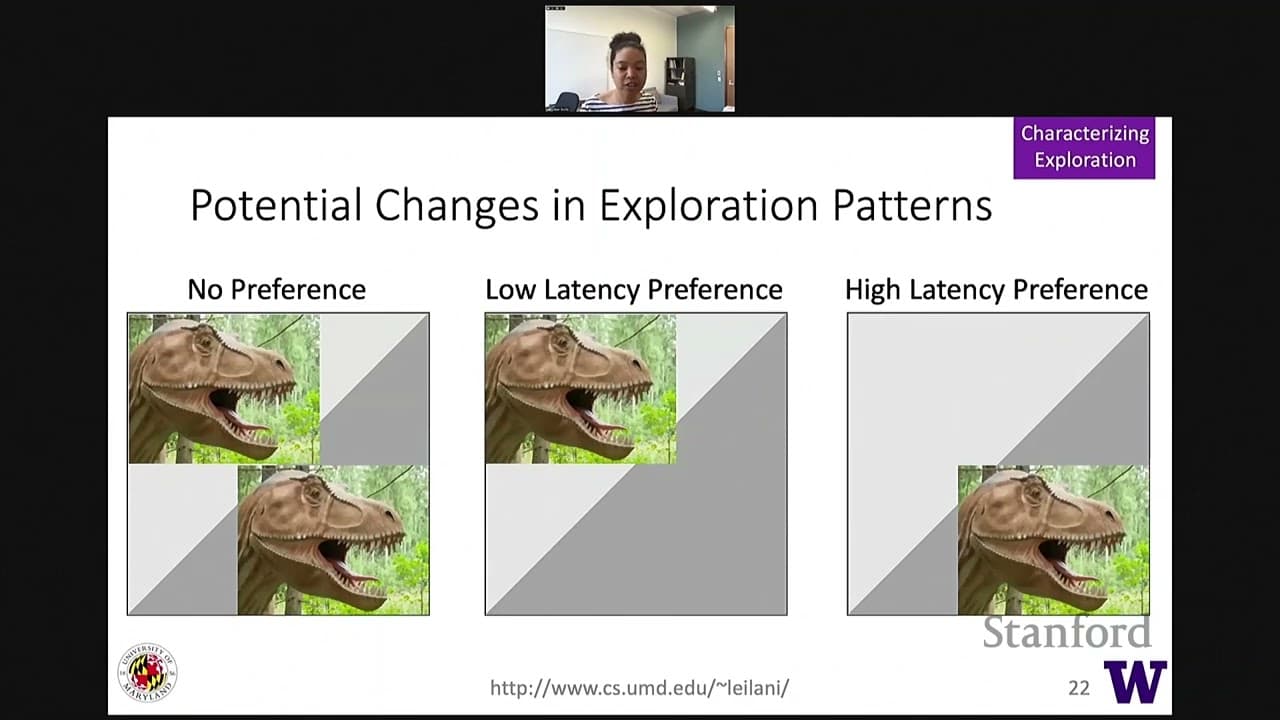
- 👤 System latency can significantly impact user exploration performance.
- 🪛 Forecast is a system that reduces latency through behavior-driven optimizations.
- ❓ Benchmarks are critical for evaluating interactive analysis systems and comparing their performance.
- 👤 User modeling and machine learning can enhance interactive data analysis systems by understanding user behavior and improving system responsiveness.
Install to Summarize YouTube Videos and Get Transcripts
Explore YouTube Video Summarizer or Get YouTube Transcript Extractor
Questions & Answers
Q: Why are existing visualization systems not scalable for large datasets?
Visualization systems are designed to work with small datasets that can fit in main memory or require data processing on external systems, making them inefficient for large datasets.
Q: Why are database management systems not interactive?
Database management systems are optimized for efficient data processing and execution of jobs, but they lack responsiveness and user-friendly interfaces for interactive exploration.
Q: How can the combination of database management systems and visualization systems improve data analysis?
Integrating these systems allows database management systems to focus on efficient data processing, while visualization systems provide intuitive interfaces for analysts to interpret and manipulate the results of computations.
Q: What challenges arise when exploring large, multi-dimensional datasets?
Large, multi-dimensional datasets like satellite sensor data are complicated to manage and require scalable solutions. They often require specialized techniques for data processing and analysis.
Q: How does system latency impact user exploration performance?
System latency can bias users' exploration behaviors, leading them to prefer lower latency regions of the data and avoid high latency areas. Reducing latency improves user exploration performance.
Q: What is the key insight of the forecast system?
Forecast leverages user behavior models to optimize tile prefetching, reducing system latency and improving user exploration performance.
Q: Why are benchmarks important for evaluating interactive analysis systems?
Benchmarks provide a standardized way to compare the performance and capabilities of different interactive analysis systems, allowing users to make informed decisions and developers to improve their systems.
Q: How can user modeling and machine learning enhance interactive data analysis systems?
User modeling and machine learning can help understand user behavior, optimize system behavior based on user patterns, and provide personalized recommendations for data exploration.
Summary & Key Takeaways
-
Organizations are struggling to handle the massive amounts of data being collected and lack effective solutions for interactive data exploration.
-
Visualization systems offer intuitive interfaces for data exploration but lack scalability, while database management systems are scalable but not interactive.
-
Integrating database management systems with visualization systems can create interactive data analysis systems that leverage the strengths of both.
Read in Other Languages (beta)
Share This Summary 📚
Summarize YouTube Videos and Get Video Transcripts with 1-Click
Try YouTube Summary with ChatGPT & Claude or YouTube Transcript Generator
Explore More Summaries from Stanford Online 📚






Summarize YouTube Videos and Get Video Transcripts with 1-Click
Try YouTube Summary with ChatGPT & Claude or YouTube Transcript Generator