Why Does Anderson Say Europe Is in Decline?
TL;DR
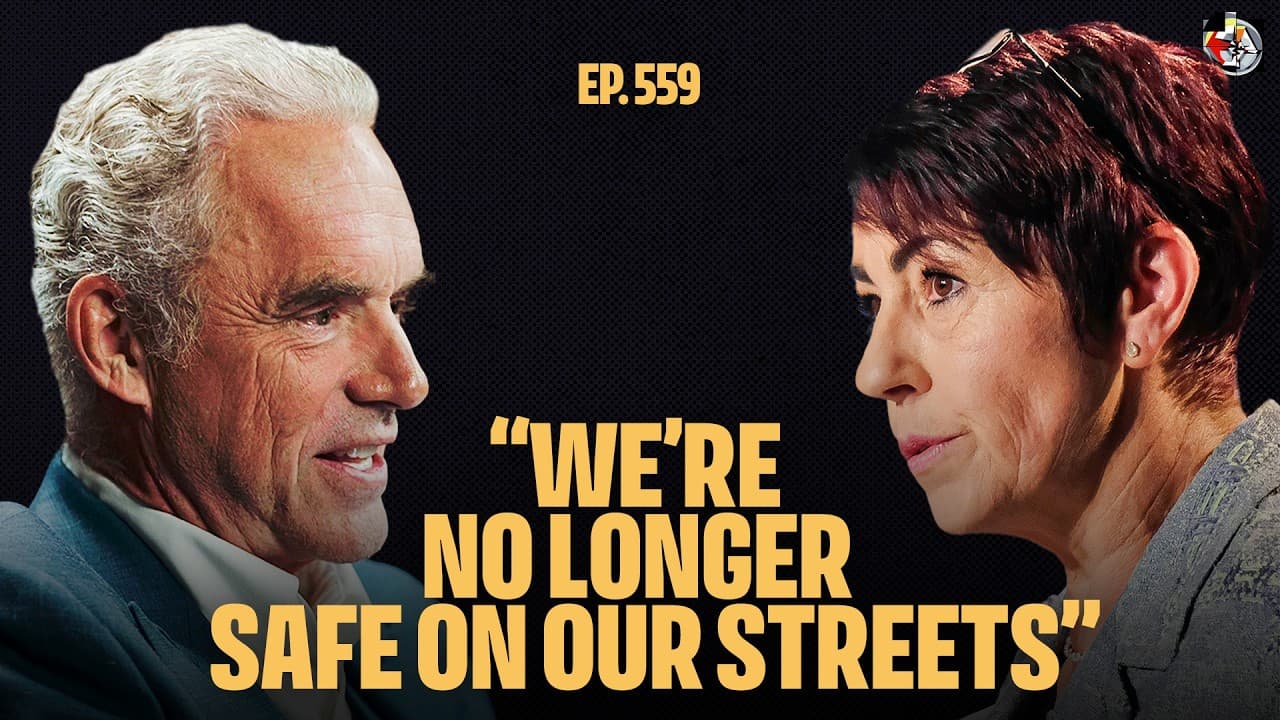
Christine Anderson argues that Europe can reverse its decline by restoring national sovereignty, democratic accountability, and policies focused on citizens rather than supranational priorities. She identifies mass immigration, the euro, centralized EU authority, deindustrialization, climate policy, and the erosion of representative government as major problems, while presenting the AfD as a response to Germans who feel politically unrepresented.
Transcript
Germany is turning into a into a hellhole country. We want policies. We want politics that actually represent the people again. You got a radically centralized Europe where the distance between the citizens and the government grew to like slave tyrant proportions. But now we are at a point where um the peoples uh of Europe are no longer sovereign. ... Read More
Key Insights
- Anderson’s political shift began after the United States subprime crisis drew her attention to widespread home losses and the forces behind them. She says this experience changed how she viewed established political institutions and contributed to her refusal to support Germany’s Christian Democrats in 2009.
- Political homelessness was Anderson’s description of having no party that represented her views after the Christian Democrats and Free Democratic Liberals changed direction. She says the experience affected her deeply and led her to cast an invalid vote in Germany’s 2009 election.
- The AfD was founded in 2013 around criticism of the EU and the euro, according to Anderson’s account. After discovering the new party through a television discussion, she researched it online, applied for membership that same night, and remained involved from its beginning.
- Democracy is government of, for, and by the people, as Anderson frames the principle. She argues that elected officials have increasingly stopped considering the interests of the citizens who elected and pay them, replacing representation with policies that dictate what people should want or need.
- Supranational authority is presented by Anderson as a threat to national sovereignty. She claims that organizations such as the EU and WEF have become the actual centers of power and decision-making, leaving European peoples with less control over policies that affect their countries.
- Political stigmatization is described as a strategy for marginalizing the AfD and its positions. Anderson says the party was first labeled anti-European for criticizing the euro, then branded xenophobic and Islamophobic when it opposed mass immigration and asylum policies.
- The far-right label has lost influence, according to both participants, because it has been applied to increasingly large groups of people. Anderson argues that repeated derogatory labeling becomes ineffective when disagreement on each controversial issue creates another population segment targeted for stigmatization.
- Europe’s difficulties are linked in the discussion to mass immigration, rising crime, deindustrialization, centralized government, climate policy, the euro, and weakened democratic representation. These are presented as Anderson’s diagnosis of decline and as reasons she believes European politics must again prioritize citizens and national sovereignty.
Install to Summarize YouTube Videos and Get Transcripts
Explore YouTube Video Summarizer or Get YouTube Transcript Extractor
Questions & Answers
Q: Why did Christine Anderson join the AfD?
Christine Anderson says she joined the AfD because Germany’s established Christian Democrats and Free Democratic Liberals no longer represented the policies she had supported. After voting invalid in 2009, she discovered the newly founded AfD during a television discussion in 2013. Its criticism of the EU and the euro matched her concerns, so she researched the party online and submitted a membership application that same night.
Q: What caused Christine Anderson’s political awakening?
Anderson identifies the United States subprime crisis as her political awakening. She watched people lose their homes and began asking why the crisis was happening. Although she had supported Angela Merkel and the Christian Democrats in 2005, her changing view of established institutions meant that she could not support the party in the next election, leading her to cast an invalid vote in 2009.
Q: How does Christine Anderson define Europe’s democratic problem?
Anderson defines the democratic problem as a growing separation between citizens and political authority. She says democracy should mean government of the people, for the people, and by the people. In her account, elected officials increasingly dictate citizens’ wants and needs rather than considering their interests, while important decisions move toward supranational organizations instead of remaining with sovereign European peoples.
Q: Why does Anderson criticize the European Union and the euro?
Anderson says her party emerged partly from criticism of both the European Union and its common currency. She argues that radical centralization has widened the distance between citizens and government, while European peoples have lost sovereignty. In her telling, this criticism was portrayed as hatred of Europe, even though she presents it as an effort to restore democratic accountability and national control over political decisions.
Q: Why has the AfD been described as far right?
Anderson argues that the description is used to defame and stigmatize a party that advocates policies its members consider common sense and representative of citizens. She says the AfD was initially called anti-European because it criticized the euro. After opposing mass immigration and disputed asylum claims, the party was also labeled xenophobic and Islamophobic. Her account presents these labels as responses to political disagreement.
Q: Why does Anderson think political labels are losing their power?
Anderson believes derogatory political labels lose their force when they are applied to nearly everyone who disagrees with dominant positions. She says each controversial issue produces another group that must be stigmatized, eventually bringing a large share of the population under the same label. Peterson similarly suggests that the far-right epithet lost considerable useful currency during the two or three years preceding the conversation.
Q: What problems does Anderson associate with Germany and Europe?
The discussion associates European decline with mass immigration, rising crime, deindustrialization, centralized EU authority, climate policies, the euro, and declining national sovereignty. Anderson also argues that elected officials no longer consistently represent citizens’ interests. These points are her political diagnosis, presented as evidence that Germany and Europe are suffering from ideological policies and increasingly distant, unaccountable decision-making structures.
Q: How does Anderson believe Europe can respond to political decline?
Anderson’s stated approach is to restore politics that represent citizens and recover democratic principles centered on government by, for, and of the people. Her argument implies returning meaningful decision-making authority to sovereign nations, reducing the distance between citizens and government, and reconsidering policies involving immigration, the euro, centralized EU power, climate priorities, and deindustrialization. These proposals reflect her political position in the interview.
Summary & Key Takeaways
-
Christine Anderson describes becoming politically homeless after the Christian Democrats and Free Democratic Liberals changed the policies she had supported. The United States subprime crisis prompted her political awakening, while the emergence of a new party critical of the EU and the euro led her to join the AfD in 2013.
-
Anderson argues that democratic government should operate for, by, and through the people, but says European officials increasingly dictate citizens’ needs instead of representing them. She claims that meaningful authority has shifted toward supranational organizations and that the widening distance between governments and citizens has weakened national sovereignty and democratic accountability.
-
The conversation examines criticism directed at the AfD and other conservative European movements. Anderson says opponents initially portrayed her party as hostile to Europe because it criticized the euro, then called it xenophobic and Islamophobic after it opposed mass immigration. She believes repeated political labeling has become less effective as more citizens face similar stigmatization.
Read in Other Languages (beta)
Share This Summary 📚
Summarize YouTube Videos and Get Video Transcripts with 1-Click
Try YouTube Summary with ChatGPT & Claude or YouTube Transcript Generator
Explore More Summaries from Jordan B Peterson 📚

Summarize YouTube Videos and Get Video Transcripts with 1-Click
Try YouTube Summary with ChatGPT & Claude or YouTube Transcript Generator