What Is the Chinese AI Open Source Trifecta?
TL;DR
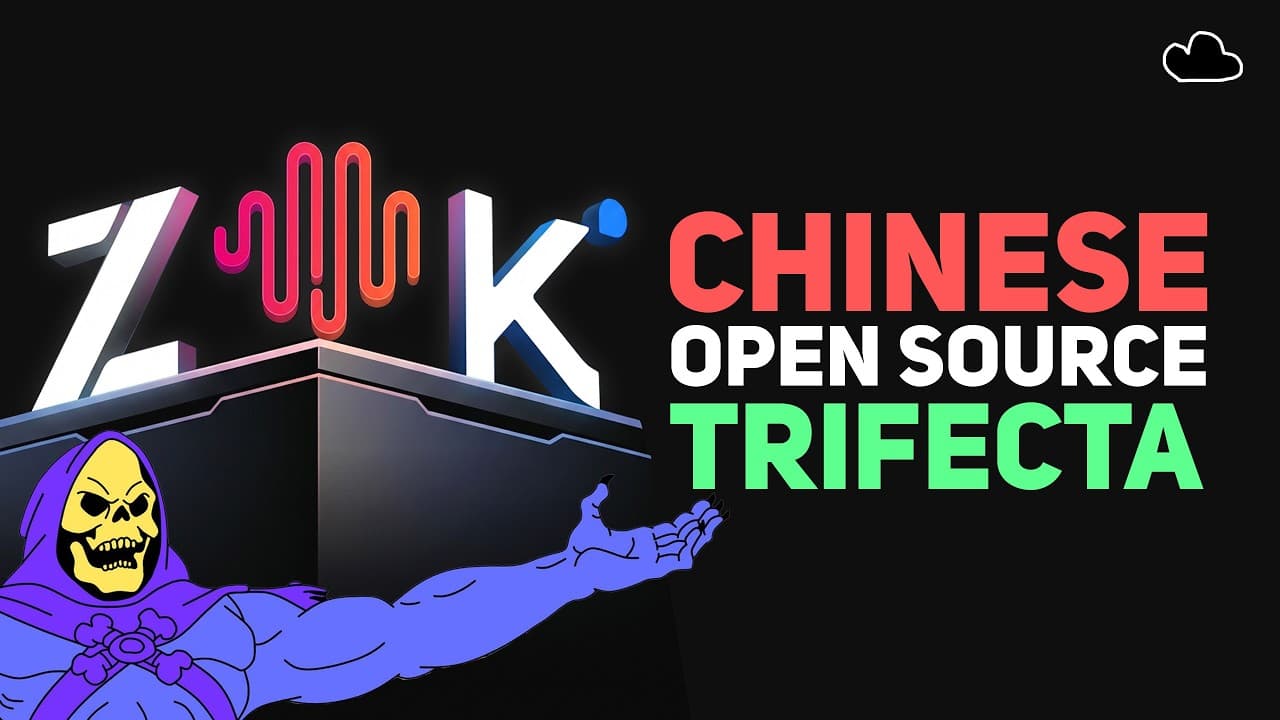
The Chinese AI open source trifecta comprises Moonshot AI, ZAI, and MiniMax, which have emerged as leading players in open source AI development. These companies have released state-of-the-art models that compete with giants like Google and OpenAI. Their focus on practical applications and agentic AI has allowed them to challenge established benchmarks and offer affordable alternatives.
Transcript
In the past few months, we witnessed some of the craziest developments in open source LLM. From July to December, there was a back-to backto backto backto back state-of-the-art open weights releases, all coming from different research labs. What's even crazier is that they were all achieved with different techniques and model sizes with each model ... Read More
Key Insights
- Moonshot AI is a pioneering open source research lab known for risk-taking and innovative models like Kim K2.
- ZAI, formerly Zpoo AI, has released models like GLM 4.7 that outperform larger counterparts in certain aspects.
- MiniMax pivoted from AI roleplay apps to LMS, releasing models like Miniax M2 with competitive performance.
- The industry shift from reasoning to practical application benchmarks has opened opportunities for smaller labs.
- Agentic AI allows models to specialize in narrow use cases, leveling the playing field against industry giants.
- Moonshot AI's quantization aware training enhances inference efficiency, reflecting real user experiences.
- ZAI's focus on practical coding applications positions it as a cost-effective alternative to premium tools.
- MiniMax's ability to pivot and innovate rapidly has positioned it as a strong contender in AI development.
Install to Summarize YouTube Videos and Get Transcripts
Explore YouTube Video Summarizer or Get YouTube Transcript Extractor
Questions & Answers
Q: What is the Chinese AI open source trifecta?
The Chinese AI open source trifecta consists of Moonshot AI, ZAI, and MiniMax. These companies have emerged as leading players in the open source AI community, releasing state-of-the-art models that compete with industry giants like Google and OpenAI. They focus on practical applications and agentic AI, challenging established benchmarks and offering affordable alternatives.
Q: How does Moonshot AI enhance model inference efficiency?
Moonshot AI enhances model inference efficiency through quantization aware training. This technique allows their models to run at lower precision during inference, improving speed and reducing costs while maintaining performance. By aligning benchmark results with real user experiences, Moonshot AI ensures that their models are both efficient and practical for everyday use.
Q: What makes ZAI's models cost-effective alternatives?
ZAI's models are cost-effective alternatives due to their focus on practical coding applications and efficient design. For example, their GLM 4.7 model is three times smaller than competitors like Kim K2, yet performs better in certain aspects. By offering models at lower costs, ZAI provides affordable solutions for developers, challenging premium tools like Anthropic's Claude Code.
Q: Why did MiniMax pivot from roleplay apps to LMS?
MiniMax pivoted from AI roleplay apps to LMS to capitalize on the growing demand for large language models. Their initial success with closed-source models like Hyo AI and Speech 02 HD demonstrated their capability in AI development. By entering the LMS market with models like Miniax M2, MiniMax aims to provide competitive and innovative solutions in AI reasoning and agentic applications.
Q: What is agentic AI and how does it impact model development?
Agentic AI refers to models that specialize in narrow use cases, allowing them to excel in specific tasks. This approach impacts model development by enabling smaller labs to compete with industry giants by focusing on practical applications rather than broad reasoning capabilities. Agentic AI has led to a shift in benchmarks, emphasizing practical performance over traditional metrics.
Q: How have practical application benchmarks changed the AI landscape?
Practical application benchmarks have shifted the AI landscape by prioritizing real-world usability over traditional reasoning metrics. This change allows smaller labs to compete with established giants by focusing on specialized applications and user experiences. The emphasis on practical performance has led to innovations in model design and efficiency, fostering competition and accelerating AI progress.
Q: What innovations has Moonshot AI introduced in model design?
Moonshot AI has introduced several innovations in model design, such as replacing traditional optimizers with muon and developing hybrid attention models like Kim Linear. Their focus on quantization aware training ensures efficient inference, aligning benchmark results with user experiences. These innovations demonstrate Moonshot AI's commitment to risk-taking and pioneering open source research.
Q: How does MiniMax's pivot demonstrate its competitive edge?
MiniMax's pivot from roleplay apps to LMS demonstrates its competitive edge through its ability to adapt and innovate rapidly. By releasing models like Miniax M2, which top benchmarks in reasoning and agentic applications, MiniMax showcases its skill in AI development. Their focus on practical performance and application-driven design positions them as a strong contender in the AI landscape.
Summary & Key Takeaways
-
Moonshot AI, ZAI, and MiniMax are leading the charge in Chinese open source AI, releasing models that challenge industry giants. Their focus on practical applications and agentic AI has allowed them to compete effectively with companies like Google and OpenAI. These labs are expanding into application-level capabilities, offering affordable and accessible AI solutions.
-
Moonshot AI is known for its innovative models like Kim K2, which incorporate quantization aware training for efficient inference. ZAI, with models like GLM 4.7, emphasizes practical coding applications, providing cost-effective alternatives to premium tools. MiniMax, after pivoting from roleplay apps, has released competitive models like Miniax M2.
-
The shift from reasoning to practical application benchmarks has opened opportunities for smaller AI labs to compete with established giants. Agentic AI enables models to specialize in narrow use cases, leveling the playing field. The Chinese trifecta's focus on practicality and application-driven development is accelerating AI progress.
Read in Other Languages (beta)
Share This Summary 📚
Summarize YouTube Videos and Get Video Transcripts with 1-Click
Try YouTube Summary with ChatGPT & Claude or YouTube Transcript Generator
Explore More Summaries from bycloud 📚


Summarize YouTube Videos and Get Video Transcripts with 1-Click
Try YouTube Summary with ChatGPT & Claude or YouTube Transcript Generator