What Is Code-Switching and How Does It Work?
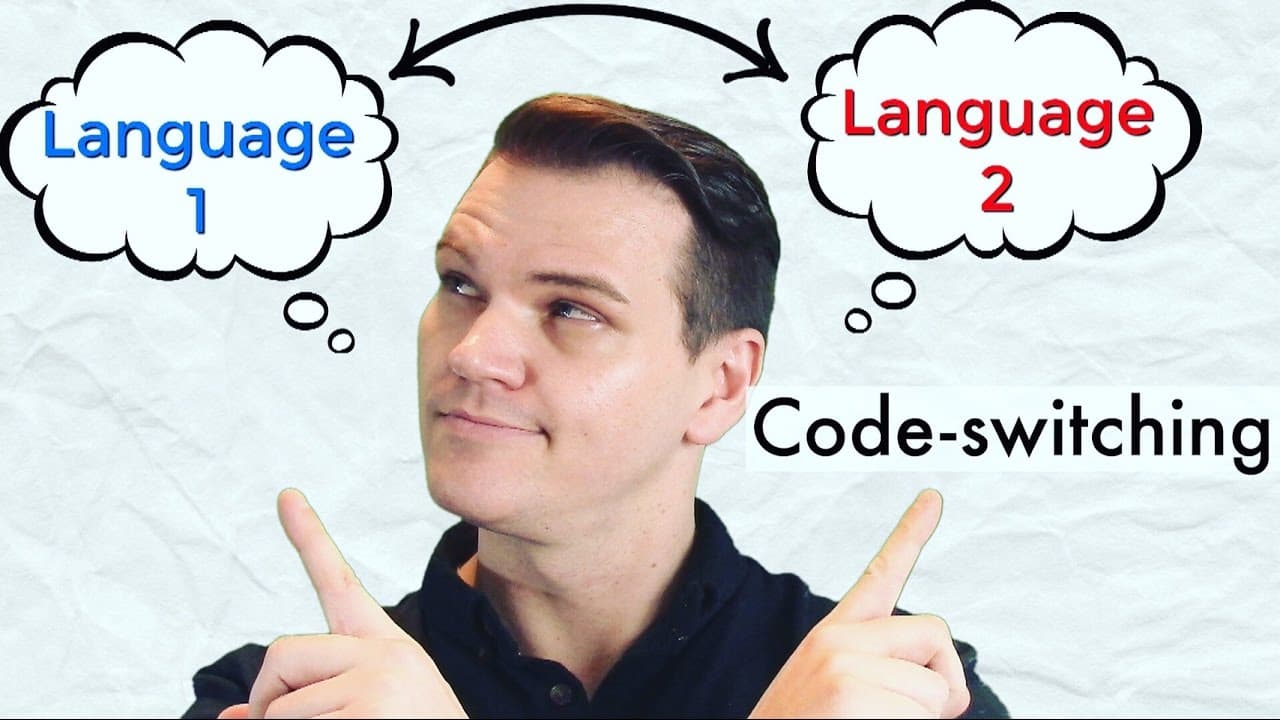
TL;DR
Code-switching is the practice of alternating between two or more languages within a conversation, often unconsciously. It serves various functions such as emphasizing points, expressing identity, and including or excluding participants. Common in bilingual contexts, it can be categorized into intersentential, intrasentential, and tag-switching.
Transcript
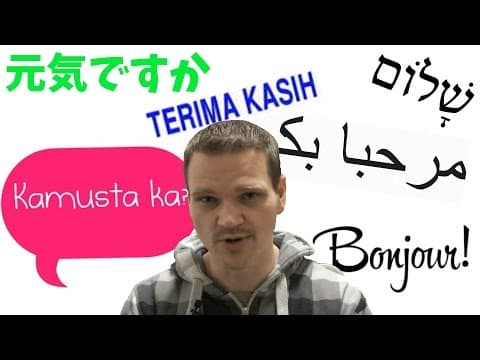
Follow Langfocus on Facebook, Twitter and Instagram. Hello everyone, (see screen) Some people are monolingual and speak just one language. Other people are bilingual or multilingual and speak more than one language. Bilingual or multilingual people sometimes switch back and forth between two or more different languages. This is called code switchin... Read More
Key Insights
- Code-switching is common among bilingual and multilingual speakers, often occurring within immigrant families and in countries with colonial histories.
- It can serve various functions, such as directive, expressive, referential, phatic, metalinguistic, and poetic purposes.
- The matrix language is typically the dominant or native language, while the embedded language is the additional language used.
- Common forms of code-switching include intersentential, intrasentential, and extra-sentential or tag-switching.
- Code-switching is often impulsive, with speakers switching languages without conscious choice.
- Intersentential switching involves changing languages at sentence or clause boundaries, as seen in Indian and Filipino movie examples.
- Intrasentential switching occurs within a single sentence, often to emphasize a point or express emotion.
- Tag-switching involves inserting a tag from one language into another language's sentence, often for emphasis or correction.
Install to Summarize YouTube Videos and Get Transcripts
Explore YouTube Video Summarizer or Get YouTube Transcript Extractor
Questions & Answers
Q: What is code-switching and where is it commonly observed?
Code-switching is the practice of alternating between two or more languages within a conversation. It is commonly observed among bilingual or multilingual individuals, especially within immigrant families and in countries where a native language is spoken alongside a colonial language, such as India and the Philippines.
Q: What are the main functions of code-switching?
The main functions of code-switching include directive (to include or exclude people), expressive (to express identity), referential (to express ideas more easily), phatic (to emphasize), metalinguistic (to comment on language), and poetic (for artistic purposes). Each function serves a specific communicative purpose within a conversation.
Q: How does code-switching differ from diglossia?
Code-switching involves switching languages within a single conversation or even a single sentence, often impulsively. In contrast, diglossia refers to switching between two different languages or forms of a language in different situations, such as formal versus informal contexts. Code-switching is more fluid and spontaneous compared to diglossia.
Q: What are the different forms of code-switching?
The different forms of code-switching include intersentential switching, where languages switch at sentence or clause boundaries; intrasentential switching, where languages switch within a single sentence; and extra-sentential or tag-switching, where a tag from one language is inserted into a sentence in another language. Each form serves different communicative purposes.
Q: Can you provide an example of intersentential code-switching?
An example of intersentential code-switching is from the Indian movie 'The Three Idiots,' where the director uses both Hindi and English in a single sentence: 'Don’t forget के हरै साल ICE में चारे लाख select होते हैं। you!' Here, the switching occurs at the clause boundary, drawing attention to specific parts of the sentence.
Q: What is the matrix language in code-switching?
The matrix language in code-switching is the dominant language used in a conversation, often the native language of the speakers. It provides the grammatical structure for the conversation, while the embedded language is the additional language used for specific purposes, such as emphasizing a point or expressing identity.
Q: How does code-switching reflect cultural identity?
Code-switching reflects cultural identity by allowing speakers to express their connection to different cultures or communities. For example, in the Philippines, switching between Tagalog and English can signal social status or a cosmopolitan identity. It enables speakers to navigate between different cultural norms and express multifaceted identities.
Q: Why is code-switching common in the Philippines?
Code-switching is common in the Philippines due to the country's bilingual environment, where English and Tagalog are both widely spoken. This practice is especially prevalent among middle and upper-class individuals, where switching between languages can express identity, social status, and educational background. It is a natural part of communication in many Filipino contexts.
Summary & Key Takeaways
-
Code-switching is a linguistic phenomenon where speakers switch between languages within a conversation. It is prevalent among bilinguals and multilinguals, serving functions like expressing identity or emphasizing points. Examples from Indian and Filipino movies illustrate different types of code-switching, including intersentential, intrasentential, and tag-switching.
-
In code-switching, the matrix language is the dominant language, and the embedded language is the secondary one. Speakers may switch languages for directive, expressive, referential, phatic, metalinguistic, or poetic functions. The switching is often subconscious and can occur within sentences or at sentence boundaries.
-
Examples from movies demonstrate how code-switching functions in real-life scenarios. In Indian and Filipino contexts, code-switching reflects cultural identity and status. The video encourages viewers to share their experiences with code-switching and thanks Patreon supporters for their contributions.
Read in Other Languages (beta)
Share This Summary 📚
Summarize YouTube Videos and Get Video Transcripts with 1-Click
Try YouTube Summary with ChatGPT & Claude or YouTube Transcript Generator
Explore More Summaries from Langfocus 📚


Summarize YouTube Videos and Get Video Transcripts with 1-Click
Try YouTube Summary with ChatGPT & Claude or YouTube Transcript Generator