What Is the Theory of Plate Tectonics and Why Is It Important?
TL;DR
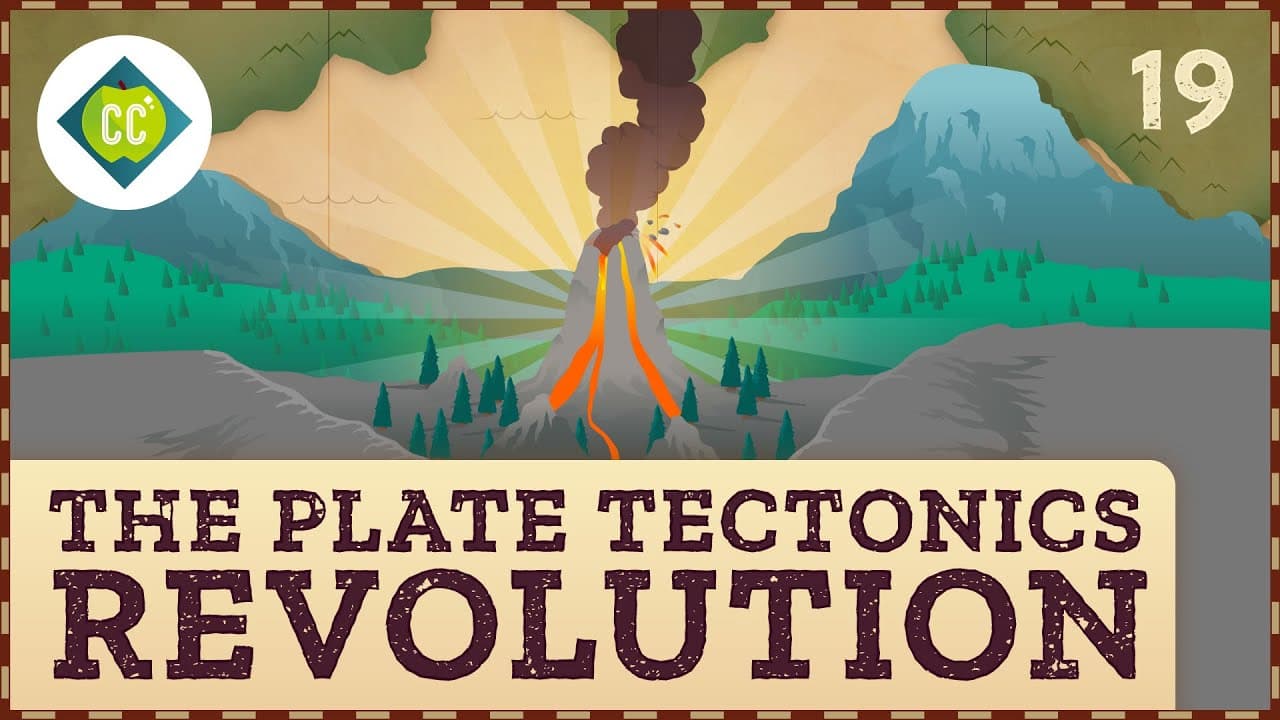
The theory of plate tectonics explains the movement of Earth's lithospheric plates, which shapes the planet's continents and causes geological phenomena like earthquakes and volcanoes. It emerged from discoveries of seafloor spreading, paleomagnetism, and subduction, revolutionizing our understanding of Earth's structure and processes.
Transcript
In the 1960s a quiet revolution took place that shifted our entire understanding of how the Earth works. Like many revolutions throughout history, it’s not a single idea that came from a single person. But eventually we pulled all that science together to create the theory of plate tectonics which explains the structure and behavior of our home pla... Read More
Key Insights
- 🍽️ The theory of plate tectonics revolutionized Earth science in the 1960s, explaining the movement of lithospheric plates and geological phenomena.
- 🖐️ Alfred Wegener's theory of continental drift and the supercontinent Pangaea laid the foundation for plate tectonics.
- 🖕 The discovery of mid-oceanic ridges and seafloor spreading provided evidence for the movement and creation of new crust.
- 👨🎤 Paleomagnetism and magnetic patterns in rocks confirmed the ideas of seafloor spreading and plate movement.
- 🍽️ Plate boundaries, including divergent, convergent, and transform boundaries, are dynamic zones where geological activity like earthquakes and volcanoes occur.
- 🍽️ The theory of plate tectonics continues to be explored and refined, with research focusing on the origins of plate movement and the connections to Earth's evolution and the biosphere.
- 👻 Satellites and advanced technology allow for the precise monitoring of plate motion and changes in Earth's surface.
Install to Summarize YouTube Videos and Get Transcripts
Explore YouTube Video Summarizer or Get YouTube Transcript Extractor
Questions & Answers
Q: How did Alfred Wegener propose the theory of continental drift and Pangaea?
Wegener used evidence such as fossil distribution, rock types, and mountain ranges to suggest that the continents were once joined together in a supercontinent called Pangaea. He hypothesized that continental drift caused the breakup of Pangaea into today's landmasses.
Q: What evidence did Harry Hess and Robert Dietz provide for seafloor spreading?
Harry Hess proposed that the seafloor was like a conveyor belt, with new crust being formed at mid-oceanic ridges and older crust being recycled into the mantle at subduction zones. Robert Dietz published similar ideas, but it was the discovery of magnetic patterns in rocks that confirmed seafloor spreading.
Q: How do plate boundaries contribute to geological phenomena?
At divergent plate boundaries, magma wells up, creating new crust and spreading the seafloor. Convergent boundaries occur when plates collide, leading to subduction, earthquakes, and the formation of volcanic mountains. Transform boundaries involve plates sliding past each other, causing stress and occasional earthquakes.
Q: How has the understanding of plate tectonics evolved since its inception?
The theory of plate tectonics has been refined over the years, with new research exploring the origins of plate movement and the formation of continents. Scientists are also comparing Earth's plate tectonics with Venus, and studying the connections between tectonic activity and the evolution of life on Earth.
Summary & Key Takeaways
-
In the 1960s, the theory of plate tectonics revolutionized our understanding of Earth's structure and behavior.
-
Alfred Wegener proposed the idea of continental drift and the supercontinent Pangaea in 1912, but it was met with skepticism until new evidence emerged in the 1950s and 1960s.
-
The discovery of mid-oceanic ridges, seafloor spreading, paleomagnetism, and subduction provided evidence for plate movement and the formation of new crust.
-
The world's coastlines were analyzed, and mathematical calculations combined with computing power led to the development of the theory of plate tectonics.
Read in Other Languages (beta)
Share This Summary 📚
Summarize YouTube Videos and Get Video Transcripts with 1-Click
Try YouTube Summary with ChatGPT & Claude or YouTube Transcript Generator
Explore More Summaries from CrashCourse 📚


Summarize YouTube Videos and Get Video Transcripts with 1-Click
Try YouTube Summary with ChatGPT & Claude or YouTube Transcript Generator