Why Is Brain Cancer the Leading Cause of Death in Kids?
TL;DR
Brain cancer is the leading cause of death in children under 15 due to its aggressive nature and the challenges in treatment options. Understanding the genetics behind brain tumors and employing an interdisciplinary approach that includes biology, behavior, and societal factors is crucial for developing effective strategies for treatment and prevention.
Transcript
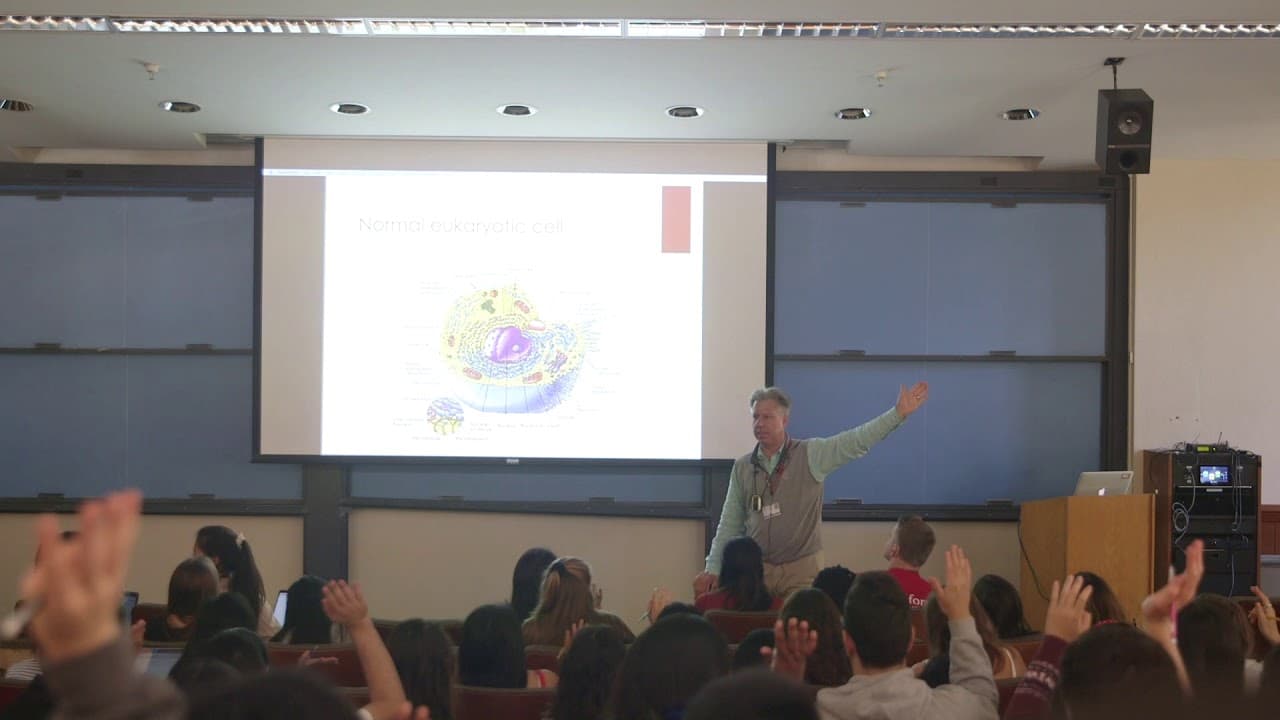
so I'm Paul Fisher I'm director of the program in human biology this is my seventh year directing so it's fun to be here it's a pleasure to be here and my job is to tell you a little bit about hum bio but then I'm also gonna use a case study a case to sort of set the table from what's going to go on this quarter in terms of what you're gonna learn ... Read More
Key Insights
- 🥺 Brain cancer is the leading cause of death in children under 15, highlighting the urgent need to find effective treatments.
- 🧠 Understanding the genetics and development of brain tumors is crucial in formulating targeted therapies and prevention strategies.
- 🧠 An interdisciplinary approach, incorporating biology, behavior, society, and culture, enables a comprehensive understanding of brain cancer and its impact on individuals and society.
- 🧠 Genetic mutations in specific pathways, such as the sonic hedgehog pathway, have been linked to an increased risk of developing brain cancer.
- 🖐️ The environment, such as exposure to certain compounds or toxins, may also play a role in the development of brain cancer.
- 🥳 Birth defects have been found to be associated with an increased risk of developing brain cancer.
- 🧠 The study of large populations and genetic analysis can provide insights into the genetic factors underlying brain cancer.
Install to Summarize YouTube Videos and Get Transcripts
Explore YouTube Video Summarizer or Get YouTube Transcript Extractor
Questions & Answers
Q: What is the current status of brain cancer in children?
Brain cancer is the leading cause of death in children under 15 and remains a major challenge in terms of treatment and prevention.
Q: How does brain cancer differ from other types of cancer?
Brain cancer poses unique challenges due to its location in the brain and its impact on cognitive function and development.
Q: What role does genetics play in brain cancer development?
Mutations in specific genes, such as those in the sonic hedgehog pathway, have been linked to an increased risk of developing brain cancer.
Q: How can an interdisciplinary approach help in addressing brain cancer?
An interdisciplinary approach, combining biology, behavior, society, and culture, allows for a comprehensive understanding of brain cancer and the development of effective strategies for treatment and prevention.
Summary & Key Takeaways
-
Brain cancer is the leading cause of death in children under 15, and there has been limited progress in finding effective treatments.
-
Understanding the genetics and development of brain tumors is essential in formulating strategies for treatment and prevention.
-
The interdisciplinary approach of human biology offers a comprehensive understanding of brain cancer, incorporating biology, behavior, society, and culture.
Read in Other Languages (beta)
Share This Summary 📚
Summarize YouTube Videos and Get Video Transcripts with 1-Click
Try YouTube Summary with ChatGPT & Claude or YouTube Transcript Generator
Explore More Summaries from Stanford 📚






Summarize YouTube Videos and Get Video Transcripts with 1-Click
Try YouTube Summary with ChatGPT & Claude or YouTube Transcript Generator