What Happens if a President Ignores Court Orders?
TL;DR
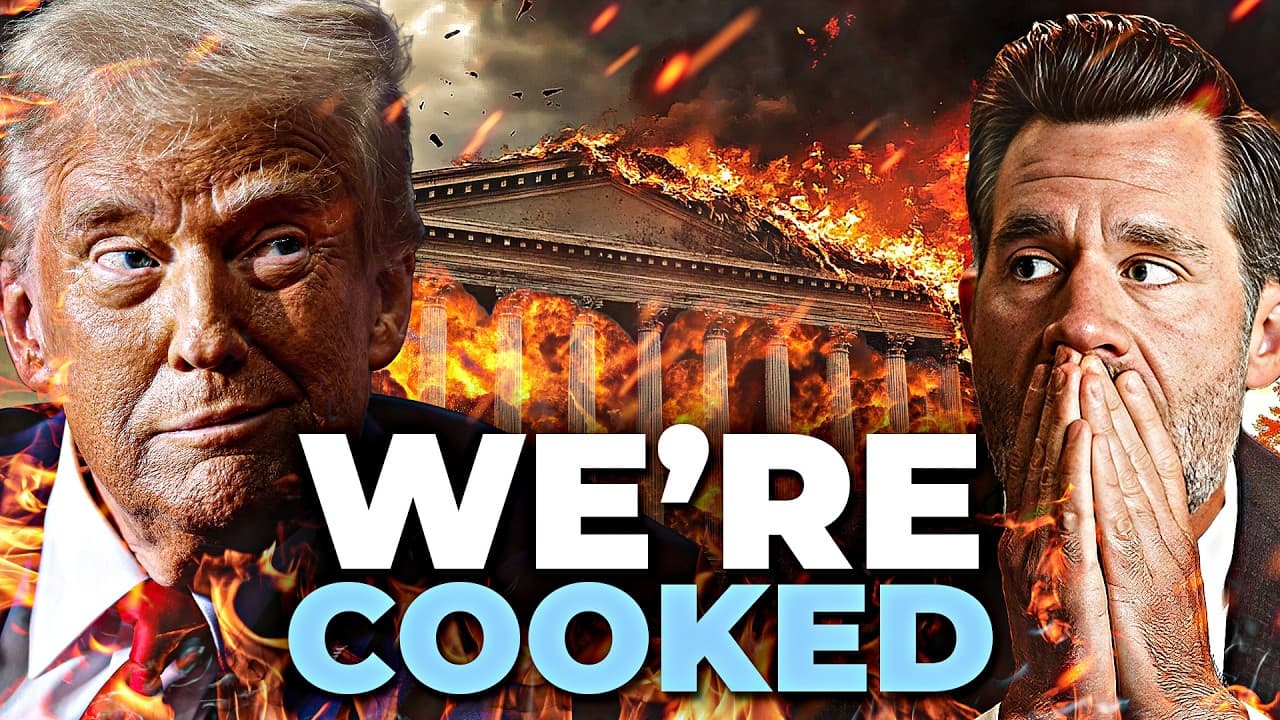
If a president ignores a court order, the judiciary’s authority can become effectively meaningless, eroding the rule of law and triggering a constitutional crisis. After Judge James Boasberg issued a 14-day order halting the deportation of over 200 Venezuelan immigrants, the Trump administration proceeded with the deportations. Courts can use contempt sanctions, while Congress can respond through impeachment and budget control. Read on to understand why enforcement remains so difficult.
Transcript
- Lawyers live by one ironclad rule. When the judge tells us to do something, we do it. That doesn't mean we always like it, and it doesn't mean we won't try to find other arguments to achieve the same ends. We're kinda like teenagers in that way. But at the end of the day, we roll our eyes privately and comply with what the judge tells us to do. A... Read More
Key Insights
- Presidents defying court orders can lead to constitutional crises by undermining judicial authority.
- The judiciary relies on compliance from the executive branch to enforce its rulings.
- Historical examples include Trump, Jackson, and Lincoln, though their situations differed in context and actions.
- Civil contempt aims to coerce compliance, while criminal contempt punishes disobedience.
- Courts can impose fines or jail time for contempt, but enforcement is complex against a president.
- Congress can hold presidents accountable through impeachment and controlling appropriations.
- Media coverage shapes public perception of legal and political events, highlighting biases.
- Judicial enforcement relies on the US Marshal Service, but political dynamics can complicate execution.
Install to Summarize YouTube Videos and Get Transcripts
Explore YouTube Video Summarizer or Get YouTube Transcript Extractor
Questions & Answers
Q: What happens if a president ignores a court order?
Presidential defiance can undermine the judiciary’s authority because courts depend on other branches recognizing and carrying out their orders. It can erode the rule of law, disrupt checks and balances, and trigger a constitutional crisis.
Q: What court order did the Trump administration allegedly defy?
On March 15th, US District Judge James Boasberg issued a 14-day temporary restraining order halting the deportation of over 200 Venezuelan immigrants. Although the judge said planes already in the air needed to turn around, the administration proceeded with the deportations.
Q: Why were the Venezuelan immigrants being deported?
Trump invoked the Alien Enemies Act of 1789 and asserted that certain immigrants were members of a Venezuelan gang. The transcript says the deportations occurred without due process establishing whether those people were actually gang members.
Q: How can courts enforce orders against a president?
Courts can use civil contempt to coerce compliance and criminal contempt to punish disobedience, including sanctions such as fines or jail time. Enforcement against a president is complicated because the judiciary lacks its own independent enforcement mechanism and relies on executive-branch cooperation.
Q: What role does the US Marshal Service play in enforcing court orders?
The US Marshal Service acts as the judiciary’s enforcement arm and can enforce federal court orders or arrest people who defy them. Political interference or resistance from executive officials can make enforcement against high-level officials difficult.
Q: How can Congress respond when a president defies the courts?
Congress can use impeachment as a political remedy for presidential misconduct. It can also control appropriations, conduct hearings, and investigate executive actions to impose constraints and public scrutiny.
Q: Did Andrew Jackson personally defy the Supreme Court in Worcester v. Georgia?
The transcript says it is a myth that Jackson personally defied the court’s order. He supported Georgia’s defiance and did not send marshals to enforce the ruling, while the famous statement attributed to him is described as almost certainly apocryphal.
Q: Did Abraham Lincoln defy a court order in Ex Parte Merryman?
Justice Roger Taney, sitting as a circuit court judge, ordered the general at Fort McHenry to bring John Merryman to a hearing, but the military denied a US marshal entry. Taney ruled that Merryman should have been brought to court, yet he did not direct Lincoln or the general holding Merryman to release him.
Summary & Key Takeaways
-
Presidential defiance of court orders threatens the judiciary's authority, risking a constitutional crisis. Historically, presidents have faced off with courts, but current actions may be unprecedented. The judiciary depends on compliance from other branches, and lack of adherence can erode the rule of law.
-
Courts use civil and criminal contempt to enforce orders, with sanctions like fines or jail time. However, enforcing these against a president is complex, and the process can be slow. The US Marshal Service typically enforces court orders, but political interference can complicate matters.
-
Congress holds power to check the executive through impeachment and budget control. Media coverage influences public perception, often highlighting biases. Understanding these dynamics is crucial for grasping the implications of presidential defiance on the rule of law.
Read in Other Languages (beta)
Share This Summary 📚
Summarize YouTube Videos and Get Video Transcripts with 1-Click
Try YouTube Summary with ChatGPT & Claude or YouTube Transcript Generator
Explore More Summaries from LegalEagle 📚



Summarize YouTube Videos and Get Video Transcripts with 1-Click
Try YouTube Summary with ChatGPT & Claude or YouTube Transcript Generator