What If There’s Another Earth? How We Find It
TL;DR
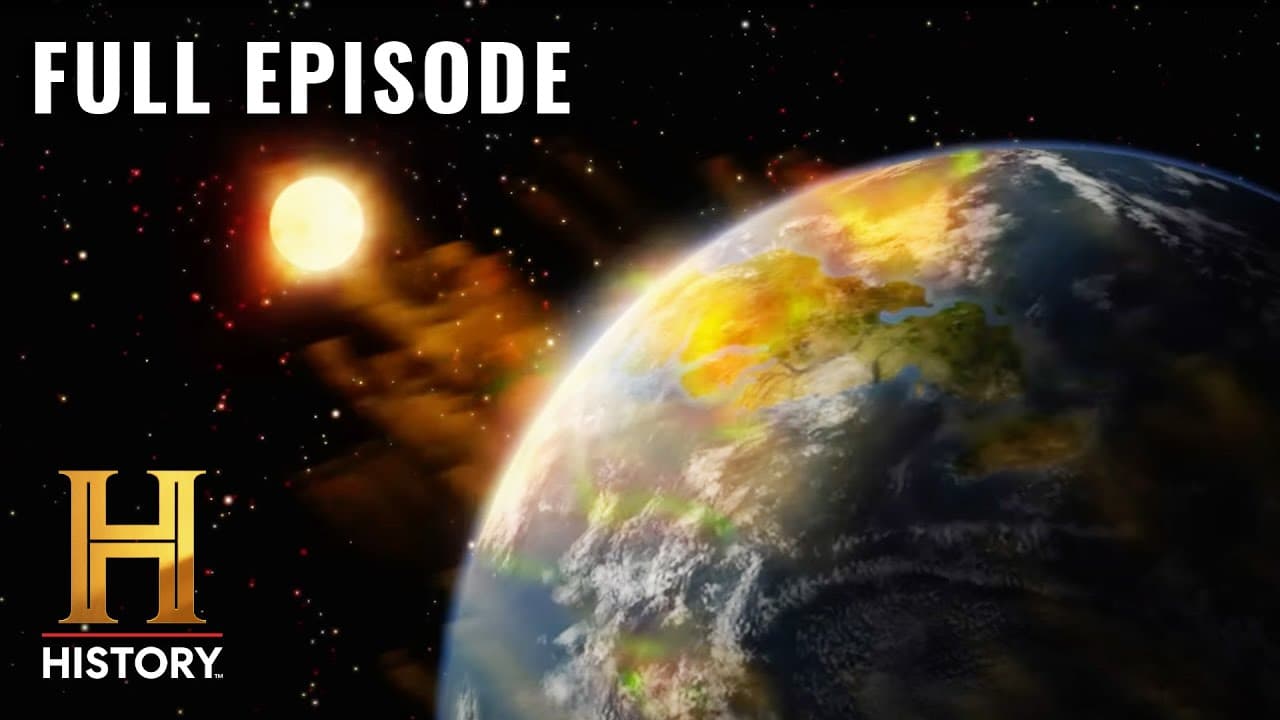
The episode explains that scientists model possible Earth-like worlds and search for them using theory, simulations, and future instruments. It covers habitable zones, planetary atmospheres, and the idea that life could exist in many different planetary environments, not just a carbon copy of Earth. It also questions how many intelligent civilizations might exist.
Transcript
NARRATOR: Are we alone, or is there another Earth-like planet somewhere in the universe? We have a fantastic goal yet for the next generation, which is to find planets that remind us of home. I believe we're right on the brink of having the technological capability to actually answer a question that humanity has been asking itself for the last 2,00... Read More
Key Insights
- Exoplanets are planets that exist outside our solar system.
- The Virtual Planetary Laboratory builds models to simulate planets around different stars.
- Plants on planets around hotter stars may appear red, orange, or yellow due to light absorption.
- Plants on cooler stars may evolve to use most of the available light, potentially appearing black.
- Liquid water is a prerequisite for life as a general criterion for habitability.
- The habitable zone depends on the star type and evolves over time as stars change.
- Spectroscopy aims to detect atmospheric gases that indicate life or Earth-like processes.
- The Drake equation estimates civilizations but can overestimate due to additional planetary factors and rarity of complex life.
- More videos from this channel:
- More from this channel: HISTORY
Install to Summarize YouTube Videos and Get Transcripts
Explore YouTube Video Summarizer or Get YouTube Transcript Extractor
Questions & Answers
Q: How do scientists define the search for another Earth in the universe?
Scientists define the search by asking whether a planet can support liquid water and have Earth-like environmental conditions. They use models to simulate planets around different star types, assess atmospheric composition with spectroscopy, and consider the habitable zone where temperatures may allow water to be liquid. This approach helps prioritize targets for future missions.
Q: What role do the Virtual Planetary Laboratory models play?
The Virtual Planetary Laboratory creates virtual worlds to predict how Earth-like planets would appear from space and how their environments would behave under different stellar radiation. By changing the star type and radiation, researchers explore diverse outcomes, including water presence, photosynthesis variations, and atmospheric signatures, before any direct observations are possible.
Q: Why might plants look different on planets around various stars?
Plants would absorb different wavelengths of light depending on the star’s spectrum. Around hotter, bluer stars, plants might reflect more red and orange light, appearing red to we observers. Around cooler stars, organisms could blacken to maximize light absorption, a result of adapting photosynthesis to available energy from the star.
Q: What is the habitable zone and why is it important?
The habitable zone is the region around a star where temperatures may allow liquid water to exist on a planet’s surface. It is crucial because water is considered a key medium for life; the zone’s location varies with the star’s type and can shift over time as the star evolves, influencing habitability prospects.
Q: How could future instruments help detect life on exoplanets?
Future instruments will analyze the light from distant planets as it passes through or reflects from their atmospheres, breaking it into spectra to identify gases like water vapor, carbon dioxide, oxygen, and ozone. The presence and ratios of these gases can indicate planetary processes and potential life-related chemistry.
Q: What is the Drake equation and what are its limitations according to the video?
The Drake equation provides a framework to estimate the number of intelligent civilizations by combining several factors about stars, planets, and life development. The video notes that the equation may overestimate civilizations, arguing complex life could be rarer due to additional variables like planetary tectonics and element recycling.
Q: Why do scientists study plate tectonics in the Rare Earth perspective?
Plate tectonics are thought to recycle elements essential for life and influence planetary habitability. The Rare Earth view argues that such geological processes may be uncommon or critical to sustaining long-term habitability, which would affect the likelihood of complex life and civilizations beyond Earth.
Q: How do exoplanet discoveries relate to Alpha Centauri and other nearby systems?
Exoplanet discoveries broaden the search for Earth-like worlds and help scientists understand how common habitable conditions might be in nearby star systems. By studying nearby candidates and using real data to refine models, researchers can better prepare for future missions and potential direct observations of nearby exoplanets.
Summary & Key Takeaways
-
The episode surveys how scientists model alternate Earths using the Virtual Planet Laboratory and how different star types affect planet warmth and photosynthesis, illustrating that life could adapt to many environments beyond our familiar Earth. It emphasizes water as a key factor for habitability and the limits of current detection methods.
-
It explains the habitable or Goldilocks zone varies with star type and time, and how liquid water is a central criterion for habitability, guiding where exoplanets might support life. It also notes the need for future missions and spectroscopy to identify atmospheric signs of life.
-
It discusses the Drake equation and critiques of its assumptions, arguing that intelligent life may be rarer due to factors like plate tectonics and planetary recycling, while highlighting the complexity of estimating civilizations across the universe.
Read in Other Languages (beta)
Share This Summary 📚
Summarize YouTube Videos and Get Video Transcripts with 1-Click
Try YouTube Summary with ChatGPT & Claude or YouTube Transcript Generator
Explore More Summaries from HISTORY 📚


Summarize YouTube Videos and Get Video Transcripts with 1-Click
Try YouTube Summary with ChatGPT & Claude or YouTube Transcript Generator