How could the US detonate a bomb on the Moon?
TL;DR
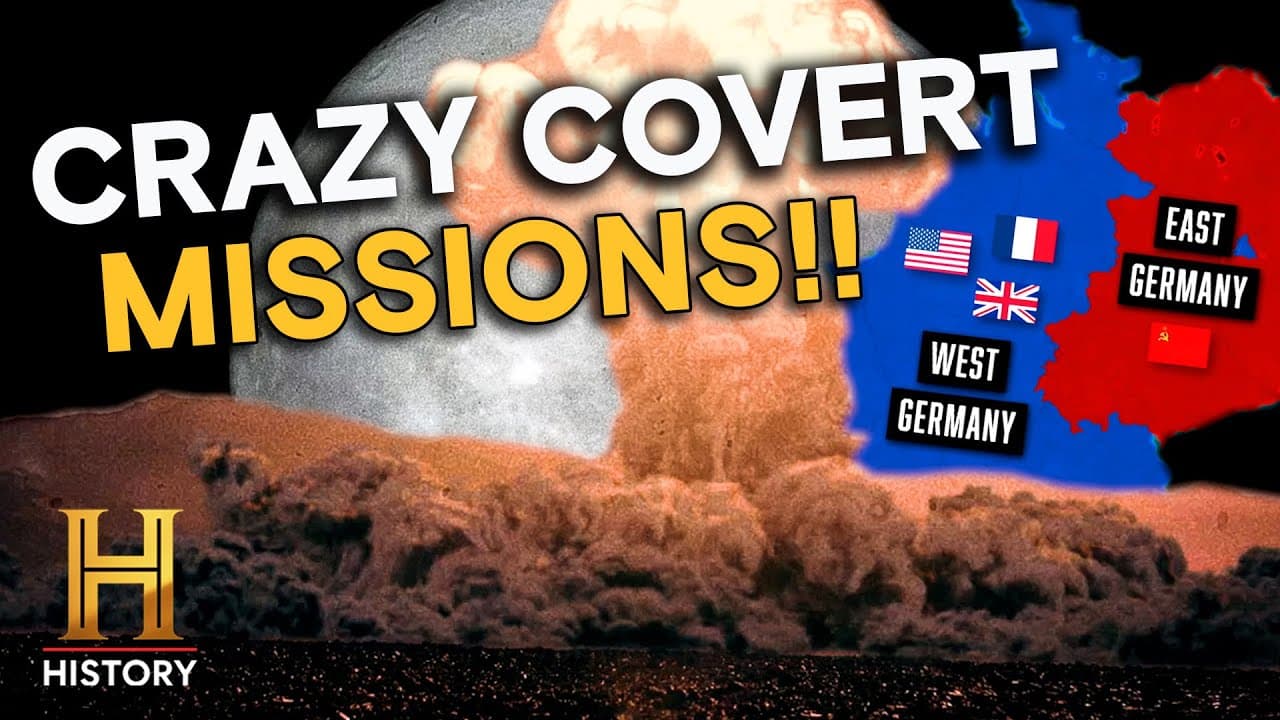
The plan called Project A119 proposed sending a nuclear warhead to the Moon to create a visible mushroom cloud as a warning of American power. NASA considered it but rejected the idea due to fears of misfire and triggering a Soviet response. The episode documents this near miss and related Cold War covert acts.
Transcript
- On October 4th, 1957, the Russians successfully launched the first satellite into space. It's called Sputnik 1 and the United States is not very happy about it. - America at that time doesn't really like it when Russia beats us to the punch on anything, especially when it comes to space and weaponry. - [Dan] The biggest fear among us military bra... Read More
Key Insights
- Project A119 was a real, secretly discussed plan to detonate a nuclear device on the Moon as a show of force. The plan used a W25 warhead with a 1.7 kiloton yield strapped to a missile for a lunar detonation. The proposal aimed to leave a visible, lasting American crater as a warning signal.
- The mission was met with concerns that a misfire could occur, causing damage or triggering a Soviet nuclear response, potentially escalating to full scale war. These risks led to the plan being shut down.
- NASA initially considered the idea within a broader push to catch up with Soviet space achievements, reflecting the urgency and fear of the space race during the Cold War.
- The episode situates the lunar detonation plan within a larger context of aggressive, sometimes absurd strategies explored by military and intelligence communities.
- In addition to space, the video recounts MI6 operations such as Tamarisk, which exploited Soviet material shortages to gather intelligence, including torn and used paper from latrines.
- The Winnipeg If Day stunt demonstrates another facet of wartime morale campaigns, using a Nazi occupation mock to raise war bonds, illustrating propaganda as a tool of national effort.
- The narrative shows how extreme ideas can be both technically possible and strategically rejected due to risk, ethics, and international consequences.
- Overall, the episode blends myth, memory, and factual record to reveal how fear influenced extraordinary proposals in history.
- More videos from this channel:
- More from this channel: HISTORY
Install to Summarize YouTube Videos and Get Transcripts
Explore YouTube Video Summarizer or Get YouTube Transcript Extractor
Questions & Answers
Q: A real search query question about the video 1
What was Project A119 and why was the plan to detonate a nuclear weapon on the Moon considered during the 1950s space race? The briefing describes a theoretical mission using a 1.7 kiloton W25 warhead attached to a ballistic missile aimed at the Moon, intended to create a public display of American power. It explains the secrecy surrounding the project, the reasoning behind proposing such a mission, and the concerns that ultimately halted it, including the risk of misfire and the possibility of triggering a Soviet counterstrike.
Q: A real search query question about the video 2
How did Winnipeg German occupation simulations function as a wartime morale and fundraising tactic in If Day? The piece describes 3,500 men in German uniforms simulating a Nazi occupation of Winnipeg, the staged events at key sites, and the rapid fundraising impact that followed, highlighting how fear and spectacle were used to mobilize public support and bond-drive contributions.
Q: A real search query question about the video 3
What is Tamarisk and how did MI6 use latrine intelligence during the Cold War? The segment explains that Tamarisk involved spies exploiting the Soviet economy by collecting disposable material like paper used by soldiers, which yielded cipher codes, troop reports, and tactical information about Soviet equipment, including tanks, showing a novel but effective method of intelligence gathering.
Q: A real search query question about the video 4
Why were there concerns about detonating a nuclear device on the Moon in the 1950s? The answer details fears of misfire, potential fallout on Earth or in the Soviet Union, and the risk of provoking a nuclear exchange, which ultimately led to the plan being abandoned despite initial interest from NASA.
Q: A real search query question about the video 5
What role did Carl Sagan play in the A119 project according to the episode? The transcript mentions that a young graduate student named Carl Sagan was part of the team assembled for Project A119, which underscores the involvement of notable scientists even in controversial, secretive military initiatives during the early space race.
Q: A real search query question about the video 6
How did the Manitoba If Day event raise war bonds and what was its broader purpose? The video explains that the staged Nazi occupation used fear to drive public participation, resulting in substantial war bond sales and illustrating how propaganda campaigns were integrated with fundraising during World War II.
Q: A real search query question about the video 7
What does The UnBelievable with Dan Aykroyd cover in Season 2 Episode 3 about space and espionage? It highlights the exploration of extraordinary but factual missions in history, the blend of dramatic recreations and archival evidence, and how these narratives reveal the uneasy balance between power, science, and security during the Cold War.
Q: A real search query question about the video 8
What is the overarching theme connecting the moon mission, Winnipeg simulation, and Tamarisk operation in this HISTORY clip? The answer points to how fear, strategic imagination, and the appetite for signaling national strength shaped enigmatic and high-stakes actions across space, society, and intelligence during the mid-20th century.
Summary & Key Takeaways
-
The story centers on an outlandish nuclear lunar mission from the 1950s, exploring why the idea was greenlit and why it was eventually shut down. It frames the tension of space race rivalries and the ethics of using celestial bodies as battlefield symbols.
-
The segment also covers other high tension operations from the era, including MI6 intelligence micro missions and a dramatic wartime propaganda exercise in Winnipeg, illustrating how fear and spectacle shaped history.
-
Taken together, the episodes reveal the blur between science, security, and propaganda in early space and espionage narratives.
Read in Other Languages (beta)
Share This Summary 📚
Summarize YouTube Videos and Get Video Transcripts with 1-Click
Try YouTube Summary with ChatGPT & Claude or YouTube Transcript Generator
Explore More Summaries from HISTORY 📚


Summarize YouTube Videos and Get Video Transcripts with 1-Click
Try YouTube Summary with ChatGPT & Claude or YouTube Transcript Generator