What Are the Basics of Multi-Task Learning?
TL;DR
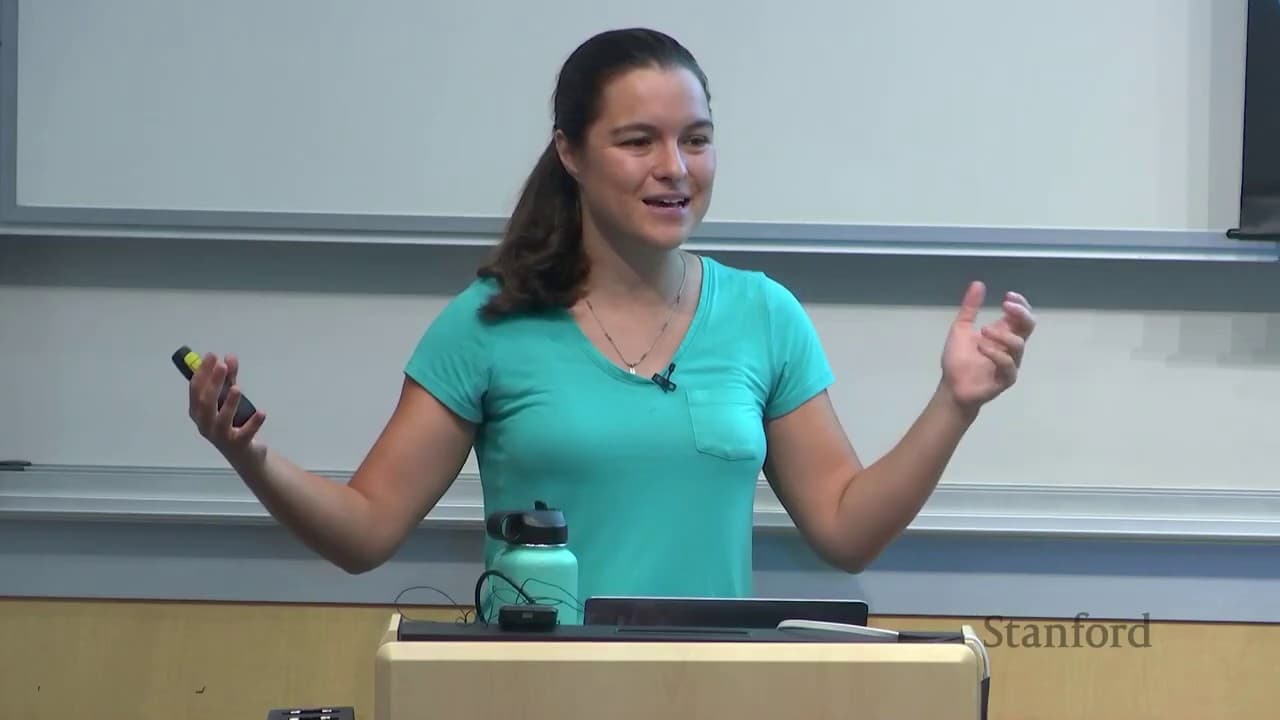
Multi-task learning involves training a neural network to perform multiple tasks simultaneously, optimizing shared parameters while minimizing negative transfer. Key elements include understanding model architectures, optimization techniques, and leveraging task descriptors to condition the network on different tasks. A case study on YouTube video recommendations illustrates practical applications and challenges in this learning approach.
Transcript
Welcome to the second lecture. First we'll cover just some logistics. So, uh, Homework 1 will be posted today, uh, and it's gonna be due Monday, October 7th and we'll cover actually some of the topics that will be, uh, in Homework 1 today. Uh, so pay attention if you wanna be able to do Homework 1. Uh, fill out preferences for papers by tomorrow so... Read More
Key Insights
- 🦮 Different model architectures and optimization techniques can be used in multi-task learning, with choices often guided by intuition and knowledge of the problem.
- ❎ Negative transfer can occur when learning one task adversely affects the learning of another, and overfitting can arise when data is limited per task.
- 👻 Soft parameter sharing allows for more flexibility in parameter sharing, and computational efficiency is important in real-world systems.
Install to Summarize YouTube Videos and Get Transcripts
Explore YouTube Video Summarizer or Get YouTube Transcript Extractor
Questions & Answers
Q: What are the challenges faced in multi-task learning?
Some challenges include negative transfer, where learning one task hinders learning another, and overfitting, especially when data is limited. Optimizing the objective and scaling the network size can address these challenges.
Q: How can negative transfer be reduced in multi-task learning?
One approach is to train independent networks for each task to avoid interference. Alternatively, the use of soft parameter sharing can allow for some parameter sharing while reducing negative transfer.
Q: What data is used in the YouTube video recommendation case study?
The input includes the user's current video and user features, and candidate videos are generated using various algorithms. The goal is to rank the candidate videos based on predicted engagement and satisfaction for the user.
Q: How is engagement and satisfaction predicted in the case study?
Different expert networks are used to generate predictions for each task, and a weighted combination of these predictions is used to rank the candidate videos. Soft parameter sharing is employed to allow for specialization of different parts of the network.
Summary & Key Takeaways
-
The lecture begins with logistics, including homework deadlines and TensorFlow review sessions.
-
The lecturer introduces the basics of multi-task learning, including model types, training processes, and challenges.
-
A case study on YouTube video recommendations is discussed, highlighting the formulation of the problem and the architecture used for engagement and satisfaction prediction.
Read in Other Languages (beta)
Share This Summary 📚
Summarize YouTube Videos and Get Video Transcripts with 1-Click
Try YouTube Summary with ChatGPT & Claude or YouTube Transcript Generator
Explore More Summaries from Stanford Online 📚
Summarize YouTube Videos and Get Video Transcripts with 1-Click
Try YouTube Summary with ChatGPT & Claude or YouTube Transcript Generator