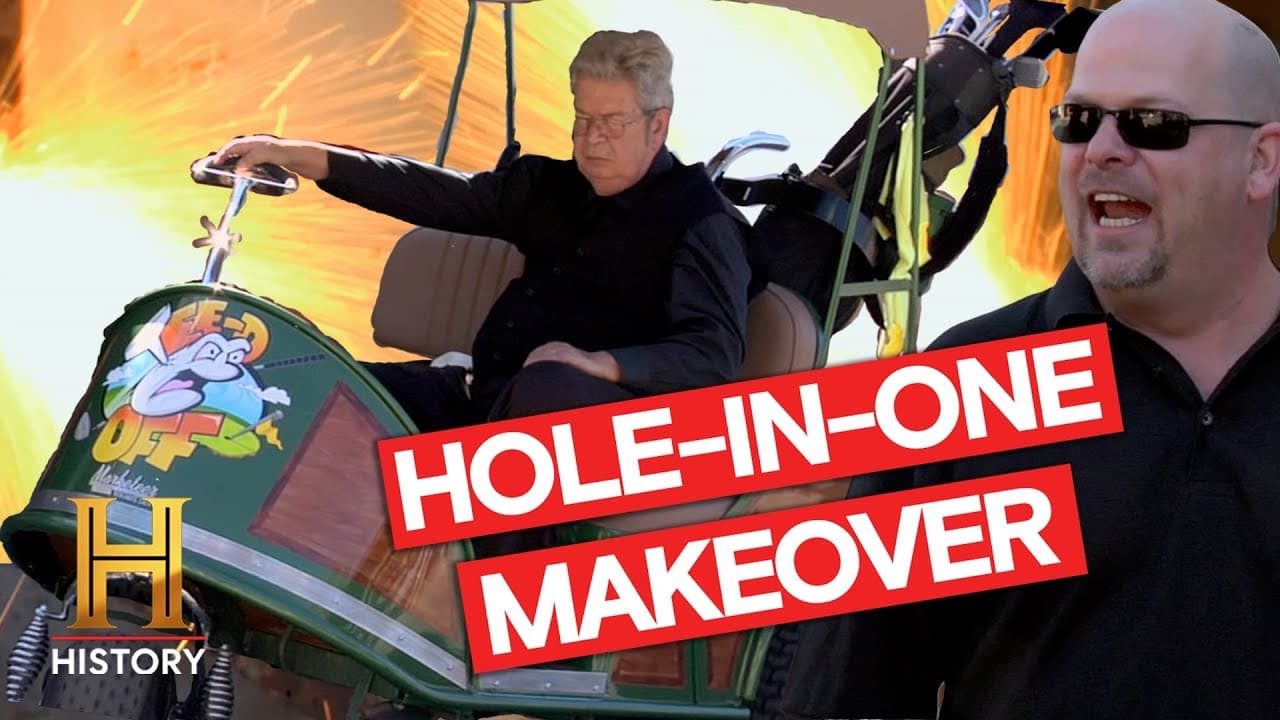
How to Restore a 1960s Marketeteer Golf Cart
TL;DR
A donor cart is used to fetch missing parts, the brake assembly is salvaged and welded from a donor, and the team performs body work, painting, and upholstery to return the cart to a safe, drivable gift. The project runs through planning, sourcing, assembly, and the final reveal to the customer.
Transcript
Holy crap. What do you think? Take it back. Rick Harrison has a pawn shop in Las Vegas. He buys the biggest pieces of crap he can find and actually brings them here and expects me to restore them and then he sells them for a huge profit. What are you wanting to do with it? I want you to fix it up for my dad. The old man's got a huge piece of proper... Read More
Key Insights
- Parts can be sourced from a donor cart to save costs and time.
- The brake assembly is sometimes welded to the frame, requiring careful removal and replacement.
- A donor vehicle helps obtain rare or unavailable components for restoration.
- The project involves extensive body work, rust removal, and dent repair.
- Interior, upholstery, and a wooden biminy top are rebuilt to match vintage style.
- A full restoration may require significant labor, estimated at around 40 man hours.
- Parts cost can be significant, with estimates around 1,500 for components.
- The final reveal is a crucial moment where customer satisfaction is assessed and celebrated.
- More videos from this channel:
- More from this channel: HISTORY
Install to Summarize YouTube Videos and Get Transcripts
Explore YouTube Video Summarizer or Get YouTube Transcript Extractor
Questions & Answers
Q: A real search query question about the video (e.g. 'How to...', 'What is...', 'Why does...', 'When should...'). Question 1
The video explains that restoring a rare golf cart starts with recognizing what parts are missing and determining whether donor components can be used. It details sourcing parts from a donor cart to save money and time, then planning the rebuild of critical systems like brakes and the battery. This approach enables a grounded, authentic recreation while preserving originality.
Q: Question 2
The team estimates the workload and budget early in the project, acknowledging that the cart will need almost everything inside, including batteries, wheels, and a top. This upfront planning helps set expectations with the client and guides the procurement of parts and labor across the restoration timeline.
Q: Question 3
A donor vehicle is used to supply missing brake components and other hard to find parts. This strategy reduces costs and ensures compatibility with the original Marketeteer model. It also allows the crew to complete essential mechanical work without compromising the cart’s vintage integrity.
Q: Question 4
The restoration process includes extensive body work, rust removal, priming, painting, and the rebuilding of the interior. The crew emphasizes attention to detail to ensure the final look and feel stay true to the original design while improving safety and reliability.
Q: Question 5
There is a focus on safety and reliability for a gift to the customer. The build includes ensuring the brakes and chassis are functional, and that the vehicle is road worthy, not just visually appealing. This balance between form and function defines the success of the project.
Q: Question 6
A biminy top is rebuilt and the seats are upholstered to match the original style. The team also crafts a wood appearance on the sides to recreate a vintage look, demonstrating that aesthetic restoration is as important as mechanical work.
Q: Question 7
The final reveal includes a ride test and a moment of satisfaction when the customer sees the finished cart. The reaction and the ability to drive the cart around the owner’s property provide validation that the restoration achieved its goals and delivered value as a gift.
Q: Question 8
The project timeline highlights that even with a donor cart, restoration involves multiple steps from disassembly to final assembly, with careful attention to parts compatibility and the sequence of upgrades. The process requires coordination among team members and careful planning to meet the client’s expectations.
Summary & Key Takeaways
-
The project begins with assessing the cart and identifying missing parts, leading to sourcing from a donor vehicle to save time and money. The team plans to replace batteries, wheels, and the top, while preserving the cart’s vintage look. This groundwork sets the restoration path.
-
The build emphasizes using donor parts for critical components, performing body work, and crafting a custom biminy top. The crew installs upholstery and authentic wood detailing to recreate the original style. The final reveal to the customer marks the completion of a ground up restoration.
-
The completion highlights safety and reliability as well as aesthetics, delivering a visually authentic piece. The reveal scene shows the owner both curious and excited, validating the effort and investment as a meaningful gift for the old man.
Read in Other Languages (beta)
Share This Summary 📚
Summarize YouTube Videos and Get Video Transcripts with 1-Click
Try YouTube Summary with ChatGPT & Claude or YouTube Transcript Generator
Explore More Summaries from HISTORY 📚




Summarize YouTube Videos and Get Video Transcripts with 1-Click
Try YouTube Summary with ChatGPT & Claude or YouTube Transcript Generator