How to cut your workload with four ChatGPT hacks?
TL;DR
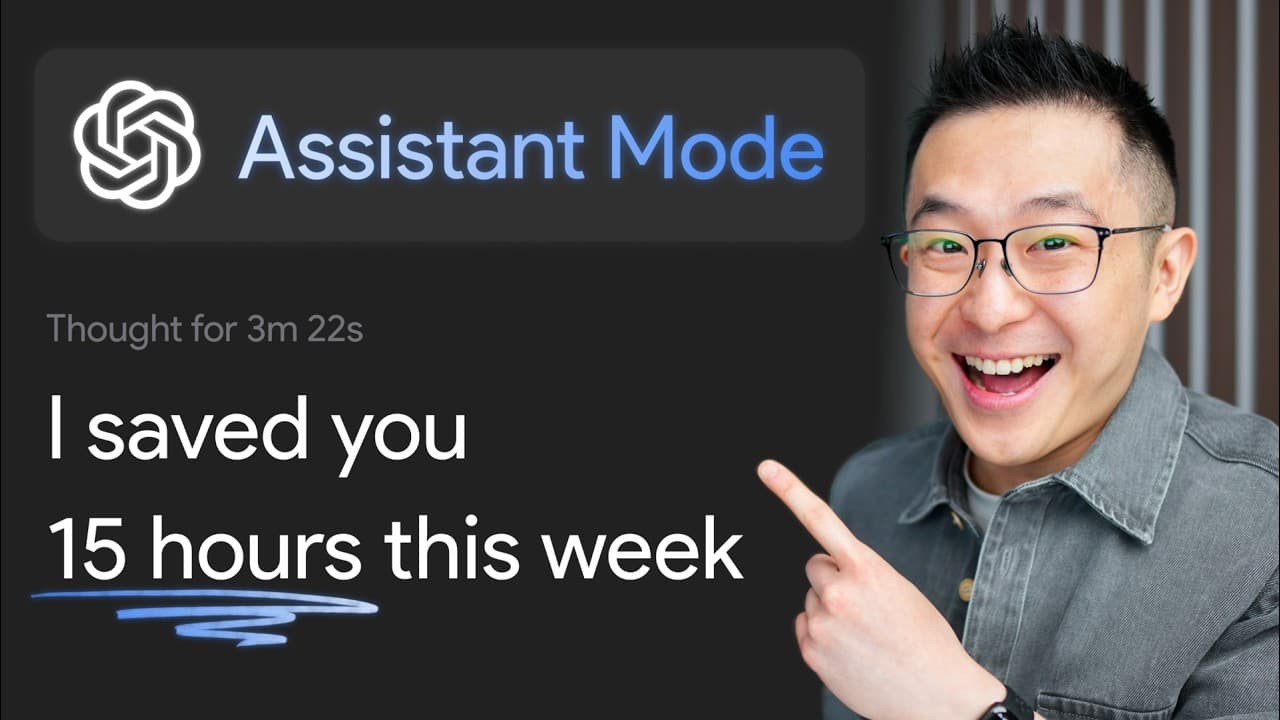
The video presents four prompt techniques to dramatically reduce back-and-forth with AI. They include prompt reversal to achieve near-perfect results in one pass, amplifying a single piece of content into multiple formats, using red team critique to surface weaknesses, and blueprint scaffolding to force step by step reasoning before output. Implementing these can cut AI workflow time in half.
Transcript
Diving right in, we have the prompt reversal technique for Chacha BT. And here's what it does. You know that back and forth we all have with AI. After that initial prompt, we get a first result that's maybe 50% of what we want. So, we ask for some changes. The second result gets us to 60% and this goes on and on until we finally land on something t... Read More
Key Insights
- Prompt reversal creates a near-final result by working backward from the desired output.
- Amplifying content converts a single source into multiple evaluative or communicative formats to save time.
- Red team technique forces a critical, opposite perspective to reveal hidden flaws.
- Blueprint scaffolding requires outlining the reasoning steps before delivering the final output.
- A detailed prompt with specific roles and expectations yields better, faster results.
- Testing the reverse engineered prompt can validate that the final output matches the goal.
- Selective use of pillar content ensures high-quality inputs for AI reformatting.
- Defining success metrics upfront adds accountability and clarity to the task.
- More videos from this channel:
- More from this channel: Jeff Su
Install to Summarize YouTube Videos and Get Transcripts
Explore YouTube Video Summarizer or Get YouTube Transcript Extractor
Questions & Answers
Q: How can prompt reversal reduce back-and-forth with AI, according to the video?
Prompt reversal reduces back-and-forth by deriving the exact prompt needed to produce the final result from the target output. By starting with the final goal and work backward, you skip multiple iterations of drafting and refining. This approach helps you land on a near-perfect answer in one go, saving time and effort.
Q: What is the fiveinut amplifier and how is it used?
The fiveinut amplifier is a technique demonstrated to amplify one high quality piece of content into additional formats. It shows how to repurpose material such as slides or reports into quizzes, internal summaries, and client facing infographics. The goal is to maximize value from a single asset while saving manual reformatting time.
Q: How does the red team technique improve output quality?
Red team technique improves output quality by first drafting from your perspective and then flipping the script to adopt a critical opposing persona. This dual viewpoint surfaces weaknesses, prompts sharper edits, and yields more robust messaging. The process is enhanced when you turn critique into actionable rewrites.
Q: What is blueprint scaffolding and why is it useful?
Blueprint scaffolding requires the AI to outline its reasoning steps before delivering the final output. This preface helps identify unnecessary details and keeps the response focused. It reduces misalignment, clarifies structure, and allows you to prune content to the essential parts needed for the task.
Q: Can these prompts be used by people in different roles?
Yes, the video demonstrates that these prompt techniques work across various roles and industries. By applying the four hacks to different kinds of content and goals, users can shorten workflows, improve accuracy, and create repeatable templates for common tasks like analysis, reporting, and outreach.
Q: Why is it important to use only pillar content for amplification?
Using pillar content, which is high quality, proven work like a strong presentation or report, ensures that amplified outputs retain a high standard. The AI magnifies what you provide, so starting with strong input reduces the risk of diluting quality and increases the effectiveness of new formats such as quizzes or emails.
Q: What role does defining success metrics upfront play in blueprint scaffolding?
Defining success metrics upfront in blueprint scaffolding creates clarity and accountability. It guides the AI to produce outputs that meet measurable goals, such as a three point takeaway in a competitor analysis. This helps ensure alignment with expectations and makes evaluation straightforward.
Q: What should you do after the AI provides a final output using blueprint scaffolding?
After receiving a final output via blueprint scaffolding, review the content to confirm it matches the desired structure and essential sections. If any gaps remain, you can request targeted refinements or add specific action items, ensuring the final result fully satisfies the initial brief and metrics.
Summary & Key Takeaways
-
The video introduces four prompt hacks that streamline AI work by limiting iterative refinements, enabling faster, closer-to-target outputs. Each hack demonstrates a practical, real-world application across roles and industries, emphasizing efficiency and repeatability.
-
The first hack uses prompt reversal to generate a precise starting prompt from the final desired answer. The second hack amplifies content into quizzes, emails, and infographics. The third hack uses red team critique to improve quality, and the fourth forces reasoning upfront with blueprint scaffolding.
-
The overall message is that well-structured prompts can drastically reduce workload, improve accuracy, and create reusable templates for common tasks, across various functions.
Read in Other Languages (beta)
Share This Summary 📚
Summarize YouTube Videos and Get Video Transcripts with 1-Click
Try YouTube Summary with ChatGPT & Claude or YouTube Transcript Generator
Explore More Summaries from Jeff Su 📚





Summarize YouTube Videos and Get Video Transcripts with 1-Click
Try YouTube Summary with ChatGPT & Claude or YouTube Transcript Generator