What Is Dystopia and Why Is It Important Today?
TL;DR
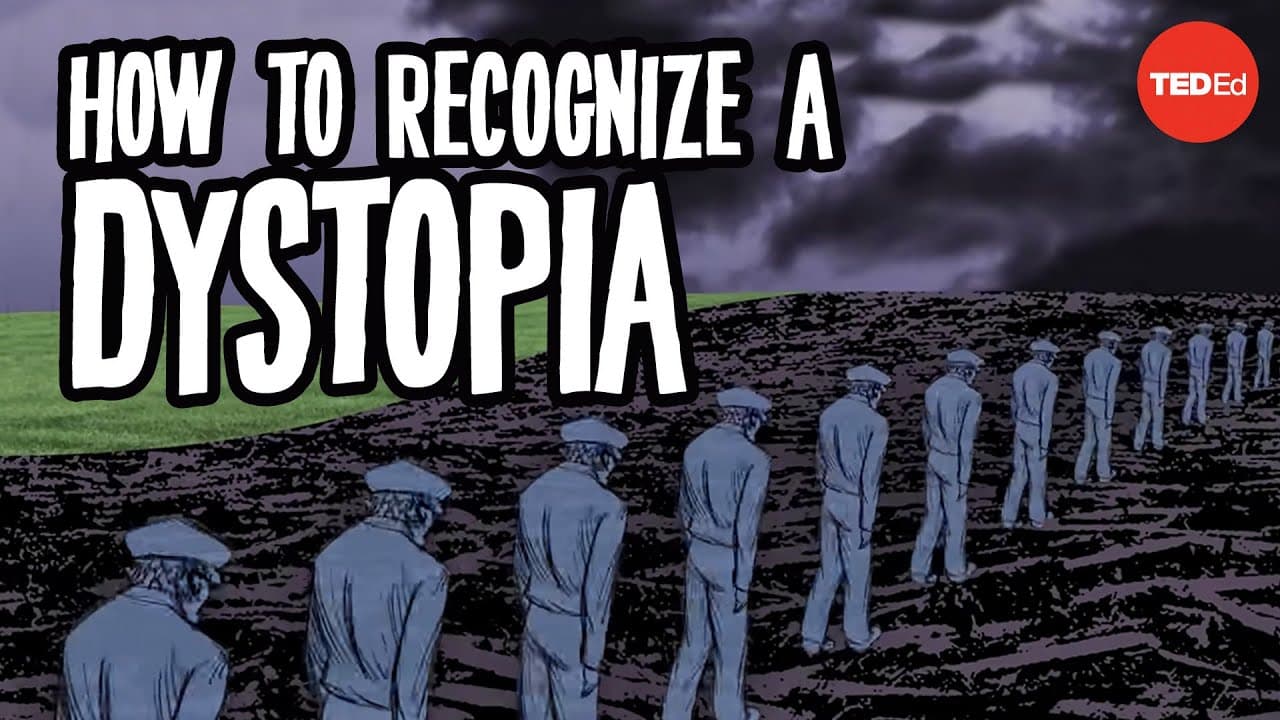
Dystopia refers to a genre that critiques societal flaws by envisioning nightmarish futures where ideals go wrong. It reflects human anxieties about issues like government power, inequality, and climate change, making it a crucial lens for understanding today's world. Authors use dystopian narratives as cautionary tales, highlighting the dangers of attempting to create perfect societies.
Transcript
Have you ever tried to picture an ideal world? One without war, poverty, or crime? If so, you're not alone. Plato imagined an enlightened republic ruled by philosopher kings, many religions promise bliss in the afterlife, and throughout history, various groups have tried to build paradise on Earth. Thomas More's 1516 book "Utopia" gave this concep... Read More
Key Insights
- 💀 Dystopian literature exposes the flaws and dangers of attempting to mold humanity into an ideal shape.
- 💦 The development of dystopian works throughout history reflects societal, political, and technological changes.
- 🌍 Real-world events and experiences of authors have heavily influenced dystopian fiction.
- 💦 Dystopian works serve as cautionary tales about various issues, including government power, inequality, and climate change.
Install to Summarize YouTube Videos and Get Transcripts
Explore YouTube Video Summarizer or Get YouTube Transcript Extractor
Questions & Answers
Q: How did Jonathan Swift's "Gulliver's Travels" contribute to the development of the dystopian genre?
"Gulliver's Travels" introduced the concept of taking trends in society to extremes, exposing their underlying flaws. It established a blueprint for dystopian works by showcasing fictional societies that seem impressive at first but are seriously flawed upon closer inspection.
Q: How did dystopian literature reflect the social, political, and technological changes of the 19th and 20th centuries?
Dystopian works of the 19th century, such as H.G. Wells's "The Time Machine" and Jack London's "The Iron Heel," explored the consequences of industrial technology and class divide. In the 20th century, works like Aldous Huxley's "Brave New World" and George Orwell's "1984" reflected the fears of genetic engineering, propaganda, totalitarianism, and loss of individuality.
Q: How did real-world events and experiences of the authors influence the dystopian works of the mid-20th century?
Authors like Yevgeny Zamyatin, George Orwell, and Sinclair Lewis lived through and witnessed the horrors of totalitarianism and totalitarian regimes. Their personal experiences and disillusionment influenced their dystopian works, such as Zamyatin's "We," Orwell's "1984," and Lewis's "It Can't Happen Here."
Q: What are some common themes in dystopian fiction across different time periods?
Common themes in dystopian fiction include social control, loss of individuality, government oppression, inequality, technological advancements, the threat of nuclear war, and the erosion of human rights.
Summary & Key Takeaways
-
Throughout history, humans have imagined and attempted to create ideal worlds, only to see them turn into nightmares of war, famine, and oppression.
-
Dystopian literature, starting with Jonathan Swift's "Gulliver's Travels," exposes the flaws of contemporary society by taking certain trends to extremes.
-
As technology and social changes advanced, dystopian works like Aldous Huxley's "Brave New World" and George Orwell's "1984" became more relevant, exploring themes of genetic engineering, propaganda, totalitarianism, and loss of individuality.
Read in Other Languages (beta)
Share This Summary 📚
Summarize YouTube Videos and Get Video Transcripts with 1-Click
Try YouTube Summary with ChatGPT & Claude or YouTube Transcript Generator
Explore More Summaries from TED-Ed 📚
Summarize YouTube Videos and Get Video Transcripts with 1-Click
Try YouTube Summary with ChatGPT & Claude or YouTube Transcript Generator