What Is the Role of Belief Systems in Human Conflict?

TL;DR
Belief systems play a crucial role in human conflict as individuals tend to engage in disputes to maintain and expand their beliefs. This content examines the nature and structure of belief systems, challenges around moral relativism, and the importance of narratives in guiding behavior. Understanding the hierarchical quality of beliefs is essential for resolving conflicts without resorting to combat.
Transcript
I Started that I started the beginning of the class three months ago talking to you about What it what the problem was that I was trying to address? and The fundamental problem was the problem of belief systems and the issue is was what precisely constitutes a belief system and Then a secondary question was why are people so inclined to even engage... Read More
Key Insights
- 🦉 The fundamental problem being addressed is the nature of belief systems and why people engage in conflict to maintain and expand their belief systems.
- 🔥 There is a search for alternative ways to resolve conflicts with regards to belief systems without resorting to combat or subordination.
- 🌍 The quality of belief systems can be judged hierarchically if there is a system in place to compare and contrast different value systems.
- 🔀 The process of interpreting the world involves simplifying and narrowing down reality, but this also leads to exclusion of other possibilities.
- 📚 Stories and narratives play a crucial role in human cognition and serve as a framework for understanding the world.
- ❗ Making mistakes and encountering unexpected outcomes is a natural part of human experience and provides an opportunity for learning and growth.
- 🐉 The unknown and unexplored territory can be seen as both a threat and a source of potential treasure.
- ♀️ It is important to avoid extreme reactions to errors, such as catastrophic dissolution or tyrannical behavior, and instead seek a balanced and adaptive approach to resolving conflicts.
Install to Summarize YouTube Videos and Get Transcripts
Explore YouTube Video Summarizer or Get YouTube Transcript Extractor
Questions & Answers
Q: What role do belief systems play in human conflict, and why are people inclined to engage in conflict to defend their belief systems?
Belief systems are deeply ingrained in individuals' identities and provide a framework for understanding the world. When these belief systems are challenged or threatened, individuals may feel compelled to engage in conflict to maintain and defend their beliefs, as they perceive their beliefs to be integral to their personal and social identity. Additionally, conflicts between belief systems may arise because one's beliefs can shape one's values, morals, and decision-making processes, leading to disagreements and clashes with others who hold different beliefs.
Q: How can we determine the relative quality of different belief systems?
Determining the relative quality of belief systems can be a complex task. It requires a comprehensive evaluation of the values, ethics, and goals associated with each belief system. Additionally, an assessment should consider the impact of these belief systems on individual and social well-being, as well as their alignment with universally accepted principles of morality. However, the assessment of relative quality may be subjective to some extent, as individuals' perspectives and cultural backgrounds can influence their perception of what constitutes a high-quality belief system.
Q: What are the consequences of errors in belief systems?
Errors in belief systems can be disorienting and unsettling. When individuals make mistakes or encounter unexpected information that challenges their beliefs, it can lead to negative emotions such as shame, anxiety, and confusion. These errors provide insights into the limitations and inadequacies of one's existing belief system, forcing individuals to reevaluate and update their understandings of the world. However, responding to errors can vary greatly among individuals, ranging from self-reflection and adjustment to defensive reactions or cognitive dissonance.
Q: Does finding a universal morality imply that all moral values are relative and arbitrary?
Finding a universal morality does not necessarily imply that all moral values are relative and arbitrary. While there may be universal principles or ethical guidelines that can guide ethical decision-making, the complexities of human values and cultural diversity suggest that moral values can differ across individuals and societies. Universal morality serves as a basis for discerning the general principles that underpin ethical behavior, but it does not invalidate the existence of diverse moral frameworks shaped by culture, personal beliefs, and societal norms.
Summary & Key Takeaways
-
The content raises questions about belief systems, such as what constitutes a belief system, why people engage in conflict to maintain and expand their belief systems, and the possibility of judging their relative quality.
-
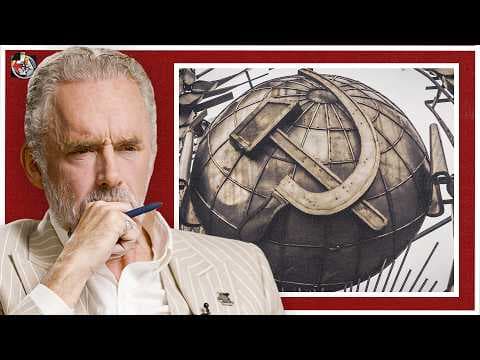
It discusses the metaphysics of the Cold War and the implications of belief system conflict and relativism.
-
The content explores the structure of beliefs, the role of narratives, and the importance of understanding the psychological and sociological phenomena associated with moral stances.
Read in Other Languages (beta)
Share This Summary 📚
Summarize YouTube Videos and Get Video Transcripts with 1-Click
Try YouTube Summary with ChatGPT & Claude or YouTube Transcript Generator
Explore More Summaries from Jordan B Peterson 📚



Summarize YouTube Videos and Get Video Transcripts with 1-Click
Try YouTube Summary with ChatGPT & Claude or YouTube Transcript Generator