What's the Difference Between Cults and Religion?: Crash Course Religions #3
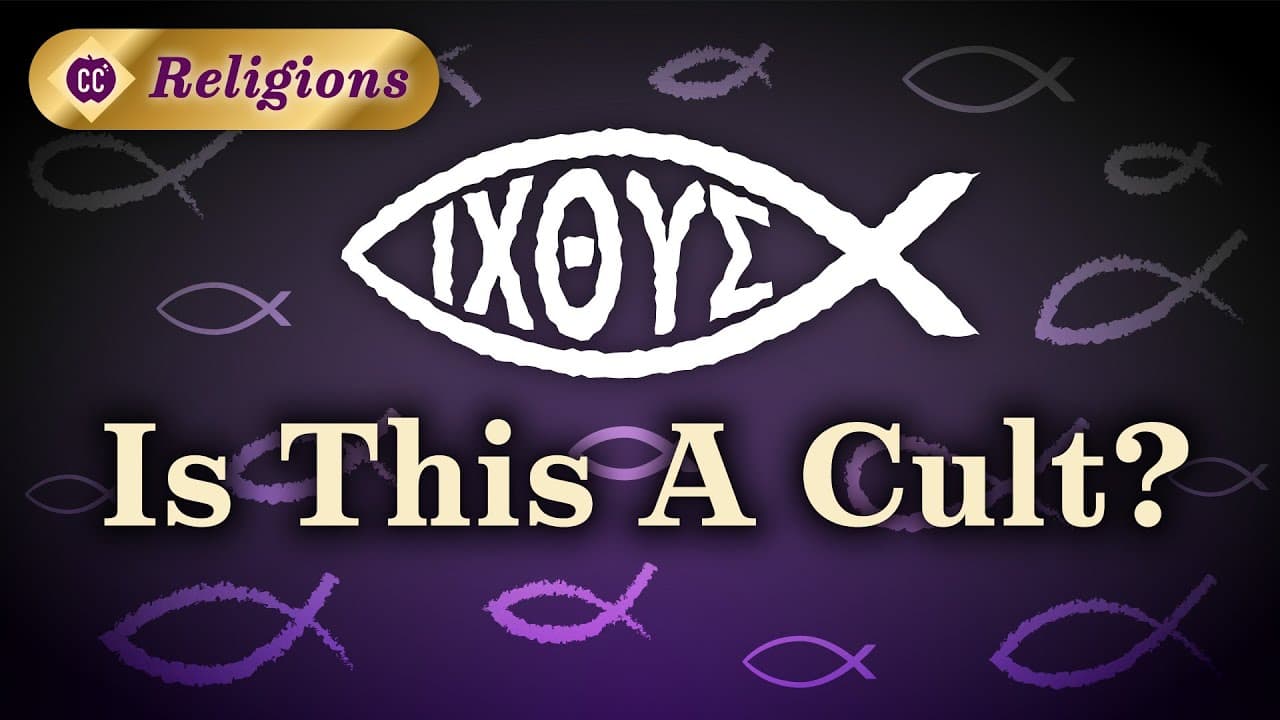
TL;DR
The distinction between cults and religions is often blurred and debated.
Transcript
Hi! I'm John Green. Welcome to Crash Course Religions. So, picture this: you’re in a cozy room, surrounded by people welcoming you with good food and kindness. They’re showing interest in your questions, your anxieties — in you. Hold on a second: is this a cult? We’ve all read the headlines, watched the documentaries, and worried about the MLM our... Read More
Key Insights
- The term 'cult' historically referred to small, eccentric religious groups but has evolved to imply danger and manipulation.
- Many religions, including Christianity, began as cults and were initially viewed with suspicion by mainstream society.
- The fear of brainwashing during the 1950s led to the labeling of new religious movements as cults, often without scientific basis.
- The label 'cult' can lead to increased scrutiny and danger for groups, as seen in the MOVE incident in Philadelphia.
- Charismatic leaders and rigid social norms are often associated with cults, but these traits can be found in established religions as well.
- Religious scholars argue for using terms like 'new religious movement' to avoid the negative connotations of 'cult.'
- The harms associated with cults, such as exploitation and abuse, are also present in major religions.
- Labeling a group as a cult often reflects societal biases rather than the group's actual practices or beliefs.
Install to Summarize YouTube Videos and Get Transcripts
Explore YouTube Video Summarizer or Get YouTube Transcript Extractor
Questions & Answers
Q: What historical context is provided about the term 'cult'?
Historically, the term 'cult' referred to small, eccentric religious groups that were relatively accepted by society. In ancient Rome, 'cultus' described elite groups devoted to worshiping specific deities. These groups were more like fan clubs than dangerous entities, and many major religions, including Christianity, began as cults.
Q: How did societal fears in the 1950s affect the perception of cults?
During the 1950s, fears of brainwashing, particularly during the Korean War, led to the perception of cults as manipulative and dangerous. This fear was used to explain why people joined movements deemed abnormal by society, and it contributed to the negative connotations associated with the term 'cult.'
Q: What example illustrates the dangers of labeling a group as a cult?
The MOVE incident in Philadelphia illustrates the dangers of labeling a group as a cult. MOVE, a primarily Black new religious movement, was misunderstood and labeled a cult by law enforcement. This led to a violent police action in 1985, where a bomb was dropped on a MOVE home, killing eleven people and destroying a neighborhood.
Q: What are some common traits associated with cults?
Cults are often associated with charismatic leaders, rigid social norms, and the exploitation of members. These groups are perceived as manipulating followers into giving up personal freedoms and resources, often under the guise of spiritual enlightenment or belonging. However, these traits can also be found in established religions.
Q: Why do some scholars argue against using the term 'cult'?
Some scholars argue against using the term 'cult' because it carries negative connotations and implies that harm and manipulation are unique to these groups. They suggest using terms like 'new religious movement' to describe groups without labeling them as inherently dangerous or abnormal.
Q: How can the label 'cult' impact the policing of certain groups?
Labeling a group as a 'cult' can lead to increased scrutiny and aggressive policing, as seen in the MOVE incident. This label can escalate violence and bring harm to already vulnerable communities, often due to societal biases rather than the group's actual practices.
Q: What is the main argument regarding the distinction between cults and religions?
The main argument is that the distinction between cults and religions is often a societal construct rather than a clear-cut difference. Many traits associated with cults, such as charismatic leadership and social norms, are also present in established religions. The label 'cult' often reflects societal biases rather than the group's nature.
Q: What does the episode suggest about the future use of the term 'cult'?
The episode suggests that the term 'cult' should be reconsidered or abandoned due to its negative connotations and the potential harm it can cause. It advocates for using more neutral terms like 'new religious movement' to describe groups without implying danger or abnormality.
Summary & Key Takeaways
-
The episode explores the blurred line between cults and religions, challenging the negative connotations associated with the term 'cult.'
-
John Green discusses how many established religions began as cults and how societal perceptions influence the labeling of religious groups.
-
The episode highlights the dangers of labeling groups as cults, including increased scrutiny and potential violence, and suggests using alternative terms.
Read in Other Languages (beta)
Share This Summary 📚
Summarize YouTube Videos and Get Video Transcripts with 1-Click
Try YouTube Summary with ChatGPT & Claude or YouTube Transcript Generator
Explore More Summaries from CrashCourse 📚






Summarize YouTube Videos and Get Video Transcripts with 1-Click
Try YouTube Summary with ChatGPT & Claude or YouTube Transcript Generator