What Were the Key Features of Hollywood's Golden Age?
TL;DR
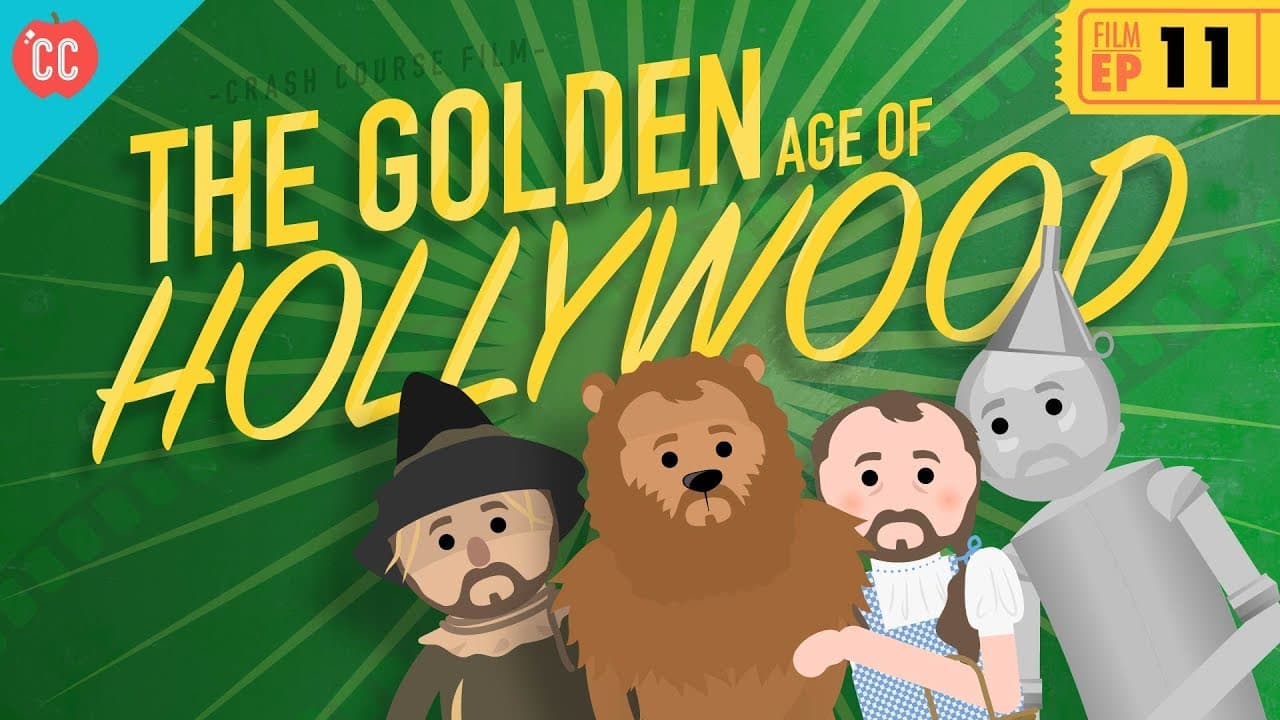
Hollywood's Golden Age, from the 1920s to the 1950s, was defined by significant advancements in sound, color, and aspect ratios, which transformed the film industry. Despite the Great Depression, Hollywood thrived, providing an affordable escape for audiences with an unprecedented output of films, led by five major studios: MGM, Paramount, Warner Brothers, 20th Century-Fox, and RKO. However, legal challenges and the rise of television began to erode the studios' monopolistic control.
Transcript
When I say Hollywood, you probably think of big-budget movies, star-studded premieres, and studios with giant backlots pumping out film after film. Most of those associations really began sometime between the 1920s and the 1950s. Once audiences could hear actors speak, listen to pre-recorded musical scores, and enjoy sound effects, film cemented it... Read More
Key Insights
- The Golden Age of Hollywood spanned from the 1920s to the 1950s, marked by technological advancements like sound, color, and aspect ratio changes.
- Despite the Great Depression, Hollywood thrived as films provided an affordable escape for the public, with studios releasing an unprecedented number of films.
- Five major studios dominated the industry: MGM, Paramount, Warner Brothers, 20th Century-Fox, and RKO, each with distinct styles and specialties.
- The U.S. Supreme Court's 1948 antitrust decision forced studios to divest their theater chains, ending their monopolistic control over the film industry.
- Technicolor revolutionized color cinematography, achieving a reliable color process that dominated for two decades and featured in classics like 'The Wizard of Oz' and 'Gone with the Wind'.
- Aspect ratios evolved during this era, with widescreen formats like CinemaScope gaining popularity, influencing film composition and storytelling.
- The studio system's control diminished with the rise of television and legal changes, but Hollywood's global influence persisted for years.
- The transition to sound-on-film technology posed challenges but ultimately solidified film's role as a dominant medium for art and communication.
Install to Summarize YouTube Videos and Get Transcripts
Explore YouTube Video Summarizer or Get YouTube Transcript Extractor
Questions & Answers
Q: What characterized the Golden Age of Hollywood?
The Golden Age of Hollywood was marked by significant technological advancements such as the introduction of sound, color cinematography, and widescreen formats. This era, spanning from the 1920s to the 1950s, saw the rise of major studios and an unprecedented number of film releases, despite the economic challenges of the Great Depression.
Q: How did Hollywood thrive during the Great Depression?
During the Great Depression, Hollywood thrived by providing an affordable form of entertainment that offered audiences an escape from their daily struggles. The film industry released a large number of films, averaging 800 per year, with genres like musicals, gangster films, and comedies becoming particularly popular for their ability to uplift spirits and reinforce American values.
Q: What role did the major studios play in the Golden Age of Hollywood?
The major studios—MGM, Paramount, Warner Brothers, 20th Century-Fox, and RKO—played a pivotal role in the Golden Age of Hollywood by dominating film production, distribution, and exhibition. Each studio had its own distinct style and focus, contributing to the diversity of films produced during this era. However, their control was challenged by legal changes and the rise of television.
Q: What was the impact of the 1948 Supreme Court ruling on Hollywood?
The 1948 Supreme Court ruling, known as United States versus Paramount Pictures, had a significant impact on Hollywood by addressing antitrust violations. It forced major studios to divest their theater chains, effectively ending their monopolistic control over the film industry. This decision marked a turning point, leading to a more competitive market and altering the traditional studio system.
Q: How did Technicolor revolutionize color cinematography?
Technicolor revolutionized color cinematography by developing a reliable and accurate color process that dominated the industry for two decades. Their beam-splitting camera system created vibrant and consistent colors, featured in iconic films like 'The Wizard of Oz' and 'Gone with the Wind.' This innovation made color films more accessible without requiring new projection equipment, significantly enhancing the visual appeal of movies.
Q: What changes occurred in aspect ratios during the Golden Age?
During the Golden Age of Hollywood, aspect ratios evolved significantly. The Academy of Motion Picture Arts and Sciences established a standard 4:3 ratio, but the introduction of widescreen formats like CinemaScope, with its 2.55:1 ratio, transformed visual storytelling. These changes influenced film composition, encouraging filmmakers to explore new framing techniques and enhancing the cinematic experience for audiences.
Q: How did the introduction of sound impact the film industry?
The introduction of sound in films revolutionized the industry by enhancing the storytelling experience and solidifying film's role as a dominant medium for art and communication. It allowed for synchronized dialogue, musical scores, and sound effects, making films more engaging and realistic. This advancement also led to the decline of the silent film era and positioned Hollywood as a leader in global cinema.
Q: What challenges did filmmakers face with widescreen formats?
Filmmakers faced several challenges with the transition to widescreen formats, such as CinemaScope. The increased aspect ratio required new approaches to composition, as close-ups became difficult to frame while landscapes were easier. This shift encouraged filmmakers to focus on world-building and long takes, altering traditional editing techniques and influencing the types of stories that could be effectively told in this new visual format.
Summary & Key Takeaways
-
The Golden Age of Hollywood, from the 1920s to the 1950s, was characterized by significant technological advancements like sound, color, and widescreen formats, which transformed the film industry. Despite the Great Depression, Hollywood thrived, offering an affordable escape for audiences with a diverse range of films.
-
Five major studios—MGM, Paramount, Warner Brothers, 20th Century-Fox, and RKO—dominated this era, each with unique styles and specialties. However, a 1948 Supreme Court ruling and the advent of television began to erode their control, signaling a shift in the industry's dynamics.
-
Technicolor's innovation in color cinematography and the establishment of new aspect ratios like CinemaScope changed the visual storytelling landscape. These advancements, along with the introduction of sound, solidified Hollywood's global influence, although the studio system's monopoly eventually waned.
Read in Other Languages (beta)
Share This Summary 📚
Summarize YouTube Videos and Get Video Transcripts with 1-Click
Try YouTube Summary with ChatGPT & Claude or YouTube Transcript Generator
Explore More Summaries from CrashCourse 📚




Summarize YouTube Videos and Get Video Transcripts with 1-Click
Try YouTube Summary with ChatGPT & Claude or YouTube Transcript Generator