What Does the Stanford Computer Science Lecture “Build Less, Design More” Say About Interactive Systems?
TL;DR
This Stanford computer science lecture argues that HCI researchers can accelerate research by designing reusable APIs, foundations, and frameworks instead of building isolated one-off tools. Dominik Moritz connects this approach to interactive visualization and machine learning systems, including Mosaic, Vega, Altair, and Swift Charts. Read on to understand how composable software can support faster experiments and broader reuse.
Transcript
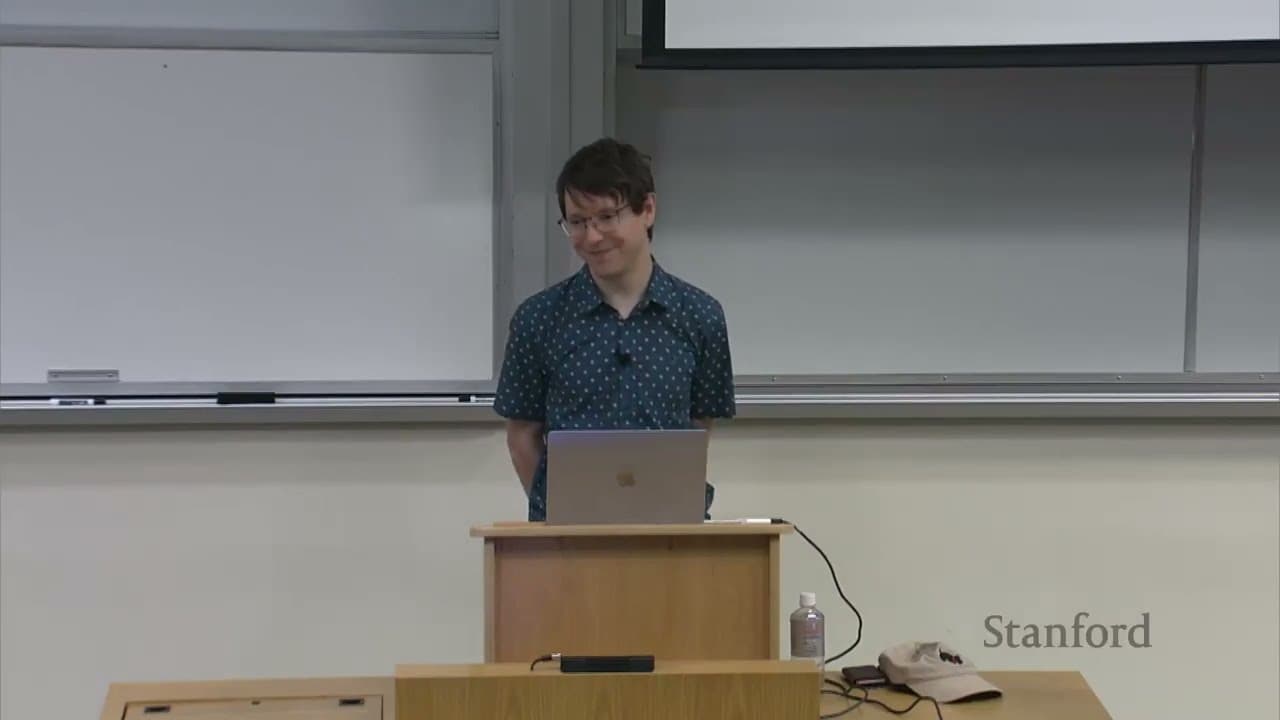
Hello, I'm Dominik. And I'm going to talk about build less, design more. I want to argue that we, as HCI researchers, could invest more into designing APIs and how systems work together, rather than building one-offs. So in a sense-- this is a provocative statement here-- I think, we can actually build more by thinking more about design and designi... Read More
Key Insights
- Composable systems are more efficient and adaptable than monolithic systems.
- APIs and specifications encourage vibrant ecosystems and reproducible research.
- Interoperable frameworks allow for faster and more flexible tool creation.
- Designing interfaces first can lead to more effective software development.
- Reducing glue code through standards like HTTP improves software compatibility.
- Mosaic framework enables scalable, interoperable visualization systems.
- Embedding Atlas and Texture provide reusable components for data analysis.
- Data Navigator enhances accessibility by decoupling structure, input, and rendering.
Install to Summarize YouTube Videos and Get Transcripts
Explore YouTube Video Summarizer or Get YouTube Transcript Extractor
Questions & Answers
Q: What does the Stanford computer science lecture say about building interactive systems?
The lecture argues that HCI researchers should invest more in designing APIs and ways for systems to work together. Dominik Moritz says foundations and frameworks can help researchers build tools faster and accelerate the creation of knowledge.
Q: What is the main argument of “Build Less, Design More”?
The main argument is that researchers can build more by thinking carefully about design, interfaces, and software composition. Moritz contrasts reusable foundations and frameworks with one-off research tools that usually attract few users.
Q: Why does Dominik Moritz criticize one-off HCI research tools?
One-off tools are often built only to test a particular hypothesis or run a user study. Even when they are released in an open-source GitHub repository, the number of people who use them is usually small.
Q: How can foundations and frameworks accelerate HCI research?
Foundations and frameworks provide software that composes, allowing researchers to create more tools and potentially build them faster. Moritz argues that moving even experimental projects toward reusable frameworks can help everyone conduct faster science over time.
Q: What is Mosaic in the Stanford Seminar?
Mosaic is presented as a framework for building charts and coordinating them with backends. It is part of Moritz's work on interactive tools for data profiling, visualization creation, and scalable visualization.
Q: Which visualization systems and languages are discussed?
The lecture names Vega and Altair as visualization systems and languages. Moritz introduces them as context for discussing accessible visualization, visualization recommendation, scalable visualization, and broader data tooling.
Q: What is Swift Charts used for?
Swift Charts is a library created by the visualization team at Apple for making charts on Apple platforms. The examples named in the lecture include Apple Watch, iPad, and iPhone.
Q: How does the lecture describe the scientific process in HCI research?
The lecture describes science as creating a hypothesis, designing an experiment, and evaluating the hypothesis through that experiment. When the process produces knowledge, that knowledge can lead to new hypotheses, so Moritz argues that this loop should be accelerated.
Summary & Key Takeaways
-
Dominik Moritz emphasizes the importance of designing APIs and composable systems in HCI research to improve efficiency and reproducibility. By focusing on interoperable frameworks, researchers can create flexible tools that adapt to various needs, reducing the time and effort required to build isolated systems.
-
The Mosaic framework, developed by Moritz and his team, enables scalable and interoperable visualization systems that can handle large datasets efficiently. It allows for the creation of dashboards and tools that integrate seamlessly with existing data analysis environments.
-
Data Navigator enhances accessibility by providing a flexible framework for navigating complex data representations. It decouples structure, input, and rendering, allowing for a wide range of navigation methods and supporting diverse user needs.
Read in Other Languages (beta)
Share This Summary 📚
Summarize YouTube Videos and Get Video Transcripts with 1-Click
Try YouTube Summary with ChatGPT & Claude or YouTube Transcript Generator
Explore More Summaries from Stanford Online 📚




Summarize YouTube Videos and Get Video Transcripts with 1-Click
Try YouTube Summary with ChatGPT & Claude or YouTube Transcript Generator