How Do Teens Protect Their Privacy Online?
TL;DR
Teens protect online privacy by separating audiences across public, private, and themed accounts, then choosing what identity and content to show on each one. However, platforms can make privacy feel costly by limiting statistics, discovery, likes, and follower growth, while supposedly temporary posts can still create lasting consequences.
Transcript
Our next group of speakers, so our next group of speakers are from, are ha- uh, hackers in training from hackers, from Hacker High. Let me introduce Ayla and Jayce. They're here to talk about the insights, um, share insights of teens and privacy, how teens are learning privacy. Um, and there'll be a chance to ask them some questions at the end of o... Read More
Key Insights
- • Many teenagers inherit an online history before they can consent because parents and schools publish photographs, activities, events, and other personal information. The speakers describe this externally created record as covering where teens go, what they do, who they know, and details about their families.
- • Online judgment can affect how teenagers think about their futures because old posts, photographs, jokes, and social interactions may later be interpreted without their original context. The teens specifically recognize that future employers could view this material and draw conclusions that jeopardize employment opportunities.
- • Social media observation is normalized among the teenagers described, who casually call it stalking and use it to follow friends, neighbors, enemies, celebrities, and others. The practice offers a window into another person’s life and can make followers feel connected to people they watch.
- • Searching online means something different within the teens’ social environment because they often look for information through Instagram pictures and accounts instead of beginning with Google. Their habits reflect a life shaped by social platforms as primary places for discovering people, activities, and personal updates.
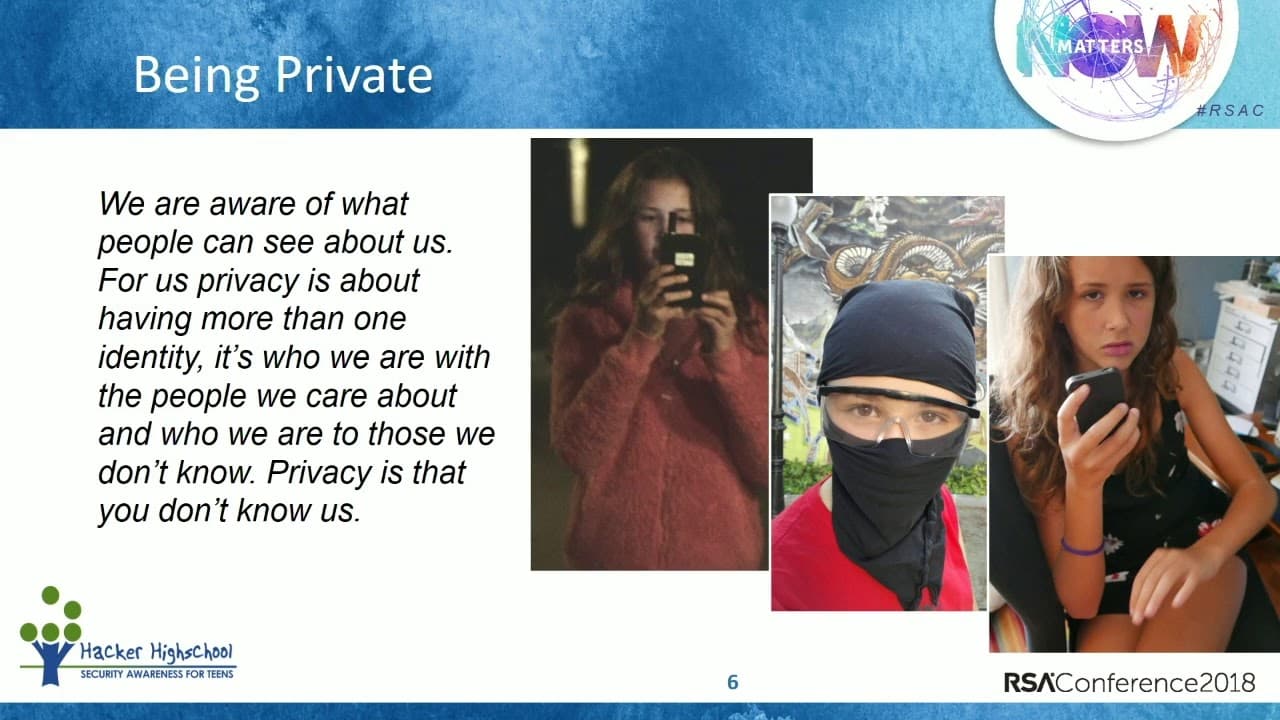
- • Privacy is defined by the speakers as maintaining multiple identities rather than becoming invisible online. Public, private, and meme accounts let teenagers select an audience, control what they publish, and separate content intended for growth from material shared only with a small group of accepted followers.
- • Privacy settings can feel like punishment because platforms may remove desirable visibility and feedback when users restrict access. The speakers mention lost Instagram statistics, reduced hashtag and Explore discovery, fewer followers and likes, and reciprocal limits on WhatsApp activity indicators and read signs.
- • Temporary sharing does not eliminate lasting risk because teens may assume a photograph visible for only a few seconds cannot cause future harm. The speakers warn that pictures shared through services such as Snapchat can remain online, while screenshots or redistribution can defeat the expectation of disappearance.
- • Proactive self-mockery is presented as a defensive response to online judgment because posting an embarrassing screenshot first can reduce another person’s power to weaponize it. The teens call this making yourself the meme before someone else does, reflecting how they have adapted to constant online exposure.
Install to Summarize YouTube Videos and Get Transcripts
Explore YouTube Video Summarizer or Get YouTube Transcript Extractor
Questions & Answers
Q: How do teenagers protect their privacy on social media?
The teenagers describe protecting privacy by maintaining separate accounts for different audiences and purposes. A public account can support visibility, followers, and likes, while a private account can contain personal updates, embarrassing pictures, or content intended only for selected friends. This approach treats privacy as control over identity and audience rather than complete withdrawal from social media.
Q: Why do teens use multiple social media accounts?
Teens use multiple accounts to separate identities, audiences, and types of content. The speakers mention public, private, and meme accounts, each allowing different choices about what to publish and who may see it. They do not view this separation as inherently wrong. Instead, it gives them more control over presentation and reduces the impact of unwanted pictures or judgments.
Q: Why can privacy settings feel like a punishment to teens?
Privacy settings can remove features that teenagers value, making safer choices feel costly. According to the speakers, private Instagram accounts lose certain statistics and have less exposure through hashtags or the Explore page, which can reduce followers and likes. On WhatsApp, hiding a last-seen time or read sign also prevents the user from seeing the same information about others.
Q: How can a teenager's online history begin without consent?
A teenager’s online history can begin when parents, schools, and other people publish information during childhood. The speakers recall parents posting baby pictures and schools sharing photographs from field trips, dances, and other events. They also say medical records and family information can exist on other people’s computers, creating a digital life record the child did not personally choose.
Q: Why can old social media posts affect a teenager's future?
Old posts can be viewed later by people who do not understand their original audience or context. The teens recognize that future employers may encounter photographs, activities, or inside jokes and interpret them differently than friends did. Because those interpretations could affect employment opportunities, teenagers must consider how present-day sharing may influence judgments made about them in the future.
Q: Why are disappearing photos still a privacy risk?
Disappearing photos can create false confidence because users may believe content visible for only a few seconds cannot persist. The speakers say pictures shared through Snapchat or similar services can remain online, and their discussion of screenshots shows how easily visual content can be captured. This risk becomes especially serious when teenagers share nudity, drug-related material, or embarrassing images.
Q: How does social media people-watching affect teen privacy?
Social media people-watching makes personal observation routine. The teenagers describe following the lives of friends, neighbors, enemies, famous people, and others by examining their accounts and updates. Constant videos and posts can make viewers feel involved in another person’s life. The same visibility can also expose activities to teachers or other adults, as illustrated by a teacher’s fake Instagram account.
Q: How do teens use self-mockery to respond to online bullying?
The speakers describe self-mockery as a proactive way to weaken embarrassing material before someone else uses it against them. A teenager might capture an unflattering image, share it in a group chat, and joke about it first. By choosing the image and framing the joke personally, the teen may reduce another person’s ability to turn it into a hurtful meme or judgment.
Summary & Key Takeaways
-
The teens describe growing up with digital records they did not choose, including photographs shared by parents and schools, posts about events, and medical information. Because their lives have always been documented online, they expect other people, including possible future employers, to judge their identities and activities through this accumulated material.
-
For these teens, privacy does not necessarily mean disappearing from social media. It means controlling presentation through multiple identities and accounts, such as public, private, and meme accounts. Each account serves a different audience and purpose, allowing users to choose what they publish and limit more personal material to selected followers.
-
Platform design can discourage private behavior because privacy settings reduce access to desirable features. The speakers say private Instagram users lose discovery and audience growth opportunities, while WhatsApp users who hide activity indicators also lose reciprocal visibility. They also warn that seemingly temporary photo sharing can encourage risky posts with lasting consequences.
Read in Other Languages (beta)
Share This Summary 📚
Summarize YouTube Videos and Get Video Transcripts with 1-Click
Try YouTube Summary with ChatGPT & Claude or YouTube Transcript Generator
Explore More Summaries from RSAC Cybersecurity 📚





Summarize YouTube Videos and Get Video Transcripts with 1-Click
Try YouTube Summary with ChatGPT & Claude or YouTube Transcript Generator