How to Manage Identity and Access in Cybersecurity
TL;DR
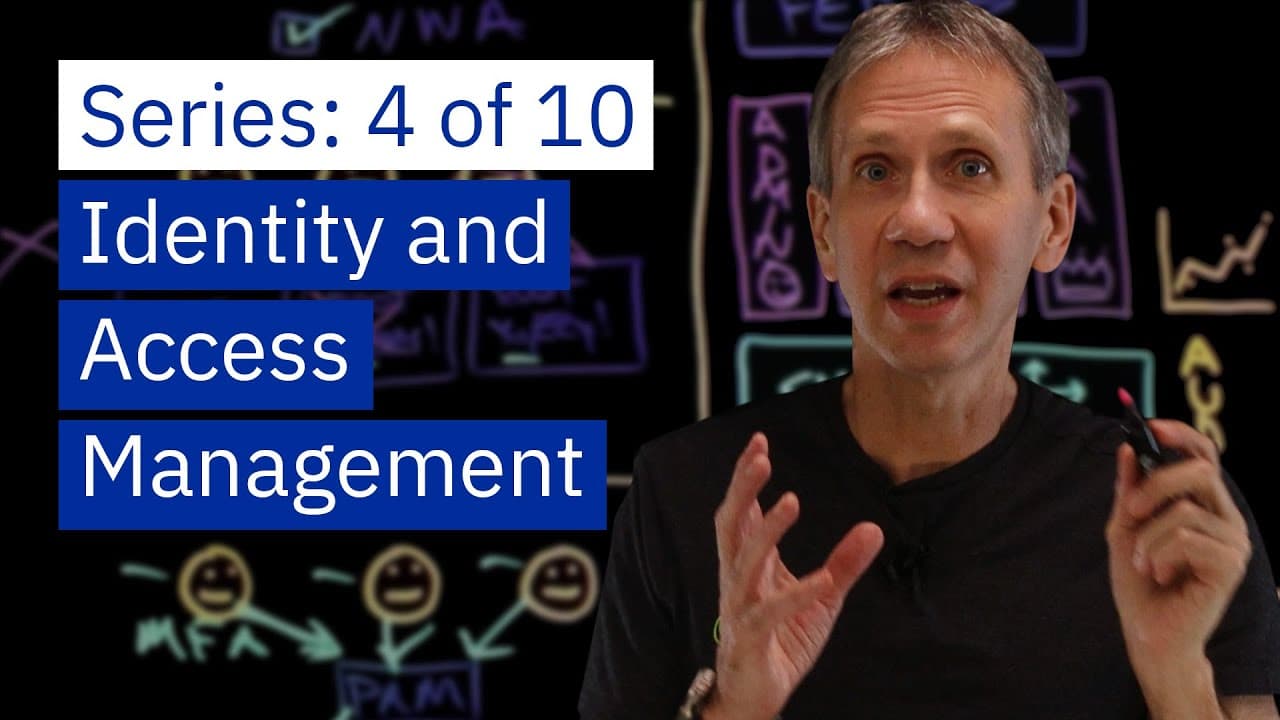
Identity and Access Management (IAM) is crucial in cybersecurity as it acts as the new perimeter. IAM involves four key components: Administration, Authentication, Authorization, and Audit. Effective IAM ensures that users have appropriate access rights and that their activities are monitored and managed securely. It also encompasses the management of privileged accounts and the integration of identity systems across different domains.
Transcript
Welcome back to the Cybersecurity Architecture Series. In the previous three videos, I talked about some of the fundamental concepts of cybersecurity architecture. In the next seven videos, we're going to talk about the seven domains of cybersecurity architecture. And today we're going to focus specifically on identity, or identity and access manag... Read More
Key Insights
- Identity and Access Management (IAM) is considered the new perimeter in cybersecurity.
- IAM involves four main components: Administration, Authentication, Authorization, and Audit.
- Administration in IAM focuses on creating, updating, and deleting user accounts and access rights.
- Authentication verifies a user's identity using factors like passwords, devices, or biometrics.
- Authorization determines what actions a user is permitted to perform based on their identity.
- Audit in IAM involves monitoring user activities to ensure compliance and detect anomalies.
- Privileged Access Management (PAM) is crucial for managing users with elevated access rights.
- Federation allows integration of identity systems across different domains for seamless access.
Install to Summarize YouTube Videos and Get Transcripts
Explore YouTube Video Summarizer or Get YouTube Transcript Extractor
Questions & Answers
Q: How does Identity and Access Management (IAM) act as the new perimeter in cybersecurity?
Identity and Access Management (IAM) acts as the new perimeter in cybersecurity by ensuring that only authorized users have access to specific systems and data. It involves verifying user identities, managing access rights, and monitoring user activities. By focusing on who the user is and what they are allowed to do, IAM creates a secure boundary around sensitive information, reducing reliance on traditional network perimeters.
Q: What are the four main components of Identity and Access Management (IAM)?
The four main components of Identity and Access Management (IAM) are Administration, Authentication, Authorization, and Audit. Administration involves managing user accounts and access rights. Authentication verifies a user's identity using methods like passwords or biometrics. Authorization determines what actions a user is permitted to perform. Audit involves monitoring user activities to ensure compliance and detect any anomalies.
Q: Why is Privileged Access Management (PAM) important in IAM?
Privileged Access Management (PAM) is important in IAM because it focuses on managing and monitoring users with elevated access rights, such as system administrators or database managers. These users have the ability to control critical systems and data, making it essential to ensure their actions are secure and traceable. PAM systems enforce stricter authentication measures and provide audit trails to prevent misuse and enhance security.
Q: How does multi-factor authentication enhance security in IAM?
Multi-factor authentication enhances security in IAM by requiring users to provide multiple forms of verification before accessing systems. This typically involves a combination of something the user knows (e.g., a password), something they have (e.g., a mobile device), and something they are (e.g., a biometric identifier). By employing multiple factors, the likelihood of unauthorized access is significantly reduced, even if one factor is compromised.
Q: What is the role of federation in Identity and Access Management?
Federation in Identity and Access Management allows for the integration and interoperability of identity systems across different domains. It enables users to authenticate once and gain access to multiple systems or services, often across organizational boundaries. Federation uses industry-standard protocols to facilitate secure and seamless access, enhancing user experience while maintaining strong security controls.
Q: How does risk-based authorization work in IAM?
Risk-based authorization in IAM evaluates the context of a user's access request to determine if it should be granted. It considers factors such as the user's location, the type of request, transaction amount, and frequency of access. By assessing these elements, the system can dynamically adjust access permissions, providing more stringent controls for high-risk activities and reducing restrictions for low-risk ones.
Q: What challenges do organizations face with storing user identities in IAM?
Organizations face challenges with storing user identities in IAM due to the need for multiple directories and synchronization across systems. Ideally, all user information would be stored in a single enterprise directory. However, practical constraints often require multiple directories, necessitating synchronization solutions like virtual or meta directories. These solutions ensure that user information is consistent and accessible across various systems.
Q: How does Consumer Identity and Access Management (CIAM) differ from traditional IAM?
Consumer Identity and Access Management (CIAM) differs from traditional IAM by focusing on providing a seamless and frictionless experience for customers. While traditional IAM emphasizes security and compliance for internal users, CIAM prioritizes ease of access and privacy for external users. CIAM systems often reduce approval processes and proofing requirements to encourage user engagement while maintaining essential security controls.
Summary & Key Takeaways
-
Identity and Access Management (IAM) is vital in cybersecurity, acting as the new perimeter. It includes four main components: Administration, Authentication, Authorization, and Audit. Administration involves managing user accounts and access rights. Authentication verifies identities using methods like passwords or biometrics, while Authorization determines user permissions.
-
Audit in IAM monitors user activities to ensure compliance and detect anomalies. Privileged Access Management (PAM) is essential for handling users with elevated access rights, ensuring they are monitored and managed securely. Federation enables integration of identity systems across different domains, allowing seamless access to various services.
-
IAM is not only about internal security but also extends to Consumer Identity and Access Management (CIAM), which focuses on providing frictionless access for customers while preserving privacy. Overall, IAM is a comprehensive framework that ensures secure and efficient management of user identities and access rights in an organization.
Read in Other Languages (beta)
Share This Summary 📚
Summarize YouTube Videos and Get Video Transcripts with 1-Click
Try YouTube Summary with ChatGPT & Claude or YouTube Transcript Generator
Explore More Summaries from IBM Technology 📚





Summarize YouTube Videos and Get Video Transcripts with 1-Click
Try YouTube Summary with ChatGPT & Claude or YouTube Transcript Generator