What AI Opportunities Are Emerging in 2023?
TL;DR
AI is a transformative general-purpose technology akin to electricity, creating vast opportunities across various industries. The key tools of supervised learning and generative AI will drive significant growth as businesses seek to build concrete applications. Emphasizing low-code solutions will enable wider adoption and customization, unlocking immense value in traditionally underserved sectors.
Transcript
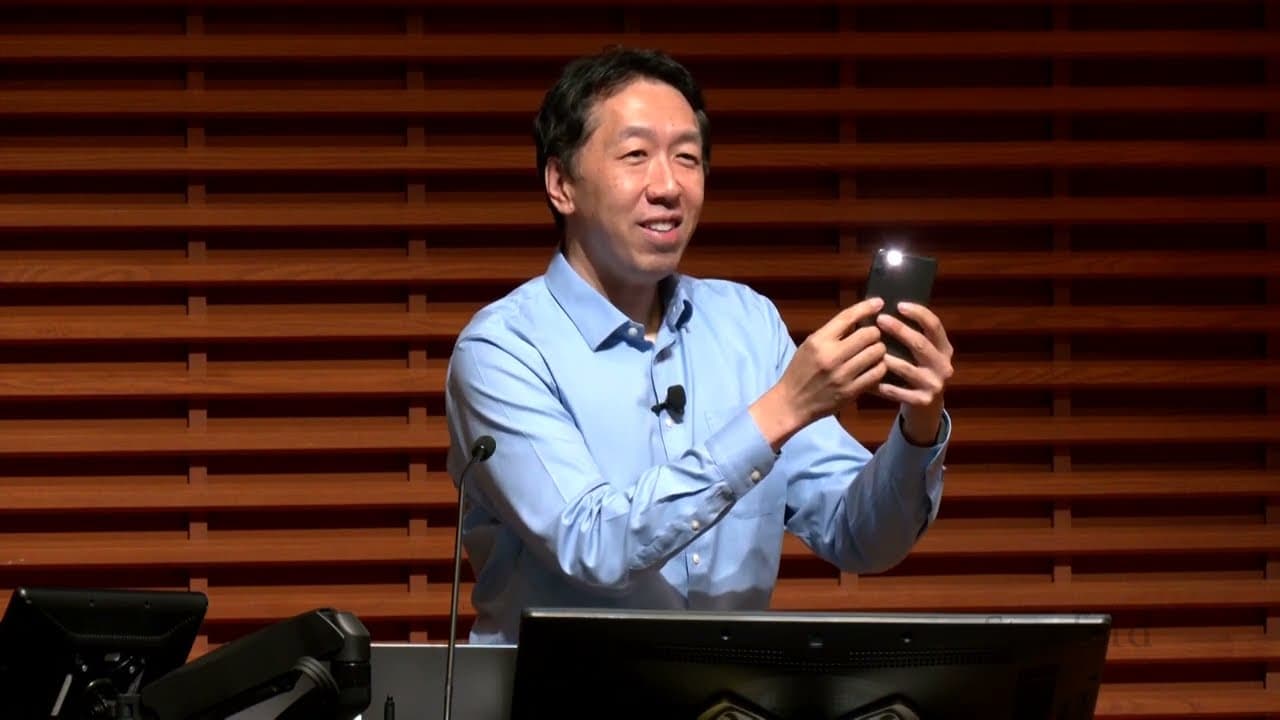
it is my pleasure to welcome Dr Andrew right Andrew is the managing General partner of AI fund founder of deep learning AI and learn and Landing AI chairman and co-founder of Coursera in an Adjunct professor of computer science here at Stanford previously he had started and led the Google brain team which had helped Google adopt modern Ai and he wa... Read More
Key Insights
- 🧲 AI is a general purpose technology, similar to electricity, that is useful for a wide range of applications across various industries.
- 📚 The two most important AI tools currently are supervised learning and generative AI, which have proven to be highly lucrative and impactful.
- 🤝 There is a growing need for low code and no-code tools that enable easier customization and deployment of AI systems across different industries.
- 🧩 Concrete and well-defined ideas provide a more efficient starting point for AI projects, especially when partnering with subject matter experts who already have deep domain knowledge.
- 💼 Opportunities for AI startups and integration into existing businesses exist across all layers of the AI stack, from hardware to infrastructure, developer tools, and applications.
- 👥 Social impact and ethical considerations are important when developing and deploying AI systems, including addressing bias, fairness, and accuracy issues.
- 💼 The disruption of jobs due to AI automation is a significant concern, and efforts should be made to ensure that affected individuals are well taken care of and treated fairly.
- 🌍 Extinction risk due to AI is unlikely, and the focus should be on harnessing the power of AI to address real extinction risks, such as pandemics and climate change, and ensure the long-term survival and thriving of humanity.
Install to Summarize YouTube Videos and Get Transcripts
Explore YouTube Video Summarizer or Get YouTube Transcript Extractor
Questions & Answers
Q: What is the main focus of Dr. Andrew Ng's presentation?
Dr. Andrew Ng's main focus is discussing the opportunities in AI, emphasizing the general purpose nature of the technology and the need to build concrete use cases for maximum value and impact.
Q: How does Dr. Andrew Ng compare AI to electricity?
Dr. Andrew Ng compares AI to electricity by highlighting its general purpose nature, explaining that AI can be applied to various applications and industries, just like electricity is useful for many different things.
Q: What are the two most important AI tools mentioned by Dr. Andrew Ng?
The two most important AI tools mentioned by Dr. Andrew Ng are supervised learning and generative AI. Supervised learning is effective for labeling and recognizing things, while generative AI allows for the generation of output based on input prompts.
Q: How does supervised learning work, and what are some examples of its applications?
Supervised learning involves training an AI model to learn from labeled data, where input-output mappings are computed. Examples of supervised learning applications include spam detection, sentiment analysis, self-driving cars, and automated visual inspection in factories.
Q: What is generative AI, and how does it differ from supervised learning?
Generative AI enables the generation of output based on input prompts. It often uses supervised learning to repeatedly predict the next word in a sequence. While supervised learning excels at labeling and recognition tasks, generative AI focuses on generating new content or output.
Q: What are the challenges and risks associated with AI, according to Dr. Andrew Ng?
Dr. Andrew Ng mentions challenges such as bias, fairness, and accuracy in AI systems. He also acknowledges the risk of job disruption due to automation. However, he emphasizes the importance of addressing these issues and ensuring that AI benefits society as a whole.
Q: What role does Dr. Andrew Ng see for startups and incumbent companies in the AI landscape?
Dr. Andrew Ng sees opportunities for both startups and incumbent companies to create and capture value in the AI landscape. Startups can pursue diverse AI opportunities, while incumbent companies can integrate AI into their existing businesses, leveraging their distribution advantages.
Q: How does Dr. Andrew Ng suggest addressing the potential disruption to jobs caused by AI?
Dr. Andrew Ng suggests the importance of taking care of people whose livelihoods are disrupted and treating them well. He emphasizes the societal obligation to ensure a smooth transition and support those affected. Additionally, he advocates for creating new opportunities in AI and other industries.
Summary & Key Takeaways
-
AI is a general purpose technology, similar to electricity, that can be applied to various applications and industries.
-
The two most important AI tools currently are supervised learning and generative AI.
-
Supervised learning is ideal for labeling and recognizing things, such as spam detection or sentiment analysis, while generative AI allows for the generation of output based on input prompts.
-
The next decade will see a surge in the adoption of AI, with supervised learning continuing to grow and generative AI becoming more prevalent.
-
The application layer of AI presents numerous opportunities, especially in industries outside of tech and consumer software internet, but requires tools and resources for customization and deployment.
Questions:
-
What is the main focus of Dr. Andrew Ng's presentation?
-
How does Dr. Andrew Ng compare AI to electricity?
-
What are the two most important AI tools mentioned by Dr. Andrew Ng?
-
How does supervised learning work, and what are some examples of its applications?
-
What is generative AI, and how does it differ from supervised learning?
-
What are the challenges and risks associated with AI, according to Dr. Andrew Ng?
-
What role does Dr. Andrew Ng see for startups and incumbent companies in the AI landscape?
-
How does Dr. Andrew Ng suggest addressing the potential disruption to jobs caused by AI?
Answer:
Q: What is the main focus of Dr. Andrew Ng's presentation?
Dr. Andrew Ng's main focus is discussing the opportunities in AI, emphasizing the general purpose nature of the technology and the need to build concrete use cases for maximum value and impact.
Read in Other Languages (beta)
Share This Summary 📚
Summarize YouTube Videos and Get Video Transcripts with 1-Click
Try YouTube Summary with ChatGPT & Claude or YouTube Transcript Generator
Explore More Summaries from Stanford Online 📚



Summarize YouTube Videos and Get Video Transcripts with 1-Click
Try YouTube Summary with ChatGPT & Claude or YouTube Transcript Generator