The physics of surfing - Nick Pizzo
TL;DR
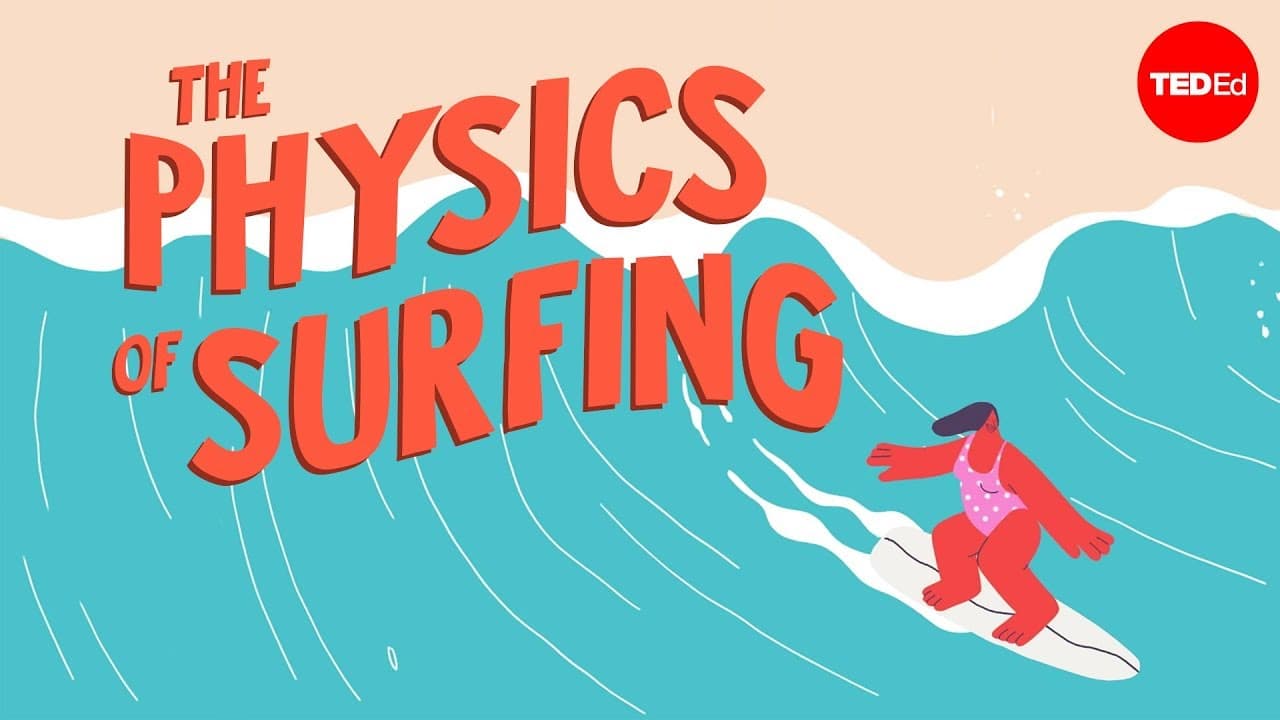
Surfing utilizes physics principles such as buoyancy, wave energy, and fluid mechanics to ride waves and catch the perfect wave.
Transcript
Whether or not you realize it, as a surfer you’re a master of complicated physics. The science of surfing begins as soon as you and your board first hit the water. The board’s size and light construction help it displace a lot of water. In turn, a buoyant force equal to the weight of the displaced water pushes up, counteracting you and your boa... Read More
Key Insights
- 👋 Surfing relies on physics principles such as buoyancy, wave energy, and wave refraction near the shoreline.
- 🌊 The motion of water particles is different from the overall motion of the waves, creating the curls or breaks characteristic of surfing.
- 👋 Different coastal features and swell origins contribute to the diversity of waves that surfers seek worldwide.
- 🦾 Surfing requires an understanding of weather patterns, tectonic geology, and fluid mechanics.
Install to Summarize YouTube Videos and Get Transcripts
Explore YouTube Video Summarizer or Get YouTube Transcript Extractor
Questions & Answers
Q: How does buoyancy help surfers stay afloat?
Buoyancy is the upward force exerted by the water that is equal to the weight of the displaced water, allowing the surfer and board to float.
Q: How are waves formed in the ocean?
Waves are formed when wind accelerates water particles near the surface, leading to the growth of ripples that become waves.
Q: What role does the shore's topography play in the behavior of waves?
The shore's topography affects wave refraction, making the waves more parallel to the shore due to the even and smooth shoreline.
Q: How do surfers catch waves and ride them?
Surfers catch waves by pivoting their board in the same direction as the wave and paddling to match its speed. Once caught, they stand up and alter their speed and direction using the fins on the surfboard.
Summary & Key Takeaways
-
Surfing involves the displacement of water by the board and the buoyant force that allows the surfer to stay afloat.
-
Waves in the ocean are a transfer of energy caused by wind acceleration on the water's surface.
-
Near the shore, the shallower seafloor and smooth topography refract waves to become more parallel to the shore.
Read in Other Languages (beta)
Share This Summary 📚
Summarize YouTube Videos and Get Video Transcripts with 1-Click
Try YouTube Summary with ChatGPT & Claude or YouTube Transcript Generator
Explore More Summaries from TED-Ed 📚





Summarize YouTube Videos and Get Video Transcripts with 1-Click
Try YouTube Summary with ChatGPT & Claude or YouTube Transcript Generator