What Is Kathakali Dance Drama?
TL;DR
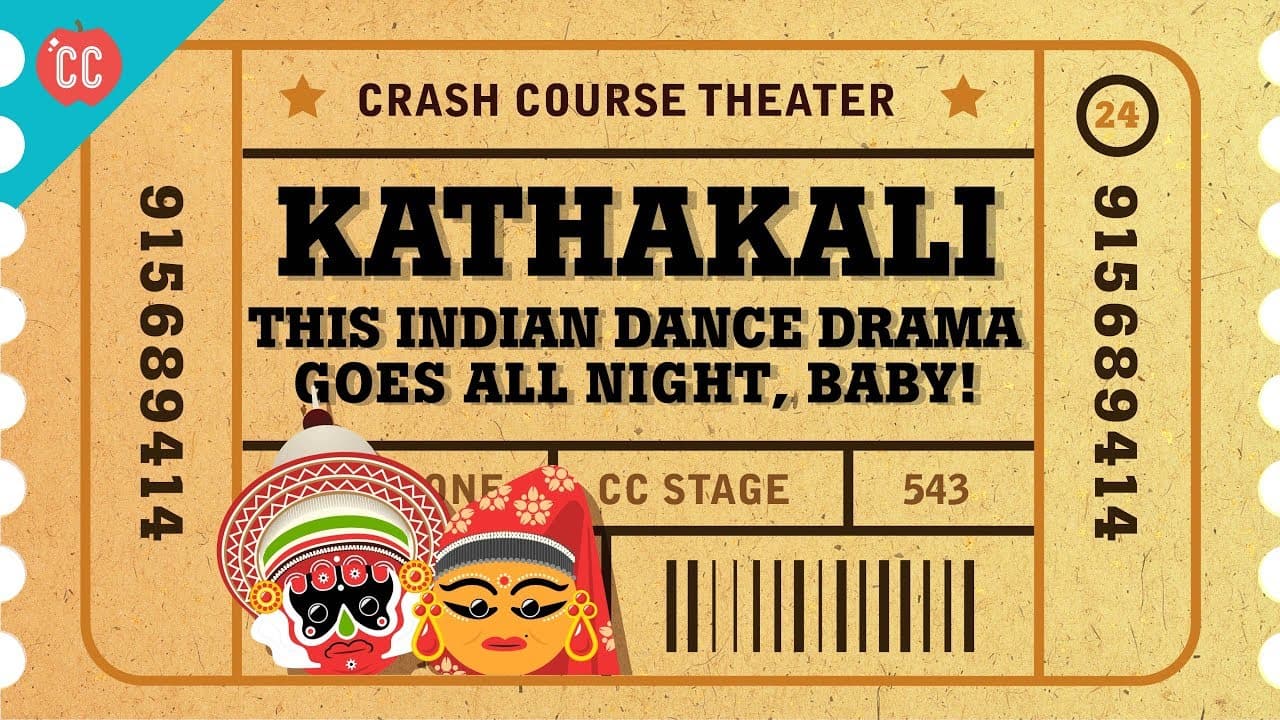
Kathakali is a traditional Indian dance-drama originating from Kerala, characterized by elaborate makeup, intricate hand gestures, and performances that often last all night. It combines music, dance, and acting, drawing stories from Hindu epics like the Mahabharata and Ramayana. Performances conclude with the symbolic slaying of a demon, showcasing the fusion of sacred and secular elements.
Transcript
hey i'm mike regnetta this is crash course theater and today i'm going to move my hands in very intricate and meaningful ways as we discuss katakali the indian dance drama that followed sanskrit drama and is still being performed today katakali performances would last all night and climax at dawn with the killing of a demon because after eight hour... Read More
Key Insights
- Kathakali is a traditional Indian dance-drama from Kerala.
- Performances often last all night, climaxing with a demon's defeat.
- It combines music, dance, acting, and martial arts.
- Stories are drawn from Hindu epics like the Mahabharata and Ramayana.
- Elaborate makeup and costumes define Kathakali characters.
- Kathakali includes 500 distinct hand gestures called mudras.
- Performances are accompanied by percussion and vocalists.
- The art form balances sacred and secular traditions.
Install to Summarize YouTube Videos and Get Transcripts
Explore YouTube Video Summarizer or Get YouTube Transcript Extractor
Questions & Answers
Q: How is Kathakali different from other Indian dance forms?
Kathakali stands out due to its elaborate makeup and costumes, intricate hand gestures, and all-night performances. Unlike other dance forms, it combines elements of music, dance, acting, and martial arts. The stories are drawn from Hindu epics, and performances conclude with the symbolic slaying of a demon, emphasizing both sacred and secular traditions.
Q: What are the key components of a Kathakali performance?
A Kathakali performance includes music, dance, acting, and martial arts. It features elaborate makeup and costumes, with performers using 500 distinct hand gestures called mudras. Performances are accompanied by percussion and vocalists, who provide the narrative and dialogue, while actors convey emotions through facial expressions and body movements.
Q: What stories are typically portrayed in Kathakali?
Kathakali primarily draws its stories from Hindu epics such as the Mahabharata and Ramayana. Some plays also borrow from other sacred texts like the Puranas. More recently, there have been adaptations of Western dramas, including works by Shakespeare, showcasing the form's versatility in storytelling.
Q: How are Kathakali characters represented through makeup?
Kathakali characters are distinguished by elaborate makeup and costumes, which take 2-4 hours to apply. Different colors and styles represent various character types: green for gods and heroes, orange-red for certain deities, and black for demonesses. Each character's makeup reflects their moral and emotional nature in the performance.
Q: What role does improvisation play in Kathakali?
Improvisation is a crucial aspect of Kathakali, with actors encouraged to add their own dance and dialogue passages once they master a role. These improvisations are expected by audiences and are a measure of a performance's success, showcasing the actor's creativity and skill in interpreting the narrative.
Q: What is the significance of mudras in Kathakali?
Mudras, or hand gestures, are vital in Kathakali, with performers using 500 distinct gestures to convey emotions, actions, and narratives. These gestures, combined with facial expressions, allow actors to tell stories without spoken words, reflecting the character's inner state and enhancing the overall performance.
Q: How does Kathakali balance sacred and secular elements?
Kathakali blends sacred and secular elements by drawing from religious texts and incorporating secular themes. Performances often depict divine play, where gods engage in human-like dramas. This balance allows Kathakali to honor Hindu values like bravery and humility while also providing entertainment through elaborate storytelling and performance.
Q: What training is required to become a Kathakali performer?
Becoming a Kathakali performer requires extensive training, often taking up to 20 years to master the art. Performers must learn intricate choreography, including 500 hand gestures and a wide range of facial expressions. This rigorous training ensures they can effectively convey complex narratives and emotions through their performances.
Summary & Key Takeaways
-
Kathakali is a traditional dance-drama from Kerala, India, known for its elaborate makeup, costumes, and intricate hand gestures. Performances often last all night and conclude with the symbolic defeat of a demon, drawing from Hindu epics like the Mahabharata and Ramayana.
-
The art form combines music, dance, acting, and martial arts, with stories presented through a repertoire of 60 plays. Kathakali performers undergo extensive training, mastering 500 distinct hand gestures and a wide range of facial expressions to convey emotions and narratives.
-
Kathakali's unique blend of sacred and secular elements makes it a significant cultural tradition. Performances are accompanied by percussion and vocalists, with actors improvising dance and dialogue passages, showcasing both their skill and creativity.
Read in Other Languages (beta)
Share This Summary 📚
Summarize YouTube Videos and Get Video Transcripts with 1-Click
Try YouTube Summary with ChatGPT & Claude or YouTube Transcript Generator
Explore More Summaries from CrashCourse 📚






Summarize YouTube Videos and Get Video Transcripts with 1-Click
Try YouTube Summary with ChatGPT & Claude or YouTube Transcript Generator