Why Did Lake-Effect Snow Shut Down I-90?

TL;DR
Stationary lake-effect snow bands reportedly produced near-zero visibility, rapid accumulation, deep drifts, collisions, and stranded vehicles across northwest Pennsylvania and northeast Ohio on January 16, 2026. Officials closed roads, imposed travel restrictions, deployed National Guard personnel, opened shelters and warming centers, and urged residents to remain home as power outages and extreme cold increased the danger.
Transcript
A catastrophic lake effect snow event has brought travel to a standstill along the Interstate 90 corridor in northwest Pennsylvania, forcing state officials to implement emergency closures and leaving hundreds of motorists stranded in what meteorologists are calling a historic weather event for early divosi dess. As of Friday evening, January 16th,... Read More
Key Insights
- The main hazard was a stationary lake-effect snow band that repeatedly drew moisture from Lake Erie and deposited heavy snow over the same communities. The transcript attributes its intensity to relatively warm lake water colliding with Arctic air from Canada.
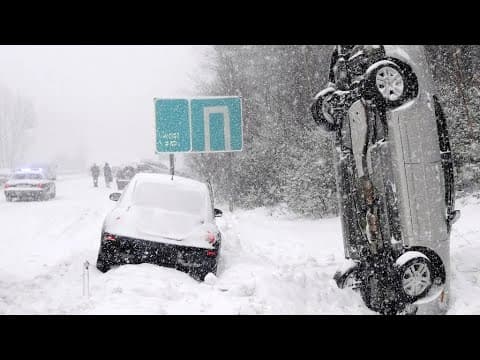
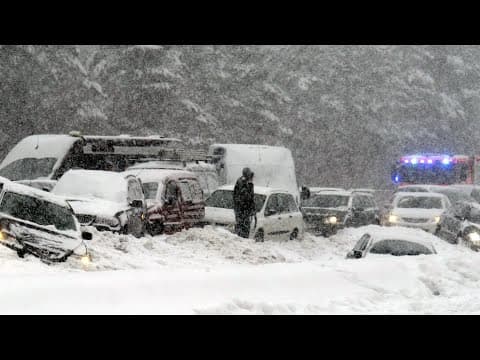
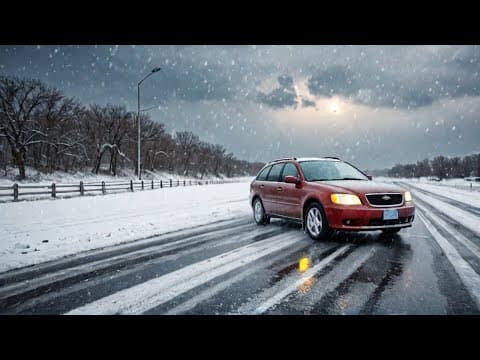
- Travel on Interstate 90 became dangerous because snowfall rates of 3 to 5 inches per hour combined with strong winds to create whiteout conditions. Drivers reportedly could not distinguish the snow-covered ground from the sky or see nearby vehicles.
- Emergency restrictions included a commercial vehicle ban, travel advisories, closed exit ramps, municipal snow emergencies, and a level three snow emergency in Geauga County. Officials said these measures were necessary to preserve access for ambulances, firefighters, snowplows, and rescue teams.
- Snow removal became unusually difficult because rapid accumulation reportedly covered cleared lanes faster than crews could maintain them. Some plow trucks pulled over, light-duty equipment was withdrawn in Chardon, and heavy front loaders were used to preserve a single emergency lane.
- Power failures created an additional life-safety threat as high winds brought snow-laden branches onto electrical lines. The transcript reports approximately 15,000 affected customers around Erie, more than 140,000 across parts of Ohio, and about 12,000 in Geauga County.
- Emergency assistance included National Guard deployments, stranded-motorist recovery, wellness checks, heavy snow-removal equipment, shelters, and warming centers. Facilities offered protection for travelers and residents who lost electricity or heating while road conditions prevented normal movement.
- The storm disrupted more than passenger travel because Interstate 90 is an important east-west freight route. Hundreds of trucks reportedly accumulated at rest stops and travel centers in Ohio while highway closures prevented commercial traffic from continuing through Pennsylvania.
- Conditions were expected to remain hazardous after the heaviest snow diminished because another cold front could cause flash freezing on cleared surfaces. The transcript also says Arctic air would persist through the weekend and that another clipper system could add snow by Monday.
Install to Summarize YouTube Videos and Get Transcripts
Explore YouTube Video Summarizer or Get YouTube Transcript Extractor
Questions & Answers
Q: Why did lake-effect snow shut down Interstate 90?
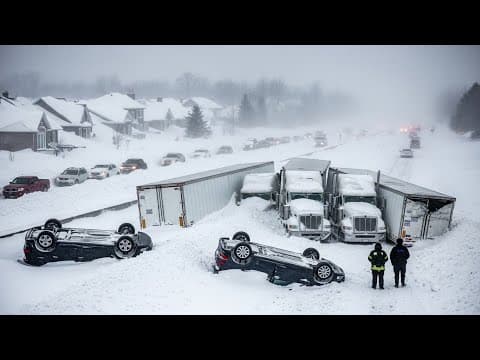
Interstate 90 was shut down or severely restricted because a stationary lake-effect snow band produced rapid accumulation, strong winds, and near-zero visibility from northwest Pennsylvania into northeast Ohio. Multiple collisions, jackknifed tractor-trailers, stranded motorists, and blocked lanes made continued travel unsafe. Authorities also needed open routes for ambulances, rescue vehicles, snowplows, and National Guard equipment.
Q: How much snow was reported around Erie, Pennsylvania?
The transcript reports that Erie International Airport recorded more than 28 inches of snow within a 12-hour period by 8:00 p.m. on January 16, 2026. Rural parts of Erie County reportedly had drifts reaching 5 feet. Forecasters warned that the stationary band could remain through Saturday morning and push total accumulation beyond 40 inches.
Q: What caused the severe lake-effect snow near Lake Erie?
The reported lake-effect event formed when Arctic air from Canada moved across the comparatively warm waters of Lake Erie. That temperature contrast supplied moisture and instability, creating a persistent conveyor belt of heavy snow. Because the resulting band remained nearly stationary, the same locations repeatedly received intense snowfall instead of experiencing only a brief passage.
Q: What emergency travel restrictions were imposed during the storm?
Pennsylvania imposed a commercial vehicle ban and general travel advisory along a 50-mile portion of Interstate 90, while some exit ramps were closed after collisions. Erie declared a snow emergency requiring non-essential vehicles to stay off city streets. In Geauga County, officials issued a level three snow emergency that closed roads to non-emergency personnel.
Q: Why were snowplows unable to keep roads clear?
Snowplows struggled because accumulation reportedly reached several inches per hour, allowing cleared lanes to become covered again very quickly. Heavy, wet snow also made removal more difficult, while high winds created new drifts and reduced visibility for operators. Some Pennsylvania plows reportedly stopped temporarily, and Chardon relied on heavy front loaders instead of standard light-duty equipment.
Q: How did the storm affect electricity and heating?
High winds and the weight of snow reportedly brought branches onto power lines, causing widespread outages. The transcript cites approximately 15,000 customers without power in the Erie metropolitan area, more than 140,000 across affected parts of Ohio, and about 12,000 in Geauga County. Falling temperatures made loss of household heating a critical safety concern.
Q: What help was provided to stranded motorists and residents?
National Guard personnel were deployed to assist with stranded-motorist recovery, wellness checks, medical access, and heavy snow removal. Shelters opened at the Erie Bayfront Convention Center and local high schools for displaced travelers. Ohio communities and the American Red Cross also established warming centers with backup generators and medical supplies for residents who lost power or heat.
Q: What safety advice did officials give during the blizzard?
Officials strongly urged residents to remain home and avoid all non-essential travel so emergency crews and snowplows could operate. Anyone who had to drive was advised to carry blankets, water, food, and a flashlight. Pennsylvania motorists were directed to the 511PA website or mobile application for current road closures and traffic conditions.
Summary & Key Takeaways
-
A stationary lake-effect snow band reportedly paralyzed the Interstate 90 corridor from northwest Pennsylvania into northeast Ohio. Heavy snowfall, strong winds, whiteout visibility, jackknifed tractor-trailers, and abandoned vehicles prompted highway restrictions, ramp closures, commercial vehicle bans, and emergency declarations while rescue crews worked to reach stranded motorists.
-
Erie County reportedly received up to 28 inches at Erie International Airport within 12 hours, with rural drifts reaching 5 feet and possible accumulations exceeding 40 inches. Snowfall overwhelmed some plowing operations, disrupted regional freight traffic, caused power outages, and forced displaced travelers into shelters at public facilities.
-
Northeast Ohio faced similarly dangerous conditions, particularly in the Lake Erie snow belt. Authorities reported rapid snowfall, deep drifts, road closures, airport disruption, widespread outages, and stranded vehicles. National Guard units, emergency services, warming centers, and heavy equipment were mobilized while officials warned residents against non-essential travel.
Read in Other Languages (beta)
Share This Summary 📚
Summarize YouTube Videos and Get Video Transcripts with 1-Click
Try YouTube Summary with ChatGPT & Claude or YouTube Transcript Generator
Explore More Summaries from Nature Damage 📚

Summarize YouTube Videos and Get Video Transcripts with 1-Click
Try YouTube Summary with ChatGPT & Claude or YouTube Transcript Generator