How Folk Theories Shape Security Decisions
TL;DR
Security depends partly on users because decisions about phishing, updates, passwords, and app permissions cannot be fully automated. People rely on informal causal beliefs built from experience, but those beliefs are incomplete and often technically inaccurate. Better security guidance should connect with how users perceive attackers, personal risk, visible harm, and control over their data.
Transcript
So today I'm gonna be talking to you about folk theories of security and privacy, which is basically about how we understand how people think about and make decisions about security and privacy. So everybody who uses computing technology has to make security-related decisions on a regular basis, whether they're actually aware that's what they're do... Read More
Key Insights
- Security depends on human judgment because phishing emails, software updates, password choices, and app permissions require decisions that are difficult to automate completely. Each choice can help protect the user and other people from security or privacy threats.
- Folk theories are informal, causal explanations that develop automatically from everyday experience. People use them to anticipate what might happen and decide how to respond, even though limited personal experience makes these beliefs incomplete and often technically inaccurate.
- Privacy expectations can rely on assumed corporate benevolence. Some users expect companies and systems receiving their data to use it only in ways consistent with the users' own preferences and beliefs about what should happen.
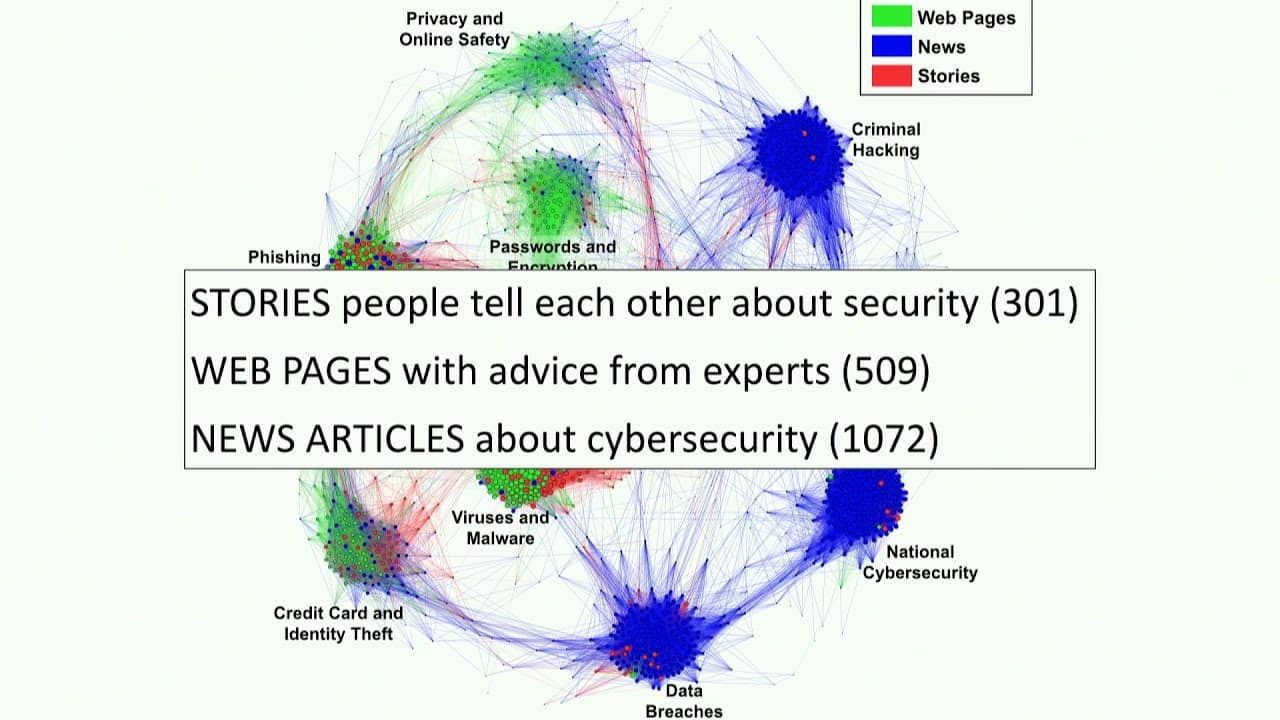
- Users and experts emphasize different aspects of cybersecurity. An analysis of user stories, expert advice pages, and news articles found that regular users focused more on attackers and attack types, while experts placed greater emphasis on methods and prevention.
- Users assess victimization partly by imagining an attacker's perspective. Information about who might conduct an attack helps them judge whether they personally could become a target, creating an opening for expert guidance that addresses motives as well as technical mechanisms.
- Automatic updates can conceal information users need to understand their computers. Some Windows 7 users expected notifications despite having automatic updates enabled, and users who intended to install promptly might have received updates later than if their intended notification settings had worked.
- Belief in personal vulnerability is associated with protective intentions. Among two thousand U.S. adult internet users, respondents who considered themselves possible or likely hacker targets more often reported protective action and plans for future protection.
- Virus beliefs influence whether protection seems worthwhile. People who expected viruses to cause visible computer problems were more likely to report antivirus intentions, while those who viewed infection through browsing as unavoidable felt less able to act protectively.
Install to Summarize YouTube Videos and Get Transcripts
Explore YouTube Video Summarizer or Get YouTube Transcript Extractor
Questions & Answers
Q: What are folk theories of security and privacy?
Folk theories are informal, causal, explanatory beliefs that people develop from everyday experiences. They form automatically and help people predict what may happen and decide how to respond. Because nobody has complete experience, these theories can be incomplete or technically inaccurate. Even so, they influence security choices, protective actions, and consent to data collection.
Q: Why can users not be removed from every security decision?
Many security decisions require personal judgment, timing, or control. Spam filters can hide important messages, software updates may interrupt users, difficult assigned passwords may be written down, and app permissions affect what data people allow systems to collect. Consequently, system security depends not only on technical mechanisms but also on choices made by the people using them.
Q: How do users and experts think differently about cybersecurity?
Regular users tend to care about who is conducting an attack and what kind of attack it is. They use that information to imagine the attacker's perspective and assess whether they might become victims. Experts focus more strongly on attack methods and prevention. This difference can keep expert advice from connecting with the concerns users actually use when evaluating risk.
Q: How were differences between user and expert security beliefs studied?
Researchers collected three kinds of material: stories people told one another about security, web pages containing advice from experts, and cybersecurity news articles. An automatic topic-model analysis showed that the documents clustered by topic. User stories emphasized attackers and attack types, expert pages emphasized attack methods, and news coverage concentrated on topics considered newsworthy.
Q: Why can automatic software updates sometimes delay protection?
Automatic updates can delay protection for users who already intend to install updates quickly but expect to receive a notification. In the Windows 7 study, some participants believed they would be notified even though automatic installation was enabled. Because the expected notification never arrived, they could not act as intended, and the automatic process could install the update later.
Q: How does automation affect learning about computer security?
Automation can hide information and functionality that would otherwise help people understand what their computers are doing. In the software-update study, users sometimes held beliefs about notification settings that did not match logged behavior. When updates occurred in the background without their awareness, users lost an opportunity to observe the process, correct their beliefs, and learn from experience.
Q: How does perceived hacker targeting affect protective behavior?
People who believe they could personally be targeted by hackers are more likely to report taking protective action and intending to protect themselves in the future. In a survey of two thousand U.S. adult internet users, respondents who thought hackers targeted other people instead of them were less inclined to act. Anticipated personal harm therefore helped motivate protection.
Q: How do beliefs about viruses affect antivirus intentions?
People who believe viruses cause visible computer problems are more likely to say they will use antivirus protection because they can imagine a recognizable consequence. By contrast, people who believe a virus can simply be caught while browsing may conclude that infection is unavoidable. That belief reduces their sense that protective action can help and weakens antivirus intentions.
Summary & Key Takeaways
-
Security and privacy outcomes depend on both technical mechanisms and human decisions. Users must judge phishing emails, choose passwords, schedule software updates, and respond to app permission requests. Because these choices are difficult to automate completely, researchers need to understand the experiences and information that shape how people evaluate risks and protective actions.
-
Folk theories are informal causal explanations that people develop automatically from everyday experiences. They help users predict future events, but incomplete experience can make them technically inaccurate. Research comparing user stories, expert advice, and cybersecurity news found that users emphasized attackers, while experts concentrated more heavily on attack methods and prevention.
-
Studies connected folk theories with real security behavior. Windows 7 users sometimes misunderstood automatic-update settings, preventing them from acting on intentions to install updates promptly. Survey responses from two thousand U.S. adult internet users also linked beliefs about personal targeting and visible virus damage with stronger intentions to use protective measures.
Read in Other Languages (beta)
Share This Summary 📚
Summarize YouTube Videos and Get Video Transcripts with 1-Click
Try YouTube Summary with ChatGPT & Claude or YouTube Transcript Generator
Explore More Summaries from RSAC Cybersecurity 📚

Summarize YouTube Videos and Get Video Transcripts with 1-Click
Try YouTube Summary with ChatGPT & Claude or YouTube Transcript Generator