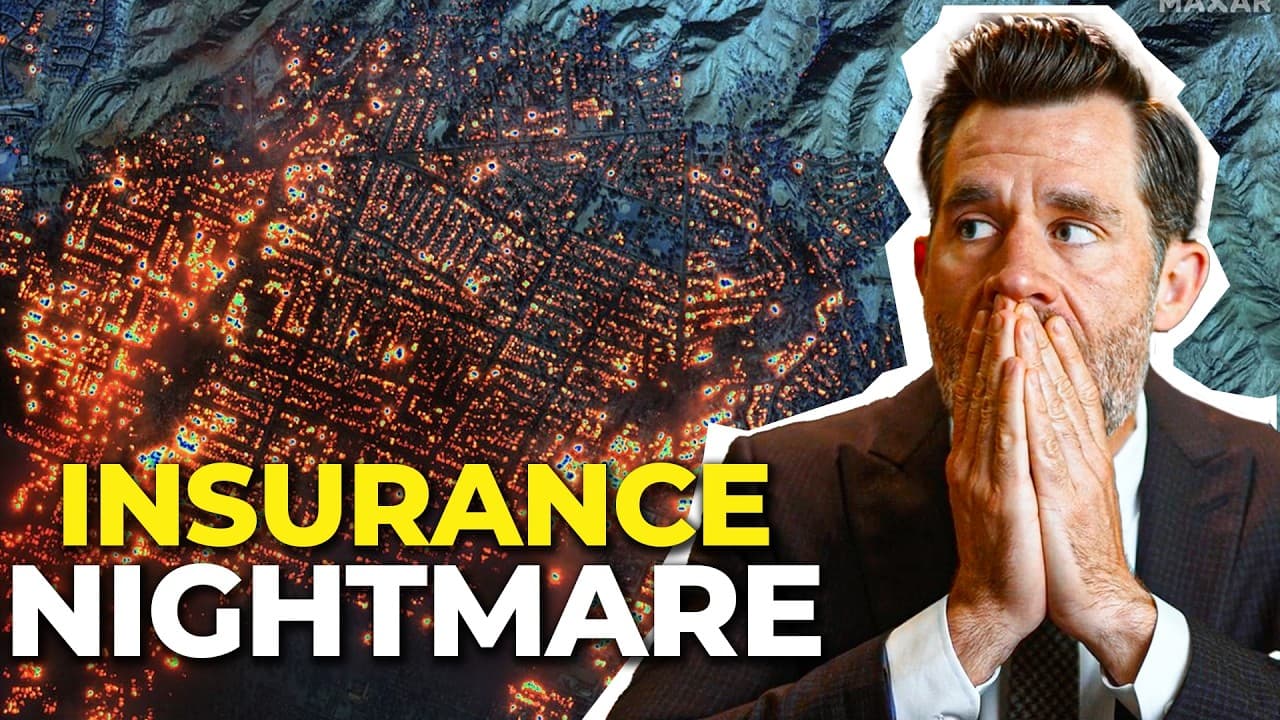
Why Are California Wildfires an Insurance Crisis?
TL;DR
California wildfires have led to an insurance crisis as major companies withdraw from the state due to unsustainable losses. Homeowners face higher premiums and limited options, while state-run insurance plans struggle to cover increasing claims. Legal and financial implications further complicate recovery efforts for affected communities.
Transcript
- [Reporter] Wind gusts expected to reach up to 70 miles per hour. - Six different wildfires raging right now. - Damage is already estimated in the hundreds of billions. - Several of the state's largest insurers either stopped or limited new policies. - These wildfires could be one of the most expensive natural disasters in US history. - The deepen... Read More
Key Insights
- California wildfires are causing unprecedented insurance challenges.
- Major insurers are leaving California due to high risk and losses.
- State-run insurance plans like FAIR are last-resort options.
- Wildfires have caused billions in economic losses and property damage.
- Legal battles over liability and settlements are ongoing.
- Climate change intensifies natural disasters, impacting insurance.
- Victims face financial burdens due to changes in tax laws.
- Controlled burns and vegetation management are critical yet complex.
Install to Summarize YouTube Videos and Get Transcripts
Explore YouTube Video Summarizer or Get YouTube Transcript Extractor
Questions & Answers
Q: Why are California wildfires causing an insurance crisis?
California wildfires are causing an insurance crisis because they lead to catastrophic losses that make it difficult for insurers to remain profitable. As a result, major insurance companies are withdrawing from the state or refusing to renew policies, leaving homeowners with limited options and higher premiums. The increasing frequency and severity of wildfires, driven by climate change, exacerbate these challenges.
Q: What is the FAIR Plan in California?
The FAIR Plan in California is a state-run insurance program that serves as a last-resort option for homeowners who cannot obtain coverage from private insurers. It provides limited coverage at higher costs and is designed for those rejected by two or more insurance companies. While it offers a safety net, it does not fully replace standard insurance policies and has significant financial exposure.
Q: How do legal battles affect wildfire recovery efforts?
Legal battles can significantly impact wildfire recovery efforts by determining liability and financial compensation for damages. Cases like those involving PG&E highlight the complexities of corporate responsibility and the challenges in securing settlements for victims. These legal processes can delay recovery, add financial burdens, and create uncertainty for affected communities seeking to rebuild.
Q: What role does climate change play in California's wildfire crisis?
Climate change plays a critical role in California's wildfire crisis by increasing the frequency and intensity of natural disasters. Warmer temperatures and prolonged droughts create conditions conducive to wildfires. This exacerbates the challenges faced by the insurance industry and complicates efforts to manage vegetation and implement preventive measures like controlled burns.
Q: How have tax laws impacted wildfire victims financially?
Changes in tax laws, particularly the removal of attorney's fees as a tax-exempt expense under the TCJA, have financially impacted wildfire victims by subjecting them to double taxation on settlement funds. This increased their financial burden, as they were taxed on both the settlement amount and the attorney's fees. Recent legislation aims to rectify this by preventing double taxation on disaster settlements.
Q: What are the challenges of implementing controlled burns in California?
Implementing controlled burns in California faces challenges due to regulatory changes, resource allocation, and environmental conditions. While controlled burns are essential for reducing wildfire risks by removing dry vegetation, they carry the risk of spiraling out of control in dry conditions. Policy debates and budgetary constraints further complicate their execution, impacting overall wildfire management strategies.
Q: Why are major insurers withdrawing from California?
Major insurers are withdrawing from California due to the unsustainable financial risks posed by frequent and severe wildfires. These events lead to significant claims that exceed the premiums collected, making it challenging for insurers to maintain profitability. As a result, companies like State Farm and Allstate are reducing or ceasing their operations in high-risk areas, limiting coverage options for homeowners.
Q: What economic impact do wildfires have on California?
Wildfires have a substantial economic impact on California, with losses projected to reach between $50 billion and $150 billion, potentially accounting for up to 4% of the state's annual GDP. This includes direct property damage, business interruptions, and broader economic disruptions. The scale of destruction poses significant challenges for recovery and places a heavy burden on both public and private sectors.
Summary & Key Takeaways
-
California's wildfires are creating an insurance nightmare as major insurers withdraw from the state, citing unsustainable losses due to increased natural disasters. Homeowners are left with fewer options and rising premiums, while state-run insurance plans like FAIR struggle to meet demand. Legal and financial complexities further hinder recovery efforts for affected communities.
-
The wildfires have caused billions in damage, with economic losses projected to reach up to 4% of California's annual GDP. Legal battles over liability, such as the PG&E case, highlight the complex interplay between corporate responsibility and disaster management. The situation is exacerbated by climate change, which increases the frequency and severity of such events.
-
Efforts to manage vegetation and implement controlled burns are critical in reducing wildfire risks. However, policy changes and resource allocation have been contentious, with debates over budgeting priorities and environmental strategies. The insurance industry faces significant challenges in adapting to these evolving risks, impacting both companies and consumers alike.
Read in Other Languages (beta)
Share This Summary 📚
Summarize YouTube Videos and Get Video Transcripts with 1-Click
Try YouTube Summary with ChatGPT & Claude or YouTube Transcript Generator
Explore More Summaries from LegalEagle 📚




Summarize YouTube Videos and Get Video Transcripts with 1-Click
Try YouTube Summary with ChatGPT & Claude or YouTube Transcript Generator