Meet the Company Training Our Robot Replacements
TL;DR
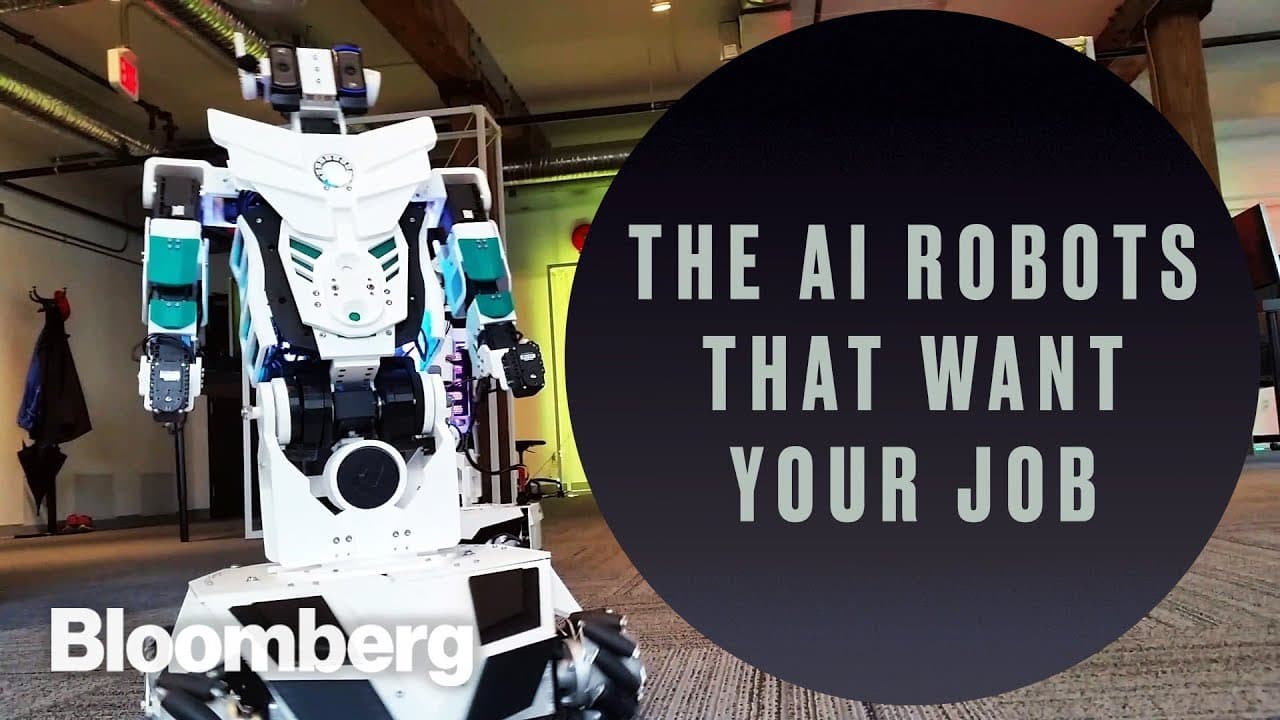
Kindred AI is developing robots to replace human factory workers.
Transcript
(shrill electronic music) [Narrator] Conventional wisdom these days says that robots will soon put millions of factory workers out of jobs. (playful electronic music) This may sound like the fever dream of Dr. Evil, but in fact, there are very pleasant people making this happen. May I introduce Suzanne Gildert? A budding AI overlord and founder of ... Read More
Key Insights
- Kindred AI, a Toronto-based startup, is pioneering the development of robots designed to replace human factory workers, focusing on tasks that are simple for humans but challenging for machines.
- Suzanne Gildert, co-founder of Kindred AI, has a background in electronics and a passion for robotics, leading to the creation of innovative robotic prototypes at the company.
- The company uses small robots as research prototypes, emphasizing safety and learning efficiency, as larger robots with underdeveloped AI could be hazardous.
- Kindred AI's robots, powered by advanced AI, are trained to pick up and sort objects of various shapes and sizes, a task that currently employs millions of human workers in warehouses.
- A unique aspect of the training involves human 'robot pilots' who manually control the robotic arms, allowing the AI to learn the nuances of object handling through observation.
- The ultimate goal is for these robots to operate autonomously, freeing human workers for more complex tasks, though this raises concerns about future job displacement.
- Suzanne Gildert envisions a future where robots are integrated into society as citizens, contributing economically and having needs similar to humans, such as maintenance and leisure.
- The potential impact of AI and robotics extends beyond manual labor, with future implications for professions like doctors and lawyers, prompting discussions on economic and societal adjustments.
Install to Summarize YouTube Videos and Get Transcripts
Explore YouTube Video Summarizer or Get YouTube Transcript Extractor
Questions & Answers
Q: What is the main focus of Kindred AI's robotic development?
Kindred AI focuses on developing robots that can perform tasks typically done by human factory workers, such as picking and sorting objects of various shapes and sizes. The goal is to automate these processes using advanced AI, reducing the reliance on human labor for these repetitive tasks.
Q: How does Kindred AI ensure the safe development of its robots?
Kindred AI uses small research prototypes to safely develop their robots. By starting with smaller robots, they can minimize potential dangers associated with larger robots that have underdeveloped AI. This approach allows them to refine the robots' learning and handling capabilities without posing significant safety risks.
Q: What role do human 'robot pilots' play in the training process?
Human 'robot pilots' manually control the robotic arms, providing a learning opportunity for the AI. By observing the pilots' actions, the AI learns the nuances of handling different objects, improving its ability to perform tasks autonomously in the future. This training method bridges the gap between human dexterity and machine learning.
Q: What are the potential societal impacts of Kindred AI's technology?
The development of autonomous robots by Kindred AI could lead to significant job displacement, especially in roles involving repetitive manual labor. This raises concerns about future employment and economic models, as AI and robotics may also impact professions like doctors and lawyers, necessitating a reevaluation of workforce dynamics and compensation structures.
Q: How does Suzanne Gildert envision the future integration of robots into society?
Suzanne Gildert envisions robots as future citizens, contributing to the economy and having similar needs to humans, such as maintenance and leisure. She believes robots will participate in economic activities, potentially earning wages to cover their operational needs, and will seek experiences and learning opportunities similar to humans.
Q: What challenges do Kindred AI's robots face in performing their tasks?
The primary challenge for Kindred AI's robots is handling the diverse range of objects encountered in warehouse settings. The robots must learn to pick up items of various shapes, sizes, and textures without dropping them, which requires extensive training and sophisticated AI to achieve the necessary dexterity and precision.
Q: What is the ultimate goal for Kindred AI's robotic arms?
The ultimate goal for Kindred AI's robotic arms is to achieve full autonomy, allowing them to operate independently without human intervention. This would enable the robots to continuously perform tasks such as picking and sorting objects, freeing human workers to focus on more complex and creative activities.
Q: How does the current use of human labor in warehouses compare to Kindred AI's robotic solution?
Currently, warehouses employ millions of human workers to perform tasks like picking and sorting objects, which are simple for humans but challenging for machines. Kindred AI's robotic solution aims to automate these tasks, potentially reducing the need for human labor and increasing efficiency in warehouse operations.
Summary & Key Takeaways
-
Kindred AI is a Toronto startup developing robots to replace factory workers, focusing on automating tasks like picking and sorting objects. The company uses small prototypes to safely develop AI capabilities, with human pilots training the robots to improve their handling skills.
-
Co-founder Suzanne Gildert envisions a future where robots are integrated into society as citizens, contributing economically and having physical needs. This shift in workforce dynamics raises concerns about job displacement and prompts discussions on future economic models.
-
The company's robots are trained to perform tasks currently done by millions of human workers, with the goal of achieving full autonomy. This technological advancement highlights the potential for AI to impact various professions, necessitating societal and economic adaptations.
Read in Other Languages (beta)
Share This Summary 📚
Summarize YouTube Videos and Get Video Transcripts with 1-Click
Try YouTube Summary with ChatGPT & Claude or YouTube Transcript Generator
Explore More Summaries from Bloomberg Originals 📚





Summarize YouTube Videos and Get Video Transcripts with 1-Click
Try YouTube Summary with ChatGPT & Claude or YouTube Transcript Generator