Why Did OpenClaw's Creator Join OpenAI?
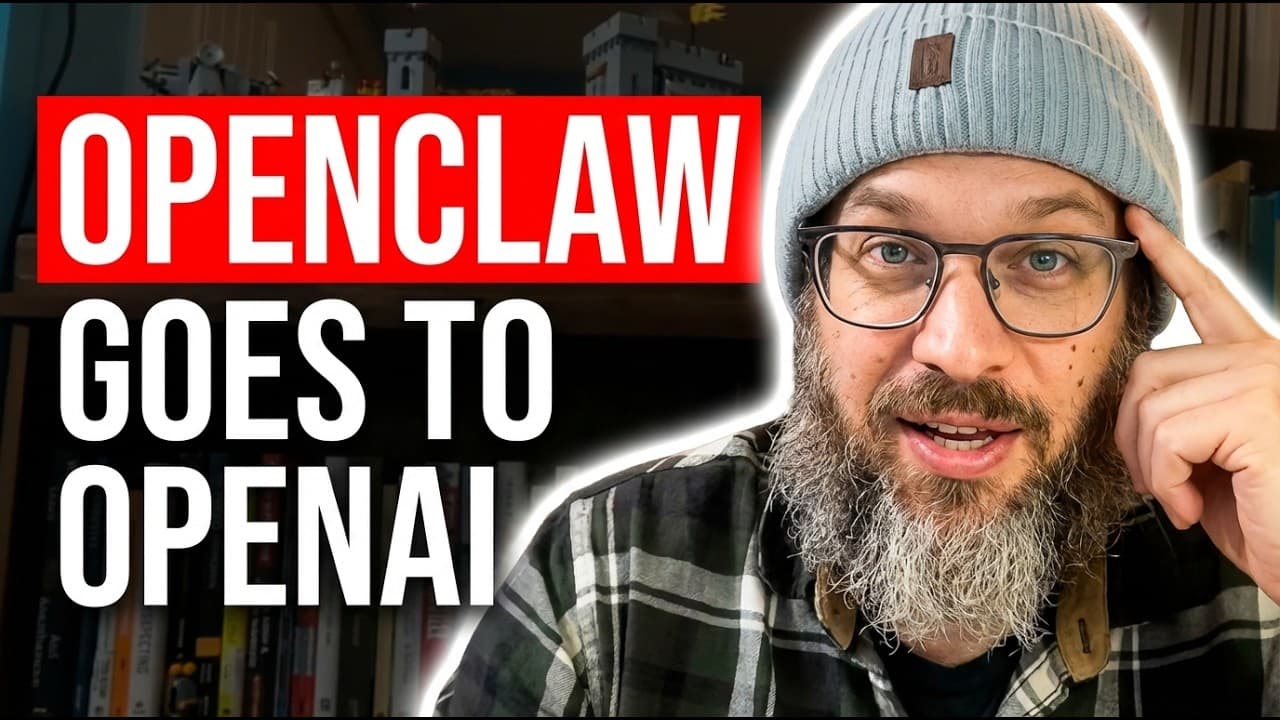
TL;DR
Peter Steinberger joined OpenAI because its vision, frontier models, computational resources, and existing personal connections best supported his goal of making agents accessible to ordinary users. OpenClaw was not acquired: it is expected to remain open source under an independent foundation, while OpenAI gains Steinberger’s architectural knowledge, developer trust, community influence, and practical experience building agents that operate real computers.
Transcript
The lobster is joining the lab. Here's what OpenAI's hire of Peter Steinberger, inventor of Open Claw, actually means. So, Peter Steinberger built the fastest growing open-source project in GitHub history in his living room, all while bleeding $20,000 a month. Then, on Valentine's Day, he posted three paragraphs on his personal blog announcing he w... Read More
Key Insights
- OpenClaw is a self-hosted agent platform that can manage email, schedule meetings, control browsers, execute shell commands, and send messages through services including WhatsApp, Telegram, Slack, Discord, Signal, and iMessage. It can run on user hardware and store data locally when configured that way.
- OpenClaw began as Peter Steinberger’s forty-fourth project after three years away from technology. He built the first prototype in roughly one hour on a Friday night in November 2025, connecting a large language model to WhatsApp, web browsing, message reading, and shell-command execution.
- OpenClaw’s rapid growth was accelerated by naming disputes and account hijacking. After Anthropic objected to the Claudebot name, scammers captured a released GitHub handle, promoted a fake token, served malware, and hijacked npm packages, nearly causing Steinberger to delete the project.
- OpenClaw reached 200,000 GitHub stars and accumulated more than 10,000 commits from 600 contributors in under three months. Its popularity reflected more than publicity, because it demonstrated that a self-hosted agent could perform practical computer tasks beyond answering questions in a conventional chatbot interface.
- OpenAI’s offer aligned more closely with Steinberger’s mission of building an agent his mother could use. The proposal included computational power, existing token support for the project, access to a frontier research pipeline, and a commitment to support OpenClaw through an independent foundation.
- OpenAI did not acquire the OpenClaw platform or obtain exclusive control over it. Steinberger joined as an employee, while OpenClaw was set to move into an independent foundation, remain open source, and continue receiving sponsorship from OpenAI under the arrangement described in the announcement.
- Steinberger’s developer credibility is an asset that OpenAI cannot easily reproduce through marketing. He built OpenClaw publicly, personally absorbed operating costs of $20,000 per month, directed sponsorship money toward dependencies, and approached negotiations without financial desperation after an earlier nine-figure company exit.
- OpenClaw’s security experience provides practical knowledge about granting agents access to real systems. More than 40 vulnerabilities were patched shortly before Steinberger’s announcement, and the platform’s browser control, scheduling, messaging integrations, self-modification capability, and shell access expose challenges that ordinary chatbot products do not face.
Install to Summarize YouTube Videos and Get Transcripts
Explore YouTube Video Summarizer or Get YouTube Transcript Extractor
Questions & Answers
Q: Why did Peter Steinberger choose OpenAI over Meta?
Peter Steinberger chose OpenAI primarily because its vision most closely matched his goal of building an agent his mother could use. OpenAI offered computational power, already contributed tokens to OpenClaw, provided access to advanced research, and had deeper personal and technical connections with him. Crucially, it also accepted his non-negotiable condition that OpenClaw remain open source through an independent foundation.
Q: What is OpenClaw, and what can it do?
OpenClaw is an open-source, self-hosted AI agent platform designed to perform work on real computer systems rather than merely answer questions. It can manage email, schedule meetings, control browsers, execute shell commands, browse the web, and communicate through WhatsApp, Telegram, Slack, Discord, Signal, and iMessage. It also supports local data storage, multiple models, scheduled tasks, and modification of its own source code.
Q: How did OpenClaw become popular so quickly?
OpenClaw combined useful agent capabilities with an unusually public sequence of controversies. It had about 2,000 GitHub stars in mid-January, then received attention after Anthropic requested that Claudebot be renamed. Account hijacking, malware, another rename, extensive discussion on Reddit and Hacker News, and coverage of an experimental agent social network amplified awareness. Genuine demand then helped it reach 200,000 stars.
Q: Did OpenAI acquire OpenClaw?
OpenAI did not acquire OpenClaw or obtain exclusive ownership of the platform. Peter Steinberger joined OpenAI as an employee, while the project itself was set to move into an independent foundation and remain open source. Sam Altman said OpenAI would continue sponsoring it. The arrangement gives OpenAI access to Steinberger’s expertise and influence without directly taking control of the community’s shared project.
Q: What does OpenAI gain by hiring Peter Steinberger?
OpenAI gains Steinberger’s developer trust, architectural expertise, community influence, and demonstrated ability to create agent systems that people use. He brings practical knowledge of browser control, shell execution, scheduling, messaging integrations, multimodel support, and security. He also has credibility with an open-source community containing 600 contributors, which would be difficult for a corporate marketing effort to reproduce independently.
Q: How did the OpenClaw naming dispute affect the project?
The naming dispute unexpectedly increased OpenClaw’s visibility. Anthropic objected that Claudebot sounded too similar to Claude, so Steinberger attempted to rename it Maltbot. Scammers captured the released GitHub handle during the transition, promoted a fake token, served malware, and hijacked npm packages. Steinberger nearly deleted everything, but a carefully coordinated second rename to OpenClaw generated further discussion and media attention.
Q: Why are OpenClaw's security problems important?
OpenClaw’s security problems matter because the agent can access browsers, messages, shell commands, local systems, and even its own source code. Those capabilities create risks beyond those of a conventional chatbot. More than 40 vulnerabilities were patched less than 48 hours before Steinberger announced his move, giving his team direct operational experience with the consequences of letting AI agents control real computers.
Q: What could the OpenClaw foundation model mean for developers?
The proposed foundation model could preserve OpenClaw as an open-source platform while allowing OpenAI to build polished consumer products using related technology and Steinberger’s expertise. The transcript compares this structure to Chromium and Chrome. Developers could retain access to a multimodel project and continue contributing, while OpenAI sponsors the ecosystem without claiming exclusive control that the open-source community would likely resist.
Summary & Key Takeaways
-
OpenClaw began as Peter Steinberger’s roughly one-hour prototype connecting a language model to WhatsApp, web browsing, and shell commands. After 43 earlier projects, his forty-fourth grew from about 2,000 GitHub stars in mid-January to 200,000, aided by trademark disputes, chaotic renaming, media coverage, and genuine demand for capable self-hosted agents.
-
Meta and OpenAI both pursued Steinberger. Mark Zuckerberg personally tested OpenClaw and offered direct product feedback, while Sam Altman’s proposal included computational resources, existing token support, access to research, and a vision Steinberger considered closer to his own. OpenAI also accepted his non-negotiable requirement that OpenClaw remain an independent open-source project.
-
OpenAI gains Steinberger rather than exclusive ownership of OpenClaw. His value includes developer credibility, detailed knowledge of agent architecture and security, and influence within a community of 600 contributors. The arrangement resembles the Chrome and Chromium model, with an open foundation potentially supporting polished commercial products while preserving broad participation and multimodel compatibility.
Read in Other Languages (beta)
Share This Summary 📚
Summarize YouTube Videos and Get Video Transcripts with 1-Click
Try YouTube Summary with ChatGPT & Claude or YouTube Transcript Generator
Explore More Summaries from AI News & Strategy Daily | Nate B Jones 📚






Summarize YouTube Videos and Get Video Transcripts with 1-Click
Try YouTube Summary with ChatGPT & Claude or YouTube Transcript Generator