What Is an AI Engineer and How to Become One?
TL;DR
An AI engineer is a software engineer specializing in AI technologies, primarily working on applying AI models in production. Unlike ML researchers, AI engineers focus on deploying models, fine-tuning, and integrating AI into applications. The role is emerging due to the demand for engineers who can implement AI solutions without needing to train foundational models themselves.
Transcript
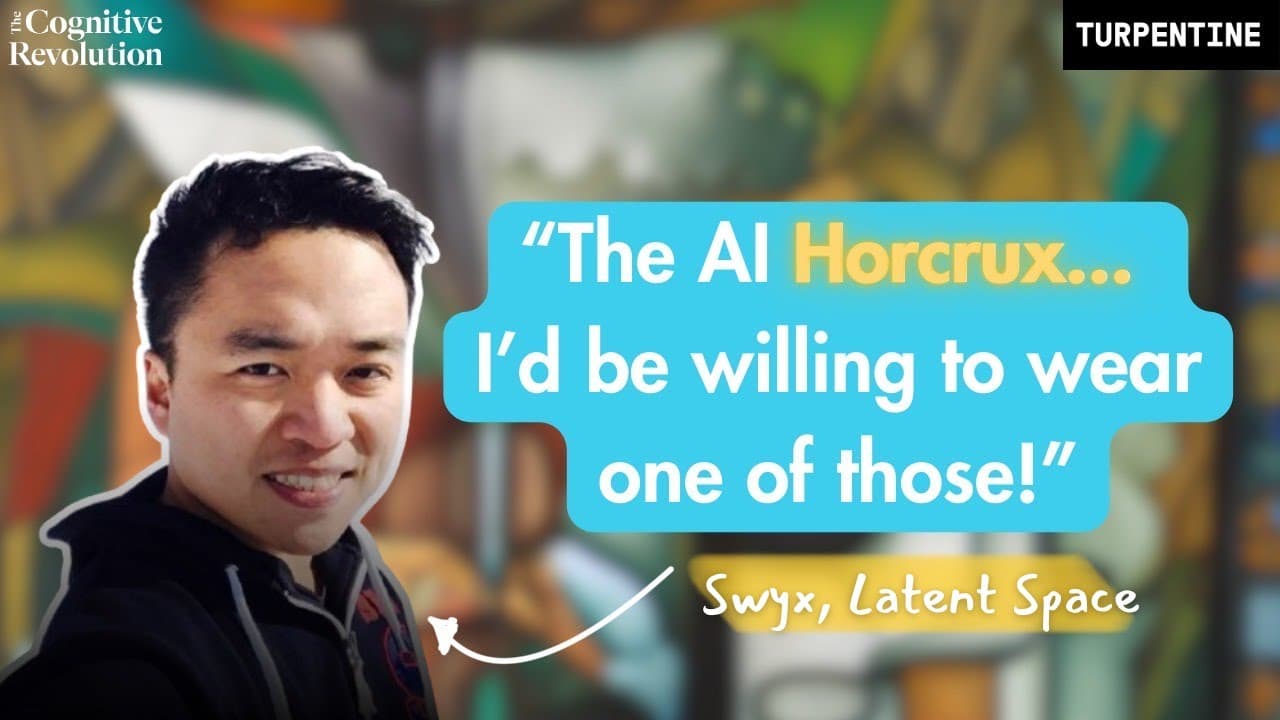
the AI hor Crux or like AI pendants I would be willing to wear one of those things I have a aura on me right now I'd love to log all my conversations and be able to talk with it these things are coming and yes they will be multimodel all of us having an effective digital twin that we can talk to and and use as at least just a notetaking thing if no... Read More
Key Insights
- An AI engineer specializes in applying AI models in production, focusing on practical implementation rather than foundational research.
- The role of AI engineer is emerging due to the demand for AI solutions in real-world applications.
- AI engineers often transition from software engineering backgrounds, learning about tokenizers, embeddings, and vector databases.
- Prompt engineering is considered a 2022 trend, while AI engineering is seen as more relevant for 2023 and beyond.
- AI engineers need to be entrepreneurial, proactive, and comfortable with undefined tasks and rapidly changing technologies.
- Key skills for AI engineers include AI UX, coding tools, LLM tooling, AI infrastructure, and building AI agents.
- The AI engineer Summit aims to be the 'ICML for engineers,' focusing on practical applications and production challenges.
- Multimodal AI, combining text, voice, and vision, is expected to significantly impact AI engineering, making integration easier.
Install to Summarize YouTube Videos and Get Transcripts
Explore YouTube Video Summarizer or Get YouTube Transcript Extractor
Questions & Answers
Q: What is an AI engineer?
An AI engineer is a software engineer who specializes in applying AI technologies in production. They focus on integrating AI models into applications, fine-tuning existing models, and ensuring that AI solutions are effectively deployed. Unlike ML researchers, AI engineers do not primarily engage in training foundational models but rather work on practical applications of AI.
Q: What skills are essential for an AI engineer?
Essential skills for an AI engineer include understanding AI user experience (UX), proficiency with AI coding tools, expertise in large language model (LLM) tooling, knowledge of AI infrastructure, and the ability to build and manage AI agents. AI engineers should also be familiar with vector databases, tokenizers, and embeddings, and be comfortable with rapidly evolving technologies.
Q: How can software engineers transition to AI engineering?
Software engineers can transition to AI engineering by learning about AI-specific tools and frameworks, such as tokenizers, embeddings, and vector databases. They should also gain experience with AI UX, LLM tooling, and AI infrastructure. Engaging in projects that involve AI model integration and fine-tuning can provide practical experience, and staying updated with the latest AI developments is crucial.
Q: Why is the role of AI engineer becoming more prominent?
The role of AI engineer is becoming more prominent due to the increasing demand for AI solutions in various industries. As AI technologies advance, there is a need for engineers who can effectively integrate these technologies into real-world applications. AI engineers bridge the gap between AI research and practical implementation, making them essential in the AI development lifecycle.
Q: What are the challenges faced by AI engineers?
AI engineers face challenges such as keeping up with rapidly evolving AI technologies, integrating AI models into existing systems, and ensuring that AI solutions are scalable and efficient. They also need to address issues related to AI safety, reliability, and ethical considerations. Additionally, AI engineers must be entrepreneurial and proactive, as the field often involves undefined tasks and experimental approaches.
Q: How does AI engineering differ from machine learning research?
AI engineering differs from machine learning research in that it focuses on the practical application and integration of AI models into production systems. While ML researchers develop and train foundational models, AI engineers work on deploying these models, fine-tuning them for specific use cases, and ensuring they operate effectively in real-world environments. AI engineering is more application-oriented, whereas ML research is more theoretical.
Q: What is the future of AI engineering?
The future of AI engineering involves greater integration of multimodal AI, where text, voice, and vision are combined to create more sophisticated AI solutions. AI engineers will play a crucial role in developing these integrated systems, making AI more accessible and useful across various applications. As AI technologies continue to advance, AI engineering will become increasingly important in bridging the gap between research and practical deployment.
Q: What is the AI engineer Summit?
The AI engineer Summit is a conference aimed at AI engineers, focusing on practical applications and production challenges in AI engineering. It features speakers from leading AI companies and startups, covering topics such as AI tools, frameworks, and the future of AI technologies. The summit aims to be a central event for AI engineers, providing insights into the latest developments and fostering a community of AI professionals.
Summary & Key Takeaways
-
AI engineers are software engineers who specialize in applying AI models in production. They focus on implementing AI solutions rather than training foundational models. The role is emerging due to the high demand for AI applications in various industries.
-
The AI engineering field is rapidly evolving, with new tools and frameworks constantly being developed. AI engineers need to stay updated with the latest technologies and be adaptable to changes.
-
AI engineers are expected to have a mix of technical skills and entrepreneurial spirit, enabling them to proactively develop AI solutions and integrate them into existing systems.
Read in Other Languages (beta)
Share This Summary 📚
Summarize YouTube Videos and Get Video Transcripts with 1-Click
Try YouTube Summary with ChatGPT & Claude or YouTube Transcript Generator
Explore More Summaries from Cognitive Revolution "How AI Changes Everything" 📚




Summarize YouTube Videos and Get Video Transcripts with 1-Click
Try YouTube Summary with ChatGPT & Claude or YouTube Transcript Generator